World city
The Labyrinth of Cloves: A Journey Through Stone Town’s Living History
In the winding coral-stone alleys of Zanzibar City, the scent of spice and the echoes of a thousand-year-old trade create a hauntingly beautiful tapestry of Swahili culture and Omani heritage.
To arrive in Zanzibar City by sea is to witness a slow-motion revelation of history, as the turquoise Indian Ocean gives way to the weathered, cream-colored skyline of Stone Town. As the high-speed ferry cuts through the swell from Dar es Salaam, salt spray mingles with the earthy scent of cloves and cinnamon carried on the monsoon winds. This is the gateway to the Swahili coast, a place where the air feels thick with the ghosts of merchants and sailors who have sought these shores for a millennium. Stepping onto the bustling docks, the modern world recedes, replaced by the rhythmic chaos of porters and the distant call to prayer.
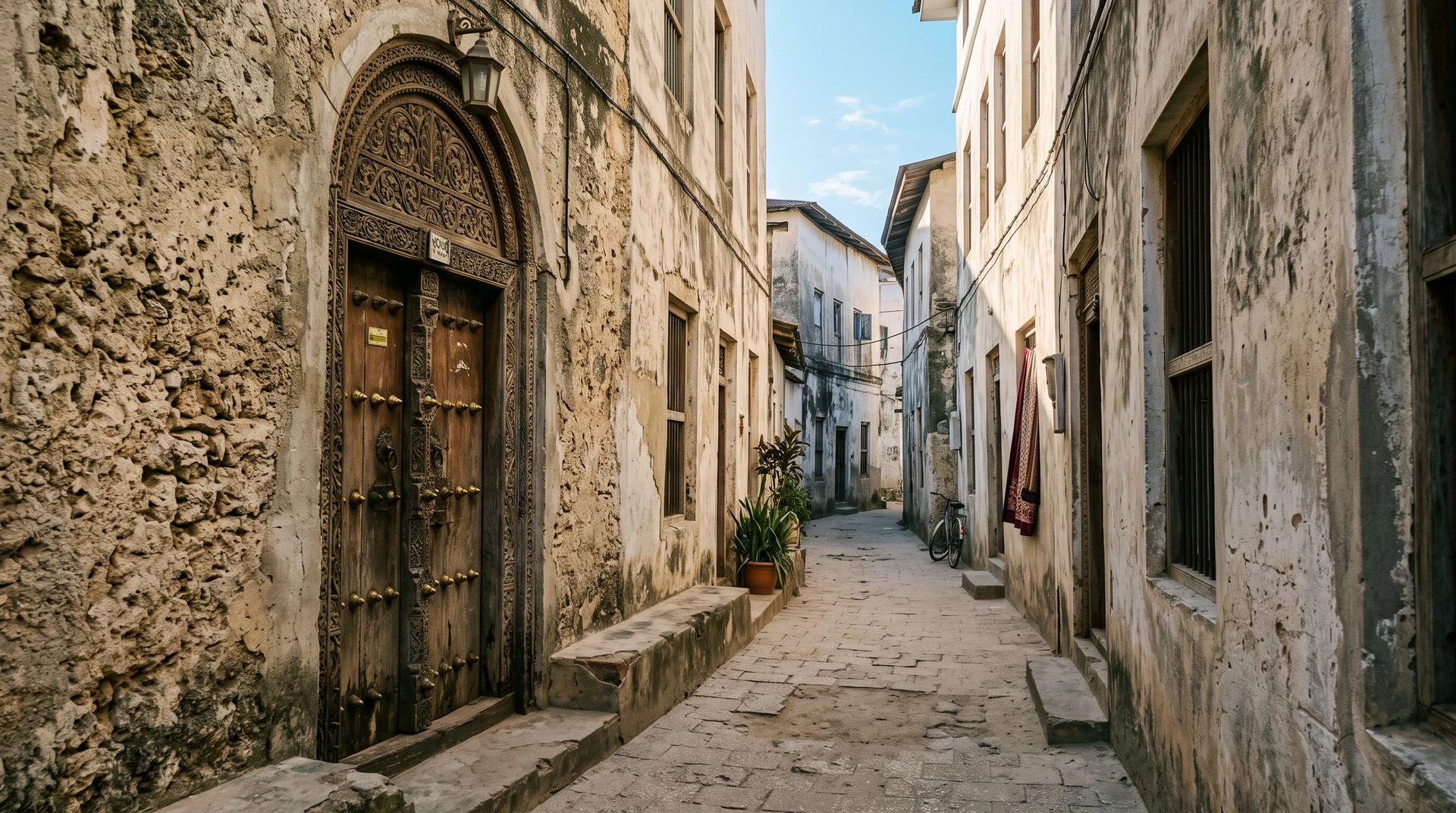
The heart of the city is Mji Mkongwe, or Stone Town, a UNESCO-listed labyrinth of narrow corridors that twist with the unpredictability of a dream. These alleys, often no wider than a man’s outstretched arms, are flanked by towering coral-stone buildings whose walls seem to lean inward, whispering secrets across the passage. The porous coral stone absorbs the tropical humidity and the golden light of the equatorial sun, creating a soft, diffused atmosphere that feels both intimate and ancient. Here, the lack of motorized vehicles allows the sounds of the city to flourish: the clinking of coffee cups, the laughter of children, and the soft shuffle of feet against smoothed stones.
Perhaps the most iconic symbols of this cultural intersection are the Zanzibar Doors, intricately carved wooden portals that serve as Stone Town's silent historians. Every door tells a story of the family that once lived behind it, their status, and their ancestral roots. Omani-influenced doors feature rectangular frames and heavy, brass-studded panels with geometric patterns and Quranic inscriptions, reflecting a heritage of desert trade. In contrast, Indian-influenced doors boast rounded tops and delicate floral motifs, their brass spikes a stylistic holdover from anti-elephant defenses repurposed as symbols of wealth. These doors are more than mere entrances; they are the physical manifestation of a cosmopolitan identity that has blended African, Arab, and Indian influences into a singular culture.
Life in Zanzibar City is defined by the "Baraza" culture, a social tradition that transforms the city’s foundations into a communal living room. The baraza is a low stone bench built directly into the exterior walls of houses, providing a space for neighbors to gather and exchange news. In the heat of the afternoon, these benches become sanctuaries of socialization where elders discuss politics over bitter ginger coffee and children rest between games. This urban hospitality is central to the Swahili way of life, fostering a palpable sense of community. There is no rush here; the concept of "pole pole"—slowly, slowly—is a guiding philosophy.
However, the beauty of Stone Town is inseparable from its darker chapters, most poignantly felt at the site of the Anglican Cathedral. Built directly atop the location of East Africa’s last permanent slave market, the cathedral stands as a powerful monument to both human suffering and the eventual triumph of abolition. The altar is placed exactly where the main whipping post once stood, a chilling reminder of the thousands traded within these coral walls. Below, the cramped, dark holding cells remain open to the public, their heavy atmosphere a stark contrast to the vibrant life above. This acknowledgment of history is essential to understanding the modern identity of Zanzibar City—a place that has weathered the storms of exploitation to emerge with a profound sense of self.
The sensory journey reaches its peak at the Darajani Market, the city’s primary bazaar and a celebration of the spice trade that once made Zanzibar a global hub. The air is saturated with the pungent aroma of cloves, nutmeg, and cardamom, stacked in colorful mounds that glow in the filtered sunlight. The market is a masterclass in organized chaos, where fishmongers display the morning’s catch alongside vendors hawking vibrant kangas—traditional wraps printed with proverbs. It is a place where the economic lifeblood of the island is most visible, a bridge between rural spice plantations and global markets. Navigating the crowded aisles requires assertiveness, but the reward is a deeper connection to the flavors that have defined Zanzibari cuisine for generations.
As the sun sets, the focus shifts to the waterfront at Forodhani Gardens, which undergoes a nightly transformation into a vibrant open-air seafood market. As the blue hour settles over the Indian Ocean, the gardens fill with the smoke of charcoal grills and the tempting smells of grilled lobster and the famous "Zanzibar pizza." This is the city’s communal dining table, where locals and tourists alike gather to eat and enjoy the cooling sea breeze. The atmosphere is electric, fueled by the energy of the "Forodhani divers" who perform acrobatic leaps from the sea wall into the darkening waters. It is a celebration of the present, a nightly ritual that reinforces the city’s connection to the sea and its spirit of conviviality. In the glow of the gas lamps, the faces of Stone Town come together in a shared appreciation for simple joys.
For the modern traveler, navigating Zanzibar City is an exercise in embracing the local pace. While the city is easily explored on foot, reaching further reaches of the island involves a ride on a "dala-dala"—the open-sided trucks that serve as the primary mode of transport. Departing from the terminal at Darajani, these vehicles are a microcosm of Zanzibari life, crowded with people and produce. For a more comfortable arrival, the international airport connects the island to major hubs, but the ferry remains the most atmospheric approach. The optimal window for a visit is during the cool-dry season from June to October, when skies are clear and humidity is manageable. During the "long rains" of April and May, the narrow alleys can become difficult to navigate, but the city retains a moody charm, its coral walls glistening under the tropical downpour.
Ultimately, Zanzibar City is a place that lingers in the memory long after the scent of cloves has faded. It is a city of layers, where every corner turned reveals a new facet of its complex, multicultural soul. From the haunting silence of the slave market to the exuberant energy of the Forodhani waterfront, it offers a journey that is as much internal as it is physical. It is a destination for those who seek a profound engagement with a living history that continues to evolve. In the wistful light of a Stone Town sunset, as the dhows glide across the horizon with their lateen sails catching the last of the day’s warmth, one cannot help but feel that Zanzibar City is not just a point on a map, but a timeless state of mind, a testament to the enduring beauty of the Swahili coast.