World city
The Pulse of the Silicon Savannah: A Journey Through Nairobi's Duality.
Between the neon-lit chaos of its legendary matatus and the silent majesty of lions prowling against a skyscraper backdrop, Nairobi emerges as a city where the future of East African tech meets the primordial rhythm of the wild.
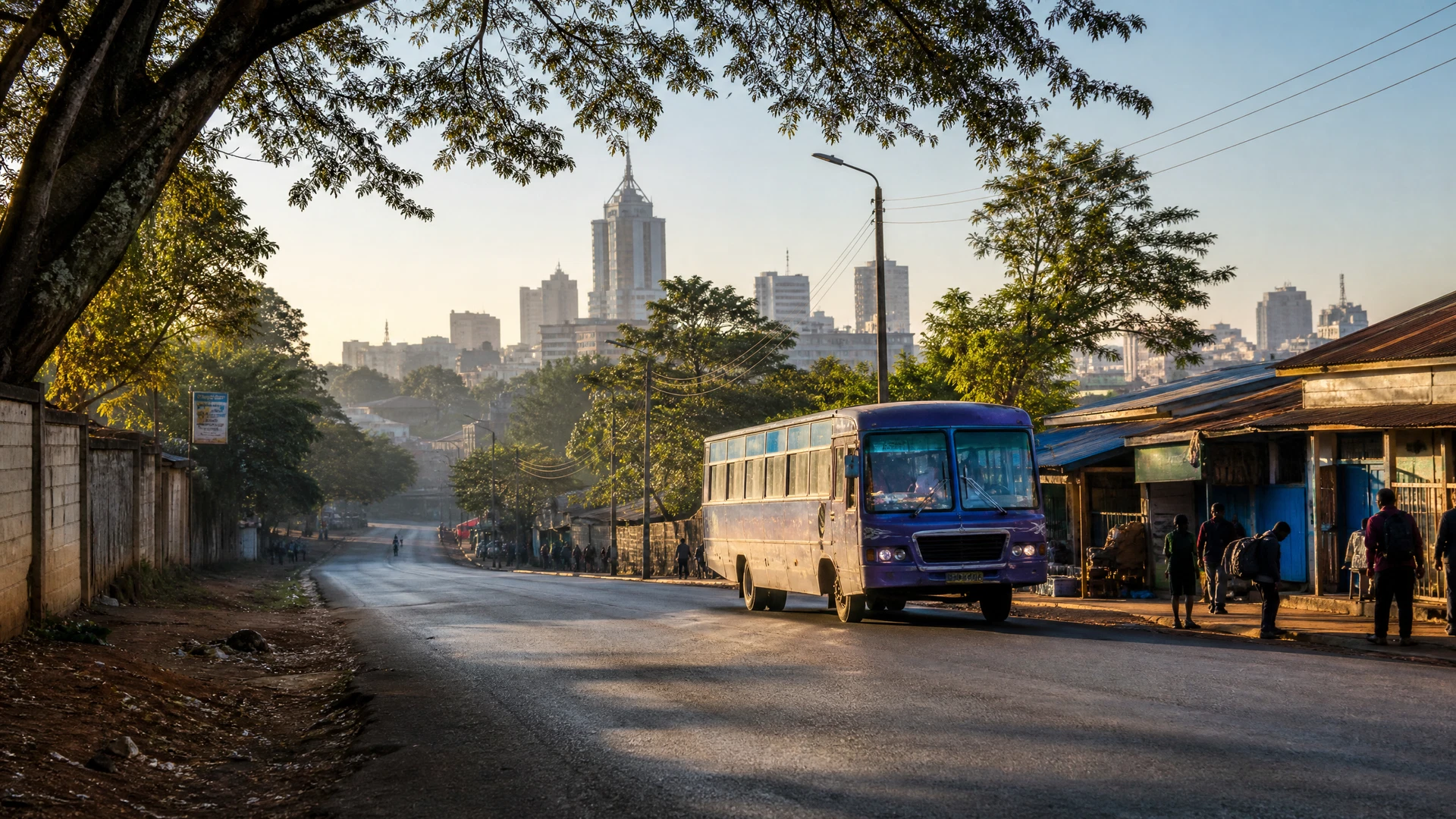
Nairobi refuses to be categorized, a restless metropolis serving as the beating heart of East Africa. Known as the Green City in the Sun, it presents a sensory overload from the moment of arrival. The air is a cocktail of red dust and the high-octane energy of a population always on the move. Unlike other global capitals that have paved over their natural heritage, Nairobi wears its wildness openly. It is perhaps the only place on Earth where you can witness a giraffe browsing on acacia leaves while the glass-and-steel towers of the Central Business District shimmer in the distance. This juxtaposition is the essence of the city's identity, a constant reminder that the ancient laws of the savannah and the frantic pace of modern life exist in a delicate, beautiful tension.
The most striking manifestation of this duality is Nairobi National Park. Located just seven kilometers from the city center, this four-hundred-square-mile sanctuary is a biological anomaly. To enter the park is to cross an invisible threshold; one moment you are navigating the clogged arteries of Lang'ata Road, and the next, you are watching a pride of lions stalk through the tall grass. The visual contrast is profound; a rhino might graze peacefully while a commercial jet descends toward the nearby airport. It challenges the conventional understanding of urban development, proving that nature does not have to be entirely displaced by concrete. For the visitor, it offers a surreal safari experience that requires no long-distance travel, grounding the city in a primordial reality.
Beyond its natural wonders, Nairobi has earned its reputation as the Silicon Savannah. This thriving tech ecosystem has transformed the city into a premier digital gateway for the continent. The energy is palpable in innovation centers like the iHub, which has birthed countless startups and attracted global tech giants. Here, a young, upwardly mobile generation is determined to leapfrog traditional development hurdles through digital solutions. This ambition permeates daily life, from the ubiquitous use of mobile money to sophisticated logistics networks. It is a city looking firmly toward the future, driven by a restless creative energy that is as infectious as it is ambitious, positioning Nairobi as a global leader in African innovation.
Nairobi's most iconic cultural expression remains the matatu. These customized minibuses, known as Manyangas, are mobile street art galleries and the lifeblood of the city's commute. To ride one is to experience Nairobi at its most raw. Each vehicle is a competitive performance art form, adorned with elaborate graffiti depicting pop stars and local heroes. Inside, booming sound systems and neon lights create a nightclub atmosphere that persists even in the morning rush hour. The matatu culture is a testament to the city's defiant creativity, a way for citizens to reclaim the streets and inject style into the urban grind. They are not just transport; they are the rhythmic pulse of the city's streets.
A sharp contrast to the high-decibel energy of the matatus is found in the tranquil Karen district. Named after author Karen Blixen, this area is characterized by sprawling estates and shaded avenues. It is home to the Giraffe Centre, where visitors can come face-to-face with the endangered Rothschild's giraffe. Nearby, the Kazuri Beads Factory provides a look at the city's social conscience, employing hundreds of local women to create hand-painted ceramic beads exported globally. In the quiet courtyards of Karen, the frantic pulse of the city fades into a soft hum, offering a space for reflection and a connection to the city's colonial and conservation-minded history, balancing the urban chaos with serene purpose.
As the sun sets, the focus shifts to Westlands, the city's cosmopolitan heart and nightlife epicenter. Westlands is a glittering testament to Kenya's growing middle class, where high-end shopping malls sit adjacent to sleek hotels. Rooftop bars offer vantage points to watch the urban lights flicker to life as the savannah sky turns purple. The nightlife is fast-paced and diverse, ranging from sophisticated jazz lounges to high-energy clubs where Afrobeats tracks keep the dance floors packed. In Westlands, the city's upward mobility is most visible, a place where global and local trends blend over artisanal cocktails. It represents the modern, aspirational face of a city that never truly sleeps.
Navigating Nairobi requires strategic patience, particularly regarding the legendary traffic. The gridlock is a shared urban experience, a time when the city seems to hold its breath. Peak hours, between 7:00 to 9:00 AM and 5:00 to 8:00 PM, are best avoided, as simple journeys can stretch into multi-hour ordeals. Yet, even in the standstill, there is a sense of resilience. Hawkers weave between cars, and the rhythmic honking creates a unique urban symphony. For the traveler, ride-hailing apps provide reliable safety, but there is an undeniable thrill in occasionally hopping onto a matatu outside of rush hour to truly feel the city's pulse. It is a lesson in the city's chaotic but enduring rhythm.
The rhythm of life is also dictated by the seasons. The dry seasons, from January to February and June to October, are the best times to visit, offering clear skies and optimal wildlife viewing. When the long rains arrive in April and May, the city's red dust turns into thick mud, and the lush greenery explodes into color. While the rains can be disruptive, they also bring renewal and a cooling respite from the sun. Regardless of the season, Nairobi remains a city of profound contrasts, where you can start your day tracking lions and end it discussing tech trends in a rooftop bar. This refusal to be one thing makes Nairobi endlessly fascinating.
Nairobi is not just a city to visit; it is an experience for all the senses. It is the smell of roasting maize, the vibrant colors of a matatu, and the sudden sight of a rhino against a backdrop of skyscrapers. It is a place where urban growth meets an indomitable spirit of innovation and respect for the natural world. To understand Nairobi is to understand the modern African story—a narrative of rapid change and enduring heritage. As you leave, the red dust might eventually wash off, but the memory of its creative and wild energy will linger, a wistful reminder of a place where the savannah and the city are inextricably one.