World city
The Victorious Dust of Cairo: A Journey Through the City of a Thousand Minarets
In the heart of Egypt, where the Nile carves a path through the sands of time, Cairo stands as a resilient megalopolis that bridges the gap between the medieval stone of Al-Muizz Street and the gleaming glass of the Grand Egyptian Museum, offering a sensory odyssey through layers of history and faith.
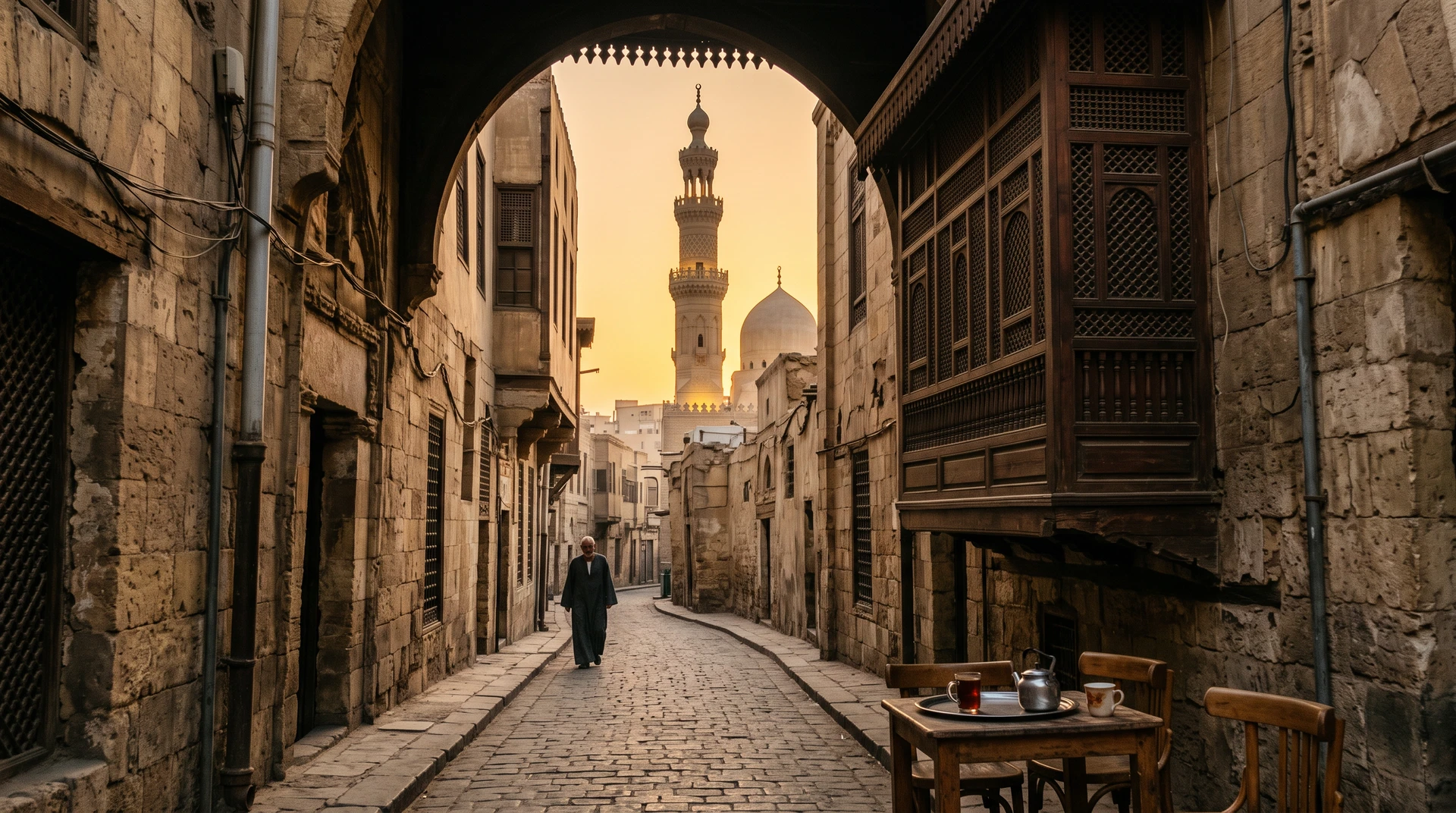
To arrive in Cairo is to step into a sensory whirlwind where the weight of five millennia of human history presses against the frantic energy of a 21st-century megacity. Known to its inhabitants as Al-Qāhirah, or "The Victorious," this is a place that triumphs over the desert dust and the relentless passage of time. The air is thick with the scent of roasted coffee and the ancient limestone of the Citadel, creating an atmosphere that is at once oppressive and exhilarating. As the Nile, the city's eternal silver artery, flows silently through the urban sprawl, it serves as a constant reminder of the civilizational lifeblood that has sustained this land since the dawn of history. Navigating the streets, one feels the juxtaposition of the eternal and the ephemeral, where donkey carts compete for space with high-speed metro trains and sleek rideshare vehicles under the watchful gaze of the Giza Plateau.
The historical heart of the city beats most fervently in Islamic Cairo, a dense labyrinth of medieval architecture that remains as vibrant today as it was in the 10th century. Walking down Al-Muizz Street is akin to traversing an open-air museum, where the stone facades of the Qalawun Complex and the intricate carvings of the Barquq Madrasa tell stories of Mamluk glory. Here, the "City of a Thousand Minarets" reveals its character through calligraphic inscriptions and geometric patterns adorning every archway. The air in the Khan el-Khalili bazaar is a heady mixture of jasmine, saffron, and the metallic tang of copper being hammered into lamps. As twilight descends, the warm amber glow of lanterns begins to spill into the streets, casting long shadows against the weathered masonry and creating a scene that feels plucked from a medieval manuscript, capturing the blurred, kinetic energy of the evening market.
A short distance away, the atmosphere shifts to the quiet, spiritual depth of Coptic Cairo. This enclave, nestled within the remains of the Roman-era Babylon Fortress, offers a profound descent into the city's early Christian heritage. The Hanging Church, suspended over the gatehouse of the ancient fortress, serves as a testament to the endurance of faith, its wooden roof designed to resemble the interior of Noah's Ark. Beneath the modern street level, the Crypt of the Holy Family provides a silent sanctuary where the Holy Family reportedly sought refuge during their flight into Egypt. The proximity of these sacred sites to the 7th-century Amr ibn al-As Mosque highlights the unique cultural identity of Cairo, where major religions have shared the same compact streets for over a millennium, creating a tapestry of coexistence that is both rare and deeply moving.
For those seeking a respite from the city's intensity, the Zamalek district on Gezira Island offers a lush, cosmopolitan escape. Surrounded by the waters of the Nile, Zamalek is a neighborhood of leafy boulevards, art deco apartment buildings, and sophisticated galleries that reflect Cairo’s mid-century influences. As the sun begins to set, the river becomes the stage for one of the city's most iconic experiences: a ride on a felucca. These traditional wooden sailboats glide silently across the water, offering a perspective of the skyline that is remarkably peaceful. From the deck of a felucca, the roar of the traffic fades into a distant hum, replaced by the gentle lapping of the river. The sight of the Cairo Tower illuminated against the indigo sky, while the lights of the riverfront reflect in the water, provides a moment of wistful contemplation amidst the city's restless evolution.
The narrative of Cairo is currently undergoing a dramatic new chapter with the integration of the Grand Egyptian Museum (GEM) near the Giza pyramids. This colossal project, a marvel of modern engineering, serves as a bridge between the ancient necropolis and the future of global tourism. The museum’s translucent stone facade echoes the geometry of the pyramids, while its interior houses the complete collection of Tutankhamun’s treasures in a setting that is as technologically advanced as it is aesthetically stunning. This new landmark does not replace the old city but rather anchors it, providing a state-of-the-art gateway to the mysteries of the pharaohs. The GEM represents Cairo's ambition to remain "The Victorious" in the modern era, ensuring that the city's unparalleled heritage is preserved with dignity even as the surrounding urban landscape continues its organic growth.
Practical navigation through this sprawling metropolis requires a blend of modern convenience and local intuition. While the historic quarters are best explored on foot to capture the tactile details of the masonry, the vast distances between districts are most efficiently managed through ridesharing apps like Uber or Careem. These services provide a transparent alternative to the often-negotiable rates of local taxis, allowing visitors to traverse the city's complex highway network with ease. For a truly local experience, the Cairo Metro offers a traffic-free link to the Coptic Quarter, depositing passengers at the Mar Girgis station in the heart of the historic district. Moving through Cairo is an exercise in patience and adaptability, but those who embrace the city's rhythmic disorder are rewarded with a deeper understanding of its resilient spirit and the enduring warmth of its people.
Timing a visit to Cairo is crucial to avoiding the oppressive heat that can define the Egyptian summer. Between October and April, the city sheds its sweltering mantle, offering mild temperatures that are perfect for long walking tours and outdoor exploration. During these months, the air is crisp, and the clear Egyptian sky highlights the dramatic silhouettes of the minarets and the desert plateau. The evening light during the winter months is particularly beautiful, casting a soft, golden hue over the city that softens the edges of the urban grit. It is during this season that the city's parks, such as Al-Azhar Park, become vibrant social hubs, where families gather to watch the sunset over the Citadel, the air filled with the sounds of life and the distant, melodic echoes of the evening call to prayer.
Ultimately, Cairo is a city of layers, a place where the past is never truly gone but is instead continuously repurposed. It is a city that demands much from its visitors—patience, curiosity, and a willingness to get lost in its dusty embrace—but it gives back in equal measure. Whether one is standing in the shadow of the Great Pyramid, sharing a tea in a hidden Zamalek cafe, or navigating the incense-filled aisles of a Coptic church, the sense of being at the center of the world is inescapable. Cairo remains a testament to human endurance and creativity, a megalopolis that has survived empires and revolutions without losing its soul. It is, and perhaps always will be, the victorious heart of the Arab world, a city that continues to write its story in the stone of its monuments and the spirit of its people.