World city
The Ochre Labyrinth: Finding the Soul of the Red City in Marrakech
Beneath the shadow of the Atlas Mountains, Morocco’s imperial heart beats within a sensory kaleidoscope of sun-baked earth, intricate zellige tiles, and the timeless call of the Medina.
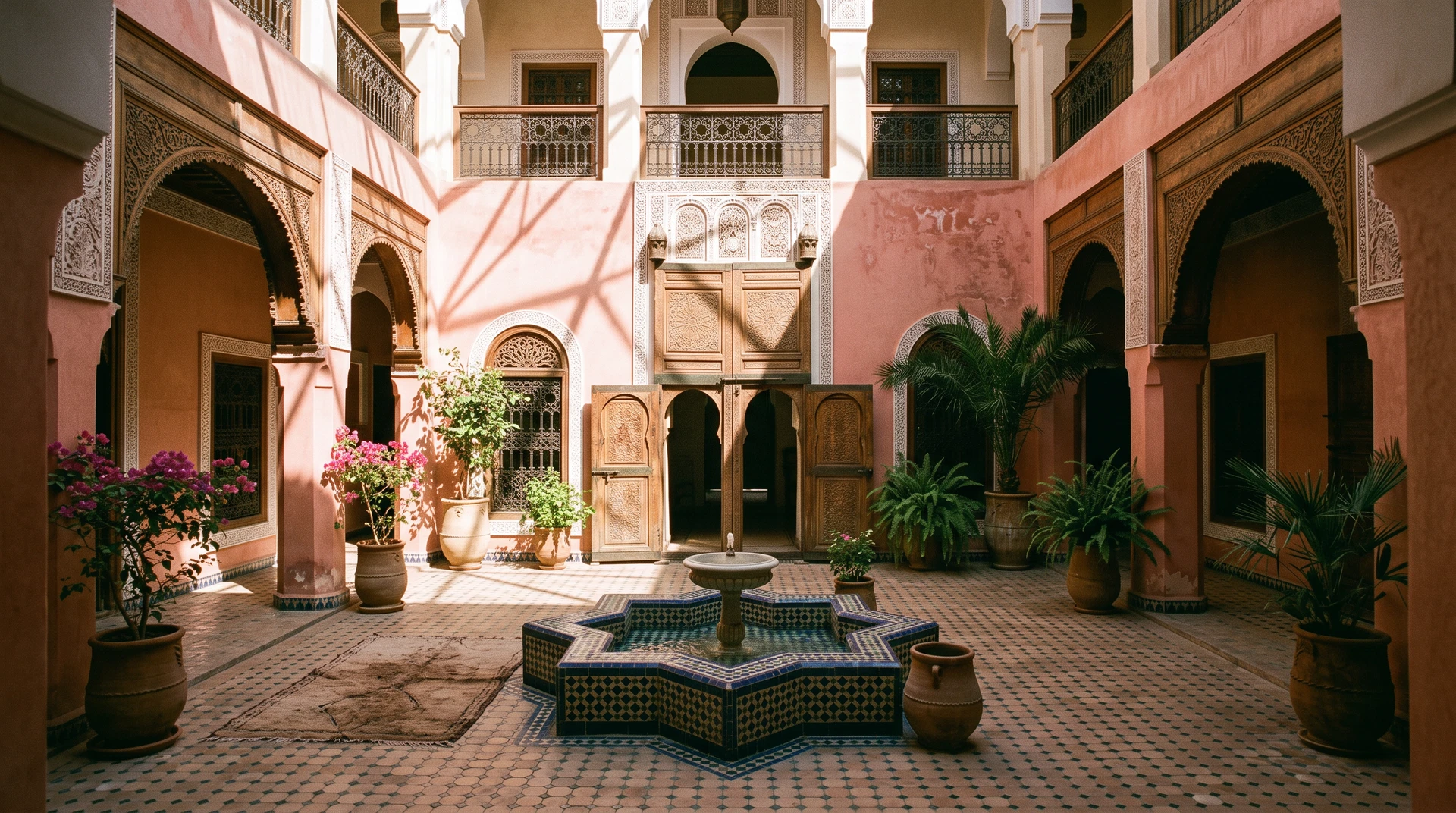
To arrive in Marrakech is to step into a city sculpted from the earth. Known as the “Red City,” its identity is tied to the iron-oxide-rich clay of the surrounding plains, used in the traditional tabia rammed-earth construction. As the sun sets, these ochre and salmon-colored walls absorb the light, radiating a deep warmth that transforms the Medina’s narrow alleys into corridors of fire and shadow. This architectural unity creates a visual harmony that grounds the visitor in a sense of place both ancient and immediate. It is a city where the ruggedness of the High Atlas foothills meets the refined elegance of an imperial capital, a dusty, vibrant metropolis breathing through its sun-baked pores.
The heart of this labyrinth is Jemaa el-Fnaa, a vast square that serves as the city’s theatrical soul. By day a bustling crossroads, it undergoes a dramatic metamorphosis at twilight. The air fills with smoke from charcoal grills as food stalls emerge, serving spiced snails and succulent tagines. The square becomes a stage for storytellers and musicians whose traditions stretch back to the city’s 12th-century foundations. To stand here is to experience a sensory twirl—a cacophony of drums, the call to prayer from the Koutoubia Mosque, and the enticing aromas of saffron. It is a place where oral traditions are lived out nightly, offering a visceral connection to Morocco’s storied past.
Deeper in the Medina, the open square gives way to the dense, shaded arteries of the souks. In Souk Semmarine, sunlight filters through slatted roofs, casting zebra-striped shadows across Berber carpets and hammered brass lanterns. The scent of the city shifts with every turn—from the earthy aroma of raw leather in the tanneries to the resinous perfume of cedarwood carved in hidden workshops. This is the commercial lifeblood of Marrakech, where ancient salt-trade routes once converged. Navigating these alleys requires surrendering to the city’s rhythm, flowing with the tide of shoppers and carts while engaging in the timeless art of negotiation that defines Moroccan social interaction.
The Mellah, or Jewish Quarter, adds a crucial layer to this complex history. Established in the 16th century, this district was the center of a thriving Jewish community instrumental in the trade of sugar and salt. Today, its narrow lanes and historic synagogues, like the Lazama, offer a reflective atmosphere compared to the main souks. The architecture here reflects a unique fusion of styles, speaking to the long-standing coexistence of diverse cultures within the city walls. Walking through the Mellah, one finds a sense of frozen time, where weathered facades and specialized shops remind visitors that Marrakech has always been a melting pot of Mediterranean, Saharan, and Andalusian influences.
For respite from the heat, the Majorelle Garden offers a surreal sanctuary. Restored by Yves Saint Laurent, this botanical masterpiece features over 300 plant species. The centerpiece is the electric cobalt-blue villa—Majorelle Blue—which provides a startling contrast to the lush greenery and terracotta paths. Within the garden, the Musée Berbère showcases the material culture of Morocco’s indigenous people, from intricate jewelry to textiles. This museum serves as a vital reminder that Marrakech’s foundations are deeply rooted in Berber traditions. It is a place of profound silence and visual brilliance, where architectural precision meets the organic wildness of the desert flora, offering a cool contrast to the surrounding city.
Marrakech’s architectural identity is a sophisticated fusion of Almoravid foundations and Andalusian artistry. This is evident in historic madrasas where desert austerity meets the intricate decorative styles of Muslim Spain. The use of zellige geometric mosaic tilework creates mesmerizing patterns, while elaborate stucco carvings and cedarwood ceilings showcase centuries-old craftsmanship. The 12th-century ramparts encircling the Medina are a testament to the city’s strategic importance, their massive forms providing a rugged frame for the delicate beauty within. This aesthetic harmony is the hallmark of the city, where the hidden courtyard of a riad offers a private paradise of fountains and orange trees, reflecting a cultural emphasis on interiority and spiritual peace.
Beyond the walls, the High Atlas Mountains are a constant reminder of the rugged landscape defining the region. On clear days, snow-capped peaks provide a stunning backdrop to the red-earthed city, creating a dialogue between the urban and the wild. This proximity has historically influenced the city’s climate, cuisine, and trade. The transition from the heat of the plains to the cool air of the Atlas reminds visitors of Marrakech’s role as a gateway between the Sahara and the Mediterranean. This unique positioning allowed the city to maintain its status as a cultural crossroads, where nomadic traditions are refined by the requirements of an imperial center, blending desert ruggedness with refined elegance.
Navigating Marrakech requires a blend of preparation and spontaneity. The optimal times to visit are spring and autumn, when temperatures are mild enough to explore the Medina on foot. Within the old city, walking is the primary option, as the narrow streets were not designed for motorized traffic. For longer journeys, beige petits taxis are standard, though fares should be negotiated or metered upfront. Culturally, the city values modesty; dressing to cover shoulders and knees is appreciated, especially in religious sites or traditional neighborhoods. Engaging with the city on its own terms—with patience, curiosity, and a sense of humor—is the key to unlocking the most rewarding and authentic Marrakchi experiences.
Ultimately, Marrakech is a sensory kaleidoscope that defies simple categorization. Every turn reveals a new layer of history, a new scent, or a new shade of red. From the theatrical energy of Jemaa el-Fnaa to the silent depths of the Majorelle Garden, the city offers a profound exploration of the human spirit’s ability to create beauty in a harsh environment. It is a place where the past is a living presence, felt in the texture of a hand-carved door or the taste of a perfectly spiced tagine. To leave Marrakech is to carry the warmth of its ochre walls, a wistful reminder of a world where tradition and modernity coexist in beautiful balance.