World city
The Luminous Melancholy of the City of Layers
Between two continents and three empires, Istanbul remains a city of profound echoes, where the salt-spray of the Bosphorus carries the weight of history and the quiet pulse of a modern metropolis.
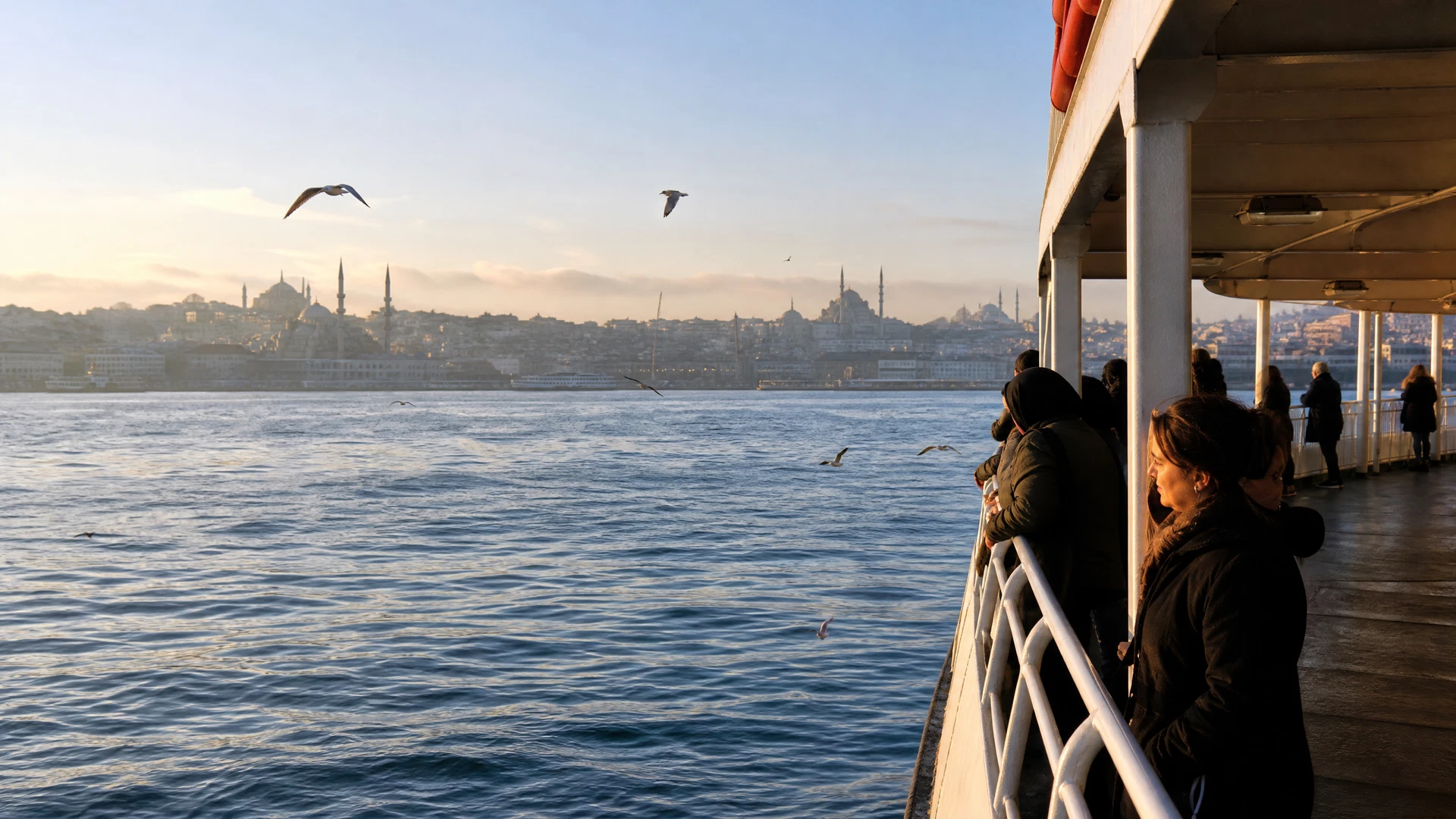
The crossing from Europe to Asia is not merely a geographic transition in Istanbul; it is a ritual performed daily by millions. As the public ferry pulls away from the salt-worn docks of Eminönü, the churning wake of the Bosphorus becomes a liquid boundary between the ancient and the immediate. The air is thick with the scent of roasted chestnuts and the sharp, briny tang of the Marmara Sea, a sensory overture to a city that has served as the capital of three successive empires. From the deck, the skyline reveals itself as a beautiful contradiction—a forest of minarets and modern glass towers competing for space against a sky that often turns a bruised, violet hue at twilight. This is the "City of Layers," a place where the passage of time is measured in the accumulation of civilizations, each built directly atop the bones of its predecessor.
To understand Istanbul is to embrace the concept of hüzün, a uniquely Turkish form of communal melancholy that permeates the very stones of the city. Popularized by Nobel laureate Orhan Pamuk, hüzün is a shared aesthetic, a wistful recognition of imperial grandeur faded into the weathered textures of the present. It is found in the peeling paint of a row house in Balat and in the gray, misty light that settles over the Bosphorus during winter. This sentiment does not weigh the city down; rather, it gives it a profound, resonant depth. The visitor who wanders through the backstreets will see Roman cisterns hidden beneath shops and Byzantine mosaics peeking through the plaster of Ottoman mosques. This constant juxtaposition of the monumental and the mundane creates a living museum where history is not curated behind glass, but lived in and walked through every day.
Venturing into the districts of Balat and Fener along the Golden Horn offers a glimpse into the multi-ethnic tapestry that once defined the Ottoman capital. These neighborhoods, characterized by steep, cobblestone alleys and vibrant, candy-colored houses, were historically the heart of the city’s Greek Orthodox and Jewish communities. Today, they remain a labyrinth, where laundry lines stretch across narrow streets and the sound of children playing echoes off the red-brick walls of the Phanar Greek Orthodox College. There is a quiet, domestic intimacy here that stands in contrast to the sprawling grandeur of the Sultanahmet Archaeological Site. In Balat, the layers of history are tactile; you can feel centuries of footsteps in the uneven paving stones and see the remnants of a vanished world in the intricate ironwork of a forgotten synagogue’s gate.
Across the water on the Asian side, the neighborhood of Moda in Kadıköy offers a different, more contemporary rhythm. If the European side is defined by its weight of history, Moda is defined by its breath of fresh air. Here, the secular pulse of modern Istanbul beats in independent bookshops, third-wave coffee houses, and seaside tea gardens where locals gather to watch the sunset over the Marmara Sea. The journey to Moda via the Bosphorus Ferry is perhaps the most scenic commute, a transcontinental voyage that costs no more than a few liras. In the evening, the promenade comes alive with music and the low hum of conversation, a testament to the city’s enduring capacity for renewal. Moda represents the Istanbul that looks forward, where the creative energy of a new generation finds a home amidst ancient traditions.
The architectural silhouette of Istanbul is dominated by the Hagia Sophia and the Blue Mosque, two titans that have faced each other across Sultanahmet Square for centuries. The Hagia Sophia, with its massive dome that seems to float on a ring of light, is the ultimate expression of the city’s layered identity—originally a cathedral, then a mosque, then a museum, and now a mosque again. Its interior is a collision of Christian seraphim and Islamic calligraphy, a visual dialogue between two of the world’s great faiths. Nearby, the Basilica Cistern offers a subterranean descent into the Roman past, where hundreds of marble columns rise from the shallow water, their bases resting on the inverted heads of Medusa. These sites are the anchors of the city, providing a sense of permanence in a metropolis otherwise characterized by restless, shifting energy.
One cannot truly experience Istanbul without spending time on the Bosphorus, the narrow strait that connects the Black Sea to the Mediterranean. The shores are lined with yalis, the weathered wooden mansions built by the Ottoman elite as summer retreats. These structures, many of which appear to be held together by little more than history and salt air, are the physical embodiment of the city’s wistful elegance. As the ferry glides past, one can see the intricate woodwork and the expansive windows designed to capture the "Bosphorus light," a quality of illumination that has inspired poets and painters for generations. The water itself is the city’s primary artery, a churning, deep-blue expanse that dictates the climate, the cuisine, and the very mood of the people who live along its banks.
For the modern traveler, navigating this vast urban sprawl is made possible by the Istanbulkart, a smart card that serves as the key to the city’s integrated transit network. Whether boarding a historic tram on Istiklal Avenue or descending into the Marmaray undersea rail, the card provides a seamless link between the disparate parts of the metropolis. Timing a visit is crucial to capturing the city’s most evocative moods. In April and May, the city erupts in color during the annual tulip bloom, a reminder that these flowers originated in the Ottoman Empire. Alternatively, the months of September and October offer a crisp, golden clarity, when the humidity of the summer has lifted and the Bosphorus currents are at their most active, drawing schools of fish and pods of dolphins into the heart of the city.
Istanbul is not a city that reveals its secrets easily; it requires a willingness to get lost, to drink glasses of dark tea in crowded squares, and to listen to the call to prayer as it echoes across the water at dusk. It is a place of profound contradictions, where the neon lights of a shopping mall might illuminate the ruins of a Genoese wall, and where the most cutting-edge fashion is sold just steps away from a centuries-old spice market. Despite its size and its chaos, there is a persistent sense of belonging that ties the residents to their city. It is a bond forged in the shared experience of hüzün and the collective pride in a heritage that is as vast as the horizon. To leave Istanbul is to carry a piece of its salt-spray and its silence with you, a reminder that in the City of Layers, the past is never truly gone.