World city
The Gilded Mist of Taipei: Where Ancient Incense Meets the Neon Sky
Between the volcanic steam of Beitou and the towering glass of Xinyi, Taipei reveals itself as a city of quiet persistence, where the rituals of the Qing Dynasty breathe alongside a hyper-efficient modern pulse.
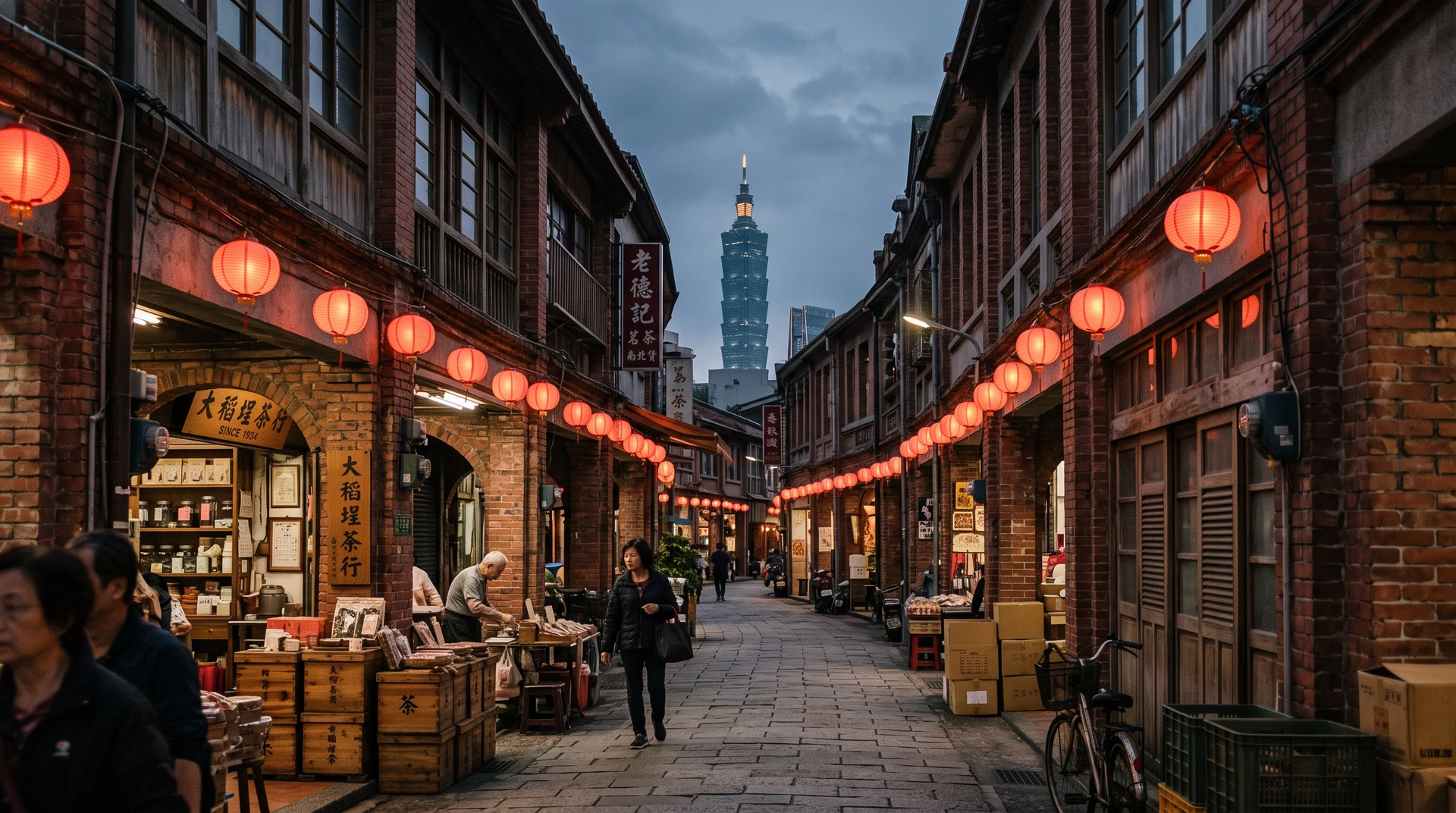
Taipei does not demand your attention with the aggressive grandeur of other Asian capitals; instead, it invites you into a lived-in authenticity that feels both intimate and infinite. To arrive in this subtropical basin is to step into a sensory landscape where the humidity carries the faint, sweet scent of jasmine and the low hum of thousands of scooters. It is a city that balances on the edge of a storied maritime past and a tech-driven future, a place where history is etched into the very grain of its weathered brickwork. Here, the urban identity is not a polished facade for tourists but a vibrant, democratic rhythm that integrates ancient customs into the daily lives of its people. As the sun dips below the surrounding emerald mountains, the city transforms into a cinematic tapestry of neon and mist, revealing a character that is as resilient as it is refined.
The historical heart of this narrative beats most clearly in Dadaocheng, a district where the ghosts of the Qing Dynasty still linger in the architecture of Dihua Street. Walking through these narrow corridors, one is transported to an era when Taipei was a flourishing hub for the global tea and medicinal herb trades. The Baroque facades and traditional shophouses, with their deep interiors and hidden courtyards, remain active centers of commerce, their shelves overflowing with dried mushrooms and crates of jasmine tea. There is a profound sense of continuity here; the same families have often occupied these spaces for generations, preserving a heritage that survived colonial shifts and rapid modernization. In the soft light of dusk, as traditional red lanterns begin to glow against the weathered red bricks, the district feels like a living museum, a fragrant bridge to a time when the river was the city's primary lifeblood.
A short distance away, the spiritual pulse of the city finds expression at Lungshan Temple, where tradition seamlessly integrates into the modern convenience lifestyle. It is a common sight to see office workers in sharp suits pausing here to offer incense before heading to their next appointment. This coexistence of the sacred and the secular is complemented by the city’s ubiquitous 24-hour convenience stores, which function as essential social nodes for everything from bill payments to fresh meals. This hyper-efficiency is not born of a cold drive for progress but of a cultural value placed on social harmony and the minimization of friction in daily life. Whether through spiritual rituals or the spotless efficiency of the MRT, Taipei’s systems reflect a society that prizes order and mutual respect, creating an environment where even the densest urban spaces feel manageable and humane.
To understand the city’s deeper, more contemplative layers, one must travel north to the geothermal retreat of Beitou. Here, the landscape shifts into a dreamlike realm of volcanic mist and sulfuric steam, a legacy of the Japanese colonial period that introduced a sophisticated bathing culture to the island. The Hell Valley geothermal vent, with its roiling turquoise waters and thick white plumes, provides a stark, primordial contrast to the neon-lit streets of the city center. In Beitou, the pace of life slows to the rhythm of the hot springs, and the architecture reflects a nostalgic aesthetic of wooden bathhouses and stone pathways. This district serves as a vital sanctuary for the city’s inhabitants, a place to shed the stresses of the metropolis and reconnect with the elemental forces of the earth. The lingering scent of sulfur and the sight of steam rising through the lush green foliage create an atmosphere of quiet melancholy.
In sharp contrast to the serene mists of Beitou, the Ximending pedestrian zone offers a high-energy explosion of contemporary youth culture and street art. Often referred to as the Harajuku of Taipei, this neon-drenched district is a vibrant laboratory for subcultures, where the latest trends in fashion and technology are on full display. The walls are adorned with sophisticated murals that reflect the city’s thriving creative scene, and the streets are alive with the energy of performers and vendors. Ximending is where Taipei’s futuristic, tech-driven pulse is most visible, a place where the boundaries between the digital and physical worlds seem to blur. Yet, even here, the city’s historical layers are present, with the iconic Red House theater standing as a sentinel of the past amidst the swirling tides of modern consumerism. It is this constant dialogue between the old and the new that gives Taipei its distinctive energy.
Navigating this complex urban landscape is made effortless by what is arguably the world’s most efficient public transportation system. The Taipei MRT is a model of civic pride, known for its absolute cleanliness and the quiet courtesy of its passengers. Complementing the rail network is the ubiquitous YouBike system, which allows residents and visitors alike to traverse the city’s many neighborhoods on two wheels, utilizing the seamless EasyCard for every transaction. This commitment to public infrastructure reflects a broader societal ethos of collective responsibility and shared space. As you glide through the city on a bicycle, passing through quiet residential alleys and bustling commercial thoroughfares, you begin to appreciate the intricate clockwork that allows Taipei to function so smoothly. It is a city that has mastered the art of being both a global technological powerhouse and a deeply livable, human-scale community that prioritizes the quality of daily life for all its citizens.
Ultimately, the true magic of Taipei lies in its ability to remain wistful even as it races toward the future. It is a city that remembers its roots in the maritime trade and the spiritual traditions of its ancestors, even as it builds some of the world’s tallest skyscrapers and most advanced semiconductors. This duality creates a unique urban poetry, a sense that every modern advancement is grounded in a deep, enduring heritage. Whether you are watching the morning mist rise over the hot springs of Beitou or seeing the lights of Taipei 101 pierce through the evening haze, you are witnessing a city that has found a way to be both ancient and avant-garde. Taipei is a place of quiet surprises and profound depth, a destination that rewards those who take the time to look beneath its neon surface. It is a testament to the enduring power of culture in a rapidly changing world.