World city
The Neon Palimpsest of Seoul
A journey through the industrial heart of South Korea’s capital, where the relentless drive of the pali-pali ethos meets the quiet, weathered beauty of neo-industrial regeneration and hidden hanok villages.
When the humidity of a sweltering Korean summer finally breaks, a phenomenon known as "Seoul Blue" descends upon the capital. In November, the sky transforms into a deep, crystalline azure that provides a stark, cinematic backdrop for the city’s dramatic seasonal shift. As the urban canopy ignites with shades of ochre and crimson, the air turns crisp, carrying the scent of roasted chestnuts and the faint, metallic tang of the city’s industrial undercurrents. This is the moment when Seoul reveals its most reflective self, standing at the intersection of a storied past and a hyper-accelerated future. For the visitor, this atmospheric grounding is essential to understanding a metropolis that never truly sleeps, yet possesses pockets of profound, weathered stillness. It is a city where the high-gloss sheen of glass skyscrapers is constantly challenged by the gritty, red-brick reality of its manufacturing roots.
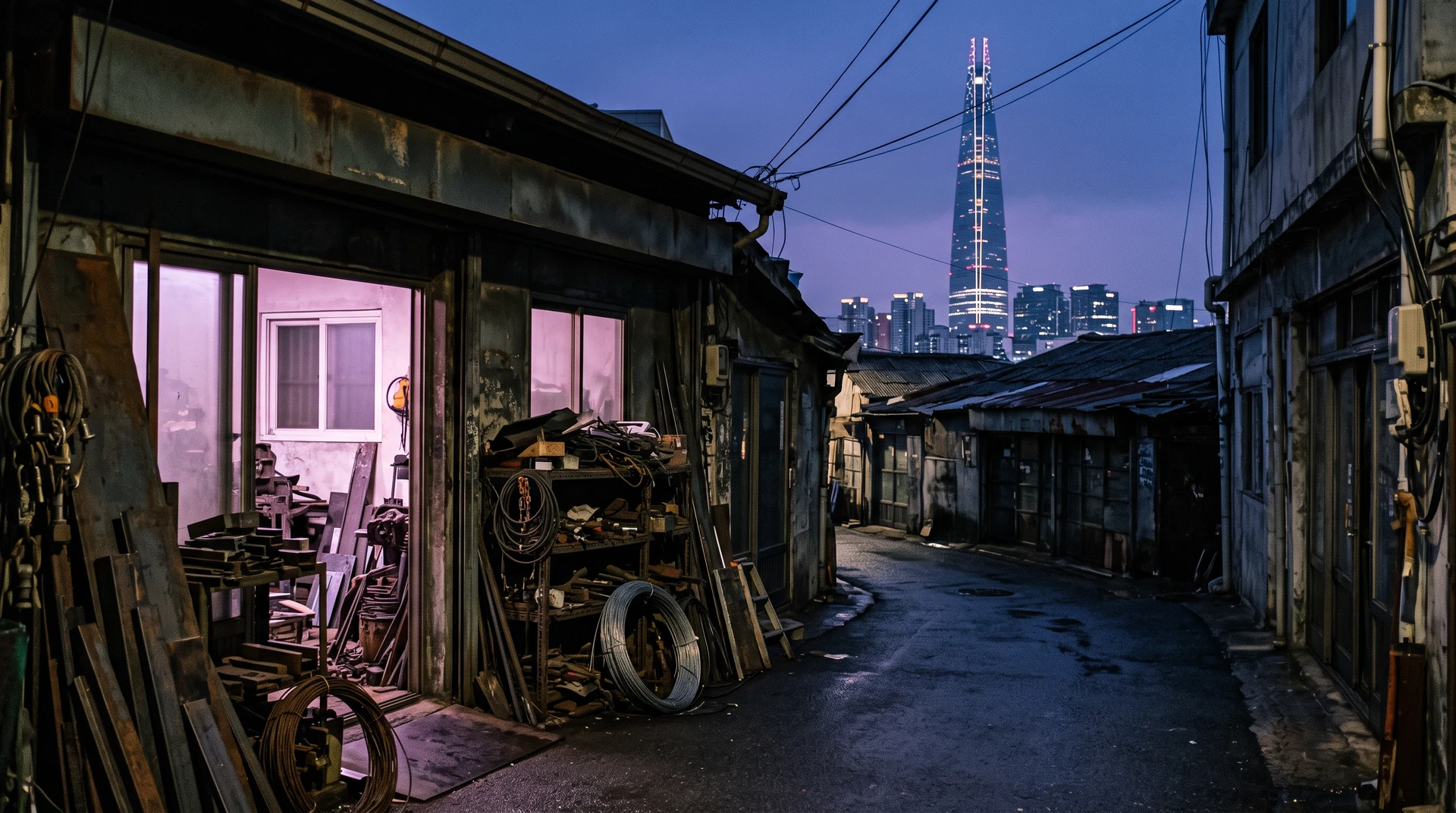
The pulse of this transition is dictated by a cultural engine known as 'Pali-pali,' or the 'hurry-hurry' ethos. This relentless drive for progress has seen Seoul rise from the ashes of conflict to become a global leader in technology and design in just a few short decades. For the traveler, this energy is palpable in the way the skyline seems to shift with every visit, as ephemeral trends rise and fall with breathtaking speed. Yet, this very speed creates a poignant contrast with the enduring weight of Korean tradition. The 'Pali-pali' spirit is not merely about haste; it is a collective urgency that pushes the city to reinvent itself daily. In the shadow of the Lotte World Tower, one can still find the slow, deliberate brewing of traditional tea, reminding us that even in a city obsessed with the next second, the past refuses to be entirely overwritten.
Nowhere is this neo-industrial regeneration more evident than in Seongsu-dong. Once the city’s primary hub for shoe manufacturing, this district has undergone a transformation that prioritizes the preservation of its gritty heritage over wholesale demolition. Walking through its streets, one encounters sprawling red-brick warehouses that have been repurposed into avant-garde galleries and sprawling cafes. The textures here are intentional: weathered wood, exposed steel beams, and the rough patina of aging masonry serve as a canvas for Seoul’s restless creative evolution. In Seongsu-dong, the "quiet luxury" aesthetic is found in the thoughtful reuse of industrial space. It is a place where young designers gather to celebrate the district's blue-collar history, ensuring that the stories of the craftsmen who once built this neighborhood are not lost to the march of modern gentrification.
A short subway ride away, the district of Euljiro offers a more clandestine version of this industrial alchemy. Known to locals as 'Hip-jiro,' this neighborhood is a labyrinth of active metal workshops where the air is thick with the smell of machine oil and the sound of grinding steel. By day, it is a bustling center of trade; by night, it transforms into a hidden playground for the city’s creative class. Clandestine bars and intimate restaurants are tucked behind unmarked doors and between stacks of scrap metal, creating a sense of discovery that is rare in the age of global GPS. Here, the 'Wistful Ink' theme of urban solitude is most acute. A visitor might find themselves sipping a meticulously crafted artisanal cocktail while watching a third-generation machinist finish a day’s work just feet away. This juxtaposition is not a performance, but a genuine, messy coexistence.
In contrast to the industrial grit of Euljiro, the Ikseon-dong hanok village offers a nostalgic retreat that feels frozen in time. This labyrinthine enclave of traditional Korean houses, or hanoks, dates back to the 1920s and stands as a defiant pocket of low-slung architecture amidst a sea of surrounding skyscrapers. The narrow alleys of Ikseon-dong are a sensory delight, where traditional tea houses and boutique shops occupy structures that have remained largely unchanged for a century. The atmosphere here is one of intimate, quiet beauty, where the sound of the city’s traffic fades into the background, replaced by the soft clink of ceramic cups and the rustle of leaves in hidden courtyards. Ikseon-dong captures the city’s ability to protect its soul while the world around it changes, offering a sanctuary where the 'wistful' nature of memory is preserved in every weathered timber and tiled roof.
This quietude, however, is always balanced by 'Heung'—an innate collective energy that serves as the city’s emotional battery. 'Heung' is the spirit that fuels Seoul’s neon-drenched nightlife and its world-conquering cultural exports. It is the joy found in a crowded pojangmacha (street food tent) over a bottle of soju, the electric atmosphere of a late-night karaoke room, and the vibrant energy of the city’s markets. This collective enthusiasm is the counterweight to the city’s melancholic industrial spaces, a reminder that Seoul’s evolution is driven by a people who possess a profound capacity for both deep reflection and exuberant celebration. Whether it is the glow of a violet neon sign reflecting in a rain-slicked puddle or the roar of a crowd in the Hongdae district, 'Heung' is the invisible thread that connects the city’s disparate parts into a cohesive, vibrant whole.
As the sun sets over the Han River, casting long shadows across the city’s mix of ancient palaces and futuristic towers, one is left with a sense of Seoul’s enduring spirit. Navigating this dense metropolis is facilitated by an ultra-efficient subway network, yet the city’s true heart is found in its intricate web of alleys best explored with local tools like Naver Maps. The neo-industrial regeneration of Seoul is not just about architecture; it is about a people who refuse to forget where they came from even as they race toward where they are going. In the quiet moments—a twilight drizzle in an Euljiro alley, the reflection of a neon sign in a puddle, the silhouette of a solitary figure against a looming skyscraper—the city speaks of historical transition and urban solitude. Seoul is a place of beautiful contradictions, a destination that invites you to lose yourself in its pace and find yourself in its stillness.