World city
The Quiet Pulse of the Labyrinth: A Journey Through Tokyo’s Hidden Villages
Beyond the neon-drenched skyscrapers and the rhythmic hum of the Yamanote line lies a Tokyo defined by its contradictions—a sprawling metropolis that functions as a collection of intimate, historic neighborhoods where Edo-period nostalgia and avant-garde creativity coexist in a delicate, enduring balance.
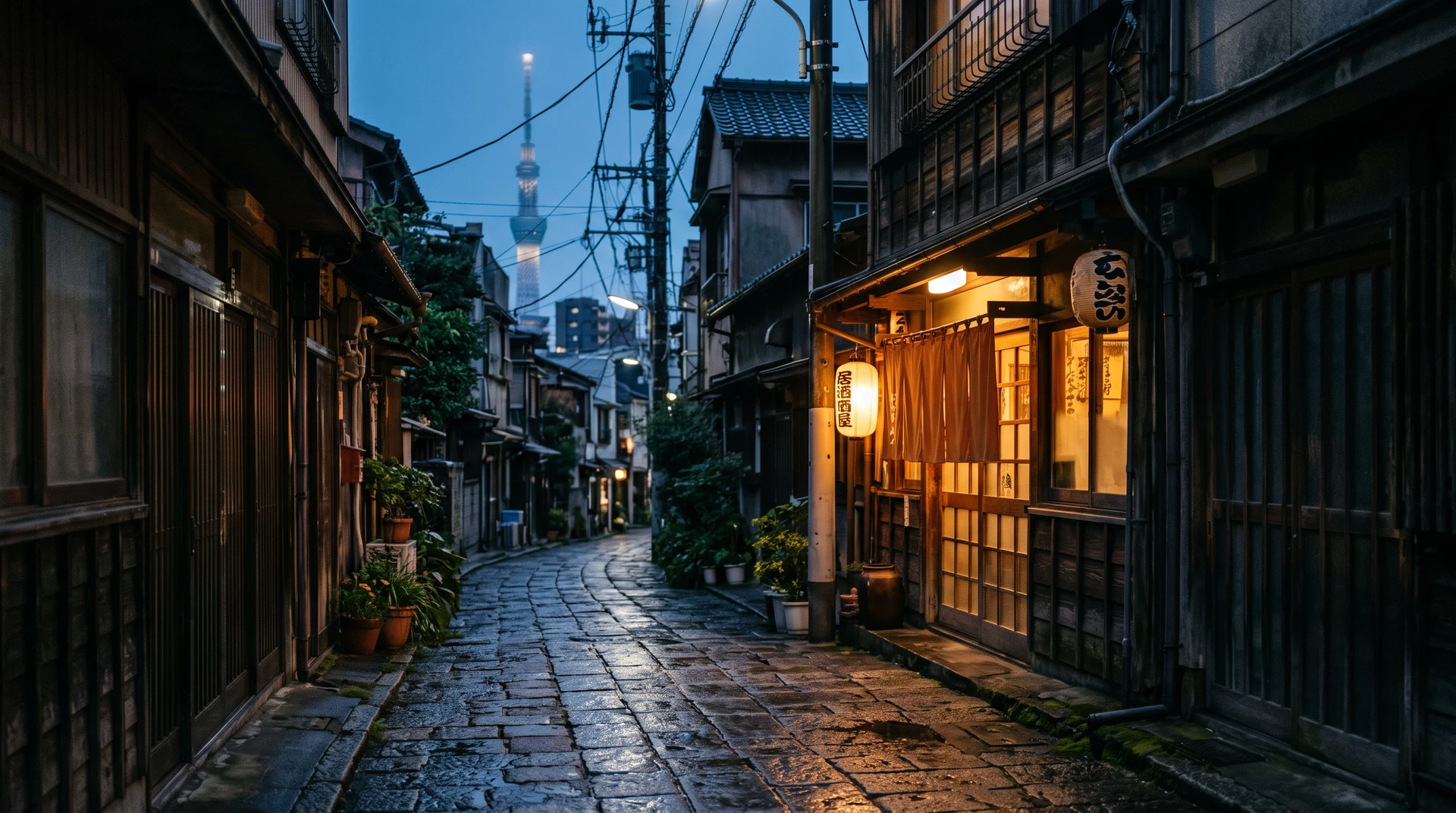
To the uninitiated, Tokyo presents itself as a singular, overwhelming monolith of neon and steel, a restless engine of modernity that never sleeps. Yet, to walk its streets is to discover that the city is not a single entity at all, but rather a vast constellation of self-contained villages, each possessing a distinct soul and a different tempo. This polycentric structure is the secret to Tokyo’s enduring allure; it is a place where hyper-density and hidden tranquility are not opposing forces, but complementary layers of the same urban fabric. From the towering heights of Shinjuku to the silent, moss-covered corners of a neighborhood shrine, the city operates on a principle of 'Old Meets New' that feels less like a collision and more like a continuous, graceful conversation. It is a labyrinth that invites the visitor to lose themselves, knowing that every wrong turn might lead to a centuries-old wooden gate or a cutting-edge gallery tucked behind a vending machine.
Nowhere is this sense of historical preservation more palpable than in Yanaka, a district that serves as the 'shitamachi' heart of northern Tokyo. Spared from the devastating bombings of the Second World War, Yanaka remains a living museum of postwar atmosphere, characterized by narrow alleys and low-slung wooden houses that lean into one another with familiar intimacy. The Yanaka Ginza shopping street is the neighborhood’s social spine, where the gentle chime of bicycle bells and the smell of freshly fried croquettes create a nostalgic rhythm. At the top of the 'Sunset Steps,' or Yuyake Dandan, locals and visitors alike gather at twilight to watch the sun dip below the rooftops, casting a warm, amber glow over a landscape that has remained largely unchanged for decades. Here, the pace of life slows, and the city’s past is written in the weathered textures of temple walls and the quiet dignity of the Yanaka Cemetery.
A short journey toward the city’s center leads to Jimbocho, a neighborhood that engages the senses in a completely different, yet equally evocative, manner. Known globally as the largest book town in the world, Jimbocho is a sanctuary for the written word, housing hundreds of second-hand bookstores that spill their treasures onto the sidewalks in organized, paper-scented chaos. The district’s history is inextricably linked to the intellectual life of Tokyo, named after a 17th-century samurai, and it has survived modernization to remain a bastion of analog culture. But Jimbocho is as much about the palate as it is about the page. The air here is thick with the piquant, complex aroma of curry, a culinary tradition that took root among the area’s students and scholars. At Kyoeido, which has been serving its signature deep black, Sumatran-style curry since 1924, the act of eating is a quiet ritual that mirrors the contemplative nature of the surrounding bookshops.
In contrast to the scholarly hush of Jimbocho lies Shimokitazawa, a creative hub that pulses with the restless energy of Tokyo’s youth subcultures. Once a postwar black market, 'Shimokita' has evolved into a bohemian paradise renowned for its dense concentration of vintage boutiques, indie theaters, and live music venues. The neighborhood’s geography was recently transformed when the Odakyu Line was moved underground, giving rise to innovative developments like 'Reload' and 'Mikan Shimokita,' which blend modern architectural aesthetics with the area’s gritty, independent spirit. Despite these changes, the essence of Shimokitazawa remains rooted in its labyrinthine backstreets, where one can find rare vinyl records, hand-curated thrift fashion, and tiny 'live houses' that serve as incubators for the next generation of Japanese musicians. It is a place of constant reinvention, where the ephemeral nature of modern trends is grounded by a fierce commitment to community and creative expression.
This duality of existence—the coexistence of the monumental and the miniature—is the defining characteristic of Tokyo’s urban identity. It is not uncommon to find a centuries-old Shinto shrine, like the vermillion-pillared Nezu-jinja, standing in the literal shadow of a glass-and-steel office tower. These spaces of 'hidden tranquility' function as the city’s lungs, providing a necessary spiritual respite from the hyper-dense environment that surrounds them. The transition between these worlds is often seamless; a visitor might step off a crowded, high-tech train and, within minutes, find themselves walking down a silent residential lane where the only sound is the rustle of bamboo leaves.
Navigating this vast metropolis is facilitated by a transit system that is arguably the most efficient in the world, yet it remains a sensory experience in itself. The key to mastering Tokyo lies in the rechargeable IC cards, Suica or Pasmo, which allow for seamless transfers between the labyrinthine Tokyo Metro network and the elevated JR lines. The Yamanote loop, a green-trimmed lifeline that circles the city’s central districts, provides a reliable orientation point amidst the urban sprawl. At the 'blue hour' of twilight, the city undergoes a cinematic transformation, as the harsh glare of the day gives way to a soft, diffused luminescence that blurs the edges of the skyscrapers. The light catches the steam rising from a ramen stall and the sharp, clean lines of a contemporary art installation, creating a visual texture that is both gritty and ethereal.
Timing a visit to Tokyo is an exercise in appreciating the transience of beauty, a concept deeply embedded in the Japanese psyche. The shoulder seasons of spring and autumn offer the most profound atmospheric grounding, as the city’s parks and gardens undergo dramatic transformations. In late March, the cherry blossoms (sakura) erupt in a fleeting cloud of pale pink, turning spaces like Ueno Park into sites of collective celebration and quiet reflection on the impermanence of life. Conversely, the autumn months of October and November bring the 'koyo' foliage, when the maples of Rikugien Garden turn a fiery, brilliant red against the darkening sky. Avoiding the oppressive humidity and torrential rains of the summer months allows the visitor to engage with the city’s outdoor spaces more comfortably, witnessing the seasonal rituals that have dictated the rhythm of Tokyo life for centuries.
Ultimately, Tokyo is a city that offers the rare gift of solitude in the midst of a crowd. It is a place where one can be surrounded by millions and yet find a corner of the world that feels entirely their own. Whether it is a quiet stool at a three-seat bar in Golden Gai, a sun-dappled bench in the East Gardens of the Imperial Palace, or a solitary walk through the neon canyons of Akihabara, the city accommodates every mood and every pace. The story of Tokyo is an ongoing narrative that each visitor contributes to, a journey through a labyrinth that leads not to a center, but to a deeper understanding of how the past and the future can inhabit the same moment.