Music
Listening rooms are bringing back the art of an uninterrupted album.
As digital streaming encourages a culture of skips and shuffles, a new wave of dedicated listening rooms is reclaiming the album as a singular, immersive experience. These spaces prioritize acoustic precision and collective silence, turning the act of hearing into a deliberate ritual of shared attention.
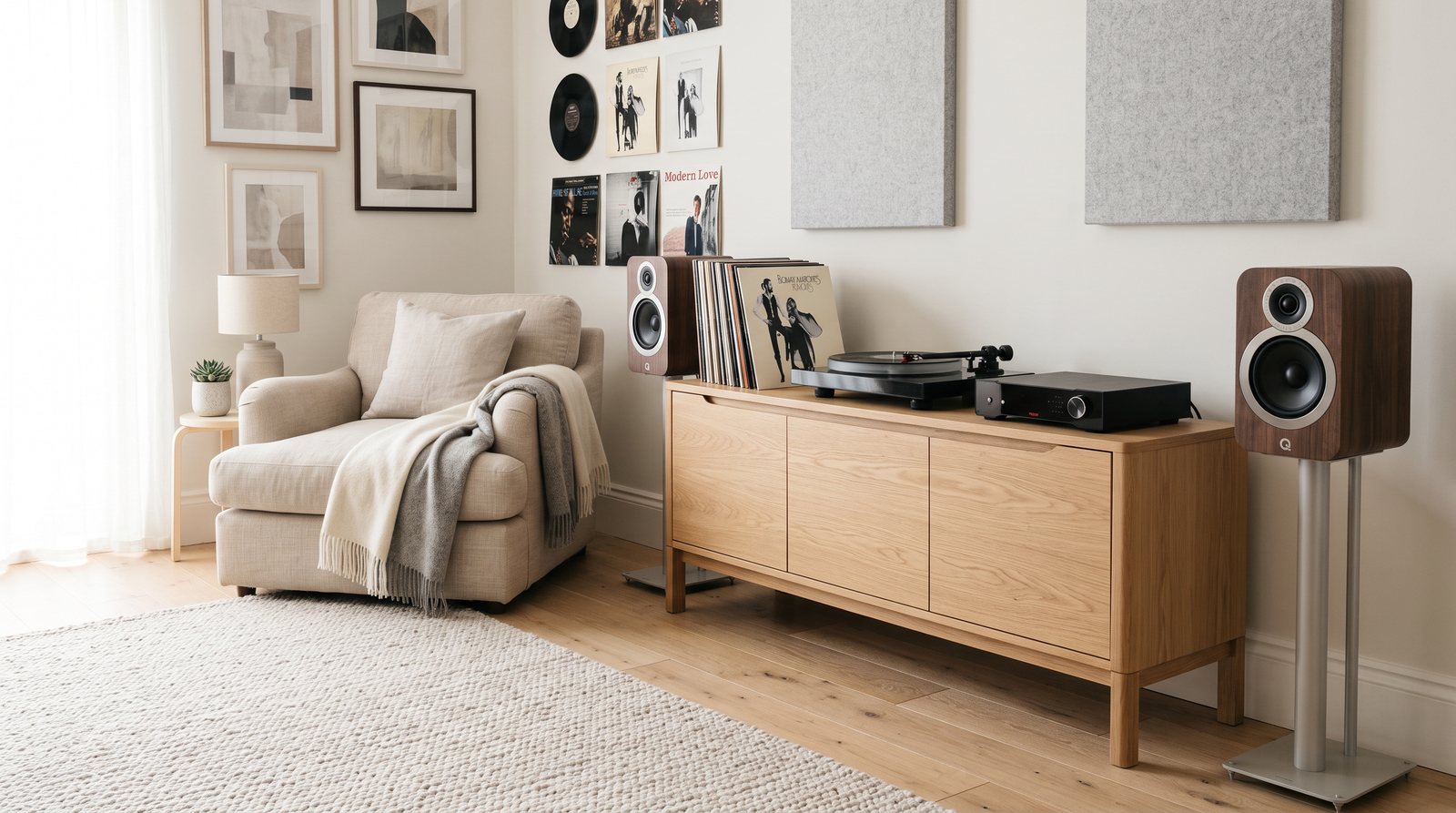
The modern musical landscape is defined by frictionless accessibility, where millions of tracks are available at a touch, yet this ease has fundamentally altered how listeners engage with the medium. As streaming algorithms prioritize individual songs and curated playlists, the concept of the album as a cohesive narrative has begun to erode. In response to this fragmentation, a significant movement is taking hold in urban centers: the return of the dedicated listening room. These spaces are not merely bars with better sound systems; they are environments designed for the singular purpose of facilitating deep, uninterrupted attention to music. By removing the distractions of the digital interface and the social pressures of traditional nightlife, listening rooms are reclaiming the act of hearing as a primary activity rather than a background texture.
The lineage of these spaces traces back to the *jazz kissa* of post-war Japan, small establishments where patrons gathered to listen to imported records on high-end equipment in near-total silence. In a period when international vinyl was prohibitively expensive and residential space was limited, these cafes provided a vital communal resource for cultural exploration. The modern listening room carries this heritage forward, adapting the *kissa* spirit to a context where scarcity is no longer the music itself, but the time and focus required to appreciate it. From Tokyo to London and Brooklyn, the philosophy remains consistent: the music is the host, and the audience is there to witness it with a level of care that is increasingly rare in the age of the skip button.
Architecture and acoustics are the silent partners in this experience, as the physical design of a listening room is engineered to minimize the distance between the recording and the listener. Unlike a club built for high-volume energy, a listening room is optimized for the reproduction of recorded sound with clinical clarity and emotional warmth. This involves using natural materials—sandstone, cork, and timber—to diffuse and absorb sound, preventing the harsh reflections common in modern industrial interiors. The lighting is typically kept low, focusing the senses on the auditory field and allowing the physical boundaries of the room to recede. In these environments, speakers are treated as central totems, often vintage horn-loaded systems that command visual and sonic authority.
The ritual of the turntable serves as the mechanical heartbeat of the listening room, reintroducing a sense of tactile consequence to the selection of music. When a record is pulled from its sleeve and the needle is carefully dropped into the groove, there is a commitment made that is absent from the digital queue. The physical limitations of the vinyl record—the twenty-minute side, the necessity of manual intervention, and the inherent fragility of the medium—enforce a rhythm that aligns with human attention spans. This friction is intentional; it requires the listener to slow down and accept the artist's sequencing without the urge to intervene. In a listening room, the person operating the equipment acts as a sonic curator, managing the transition between sides and ensuring that the equipment is performing at its peak, maintaining the integrity of the signal from the groove to the ear.
Socially, the listening room occupies a unique position as a "third place" that prioritizes collective silence over conversation. In traditional social settings, music often serves as a lubricant for talk, filling the gaps between words. In a listening room, the hierarchy is inverted. The silence of the patrons is a form of shared respect, a communal agreement to set aside the self in favor of the work. This creates an unusual kind of intimacy; one can be in a room full of strangers, yet feel a profound connection through the shared experience of a particular harmony or a sudden shift in tempo. It is a form of secular congregation where the liturgy is the discography, and the result is a sense of presence that is difficult to achieve in isolation. The room becomes a vessel for collective memory, where the history of recorded sound is experienced as a living, breathing force.
The technical philosophy underpinning these spaces is often described through the lens of high-fidelity, but the goal is less about technical perfection and more about emotional transparency. The use of vacuum tube amplifiers and high-sensitivity speakers is a choice made to preserve the "air" and "space" present in original recordings. These components are valued for their ability to reproduce micro-details—the intake of a singer's breath or the resonance of a piano's wooden body—that are often lost in the compression of digital formats. For the listener, these details are the bridges to the moment of creation, providing a sense of physical proximity to the performers. By investing in the quality of the playback chain, the listening room honors the labor of the musicians, engineers, and producers, ensuring that their intentions are translated as faithfully as possible to the present moment.
Reclaiming the album as a narrative form is perhaps the most significant cultural contribution of the listening room. In the mid-twentieth century, the long-playing record was the primary canvas for musical expression, allowing artists to construct complex arcs that spanned multiple tracks. When listened to in its entirety, an album reveals its internal logic—the way a quiet acoustic ballad sets the stage for a grand orchestral climax. The listening room provides the temporal space for these narratives to unfold without interruption. It encourages the listener to engage with the "difficult" tracks and the experimental transitions that are often bypassed in a more casual setting. This commitment to the whole work allows for a deeper understanding of the artist's vision, transforming the act of listening from a series of highlights into a complete journey.
Beyond the cultural and technical aspects, the rise of listening rooms reflects a growing psychological need for sensory depth and cognitive rest. In a world characterized by "continuous partial attention," where multiple streams of information compete for our focus, the opportunity to do just one thing for an hour is increasingly therapeutic. Deep listening is a meditative practice; it requires a quiet mind and a willingness to be led by the sound. The physiological effects of this engagement—the slowing of the heart rate and the focused breathing—provide a counterweight to the stresses of modern urban life. The listening room acts as a sanctuary, a place where the noise of the city is replaced by the structured beauty of sound. It is a reminder that some of the most profound human experiences are not those that we control, but those that we allow ourselves to be moved by.