Travel
Slow routes are giving travelers a more precise sense of distance.
A shift toward deliberate, low-velocity travel is redrawing the global map, replacing the abstract void of aviation with a tangible, granular understanding of the miles that lie between us and our destinations.
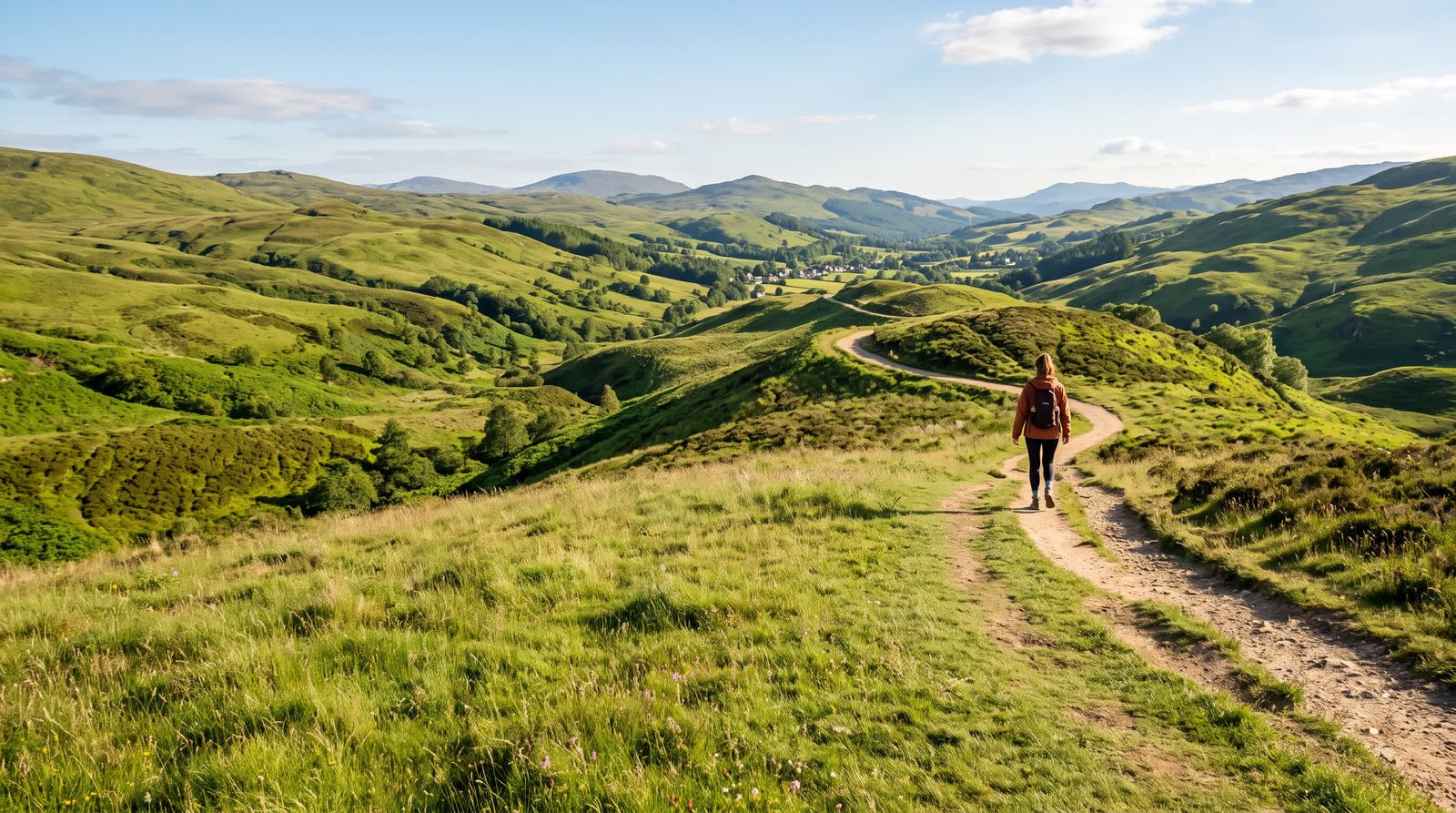
The modern experience of distance has long been defined by its erasure. For decades, aviation has collapsed the geography of the planet into a series of departure gates and arrival halls, where the space between points is treated as a temporal tax rather than a journey. This model of total atmospheric bypass leaves the traveler with a wealth of destinations but a profound poverty of context. When the earth is viewed only from thirty thousand feet, it ceases to be a place and becomes a static abstraction. This collapse has fundamentally altered our relationship with the world, turning travel into a logistical exercise rather than a sensory engagement with the curvature of the earth. We have become accustomed to the disembodied sensation of crossing continents in an afternoon, losing the tangible reality of the miles in the process.
A quiet counter-movement is now reclaiming the miles that aviation spent half a century trying to hide. The resurgence of slow routes—by rail, water, and foot—is a necessary re-calibration of our spatial awareness. When a traveler chooses the train over the plane, they opt into a more precise measurement of the world. At ground level, distance is no longer a number on a boarding pass; it is the slow transition of forest into field and the gradual cooling of the air as the track climbs. This deliberate pace forces a reconciliation with the true scale of the planet, reminding us that the world is an interconnected fabric of environments that must be crossed, not just bypassed. By moving at a human scale, we regain a sense of the earth’s physical resistance.
The sensory richness of these slower routes provides a granular detail absent from high-velocity transit. On a long-distance rail journey, the traveler observes the intimate architecture of backyards, industrial fringes, and unmanicured wild spaces. There is a specific literacy that develops when watching the landscape change house by house, or noticing the subtle shift in sunlight as the latitude changes. These are the quiet signals of distance that the brain is designed to process. In their absence, the mind struggles to keep pace with the body, leading to the disorientation of jet lag, which is as much a psychological displacement as a biological one. By moving at a speed that allows for observation, the traveler gives their senses the time required to truly inhabit the journey.
This return to slowness is also a response to the climate crisis, which has turned the high-carbon efficiency of flight into a source of ethical friction. The "climate-field" of travel is being redrawn by those who view the carbon footprint of a journey as part of its essential character. In this context, the slow route is a choice of presence. By accepting the longer duration of a train or boat, the traveler acknowledges the environmental cost of movement and chooses to pay it in time rather than in emissions. This shift has led to a renewed appreciation for the infrastructure of the past—the grand railway stations and coastal routes that follow the natural contours of the land. These paths respect the geography, offering a sustainable way to move through the world.
The psychological benefits of the slow route are increasingly evident in a world obsessed with optimization. The journey becomes a destination, a liminal space where the pressures of productivity are suspended by steady motion. There is a profound mental clarity that comes from being tethered to the ground, watching the world unfold in a logical sequence. Unlike the pressurized cabin of an aircraft, where time is something to be killed, the window of a train offers a constant, evolving narrative of the earth. This allows for deep contemplation rarely found in the modern workday, turning transit into a productive interval of reflection. The traveler arrives not exhausted by the effort of bypassing the world, but enriched by the experience of having seen it.
The social architecture of slow travel differs fundamentally from the sterile isolation of the airport. On a slow route, there is a shared rhythm among passengers, a collective acknowledgement of the time being spent together. Whether it is a shared meal in a dining car or a quiet conversation on a ferry deck, these encounters are grounded in the common reality of the journey. There is no rush to the exit; there is only the steady progress toward a visible horizon. This creates a sense of community that is fleeting but real, a reminder that we are all fellow travelers on a shared surface. The journey is not just a gap between places, but a social environment that values the process of movement as much as the result.
As we look toward the future of global mobility, the precision of the slow route offers a model for a more thoughtful engagement with our surroundings. It suggests that the most valuable way to see the world is with a clarity that only a human pace can provide. The slow route is a tool for re-enchantment, stripping away the abstractions that have made the world feel small and disposable. By reclaiming the distance, we reclaim the dignity of the places we visit, treating them not as points on a list, but as destinations earned through patient travel. In the end, the most precise sense of distance is measured in the memories of the landscapes that were allowed to leave their mark on the traveler.
Ultimately, the precision afforded by slow travel is a form of respect for the scale of the earth and the integrity of the communities between famous landmarks. When we move slowly, we are less likely to treat a destination as a mere backdrop and more likely to understand it as a living entity. The slow route gives us the distance we need to see the world clearly and the time we need to understand what we are seeing. It is a reminder that in a world that is constantly accelerating, the most rewarding thing we can do is to slow down and take the long way home. This deliberate act of measurement ensures that the art of travel remains a vital, grounded part of the human experience, connecting us to the planet in a way that speed never can.