Books
The independent bookshop is becoming a neighborhood newsroom.
Independent bookshops are evolving beyond retail, transforming into vital civic hubs that function as neighborhood newsrooms. By fostering local dialogue and curating community knowledge, these spaces provide a grounded alternative to the digital noise.
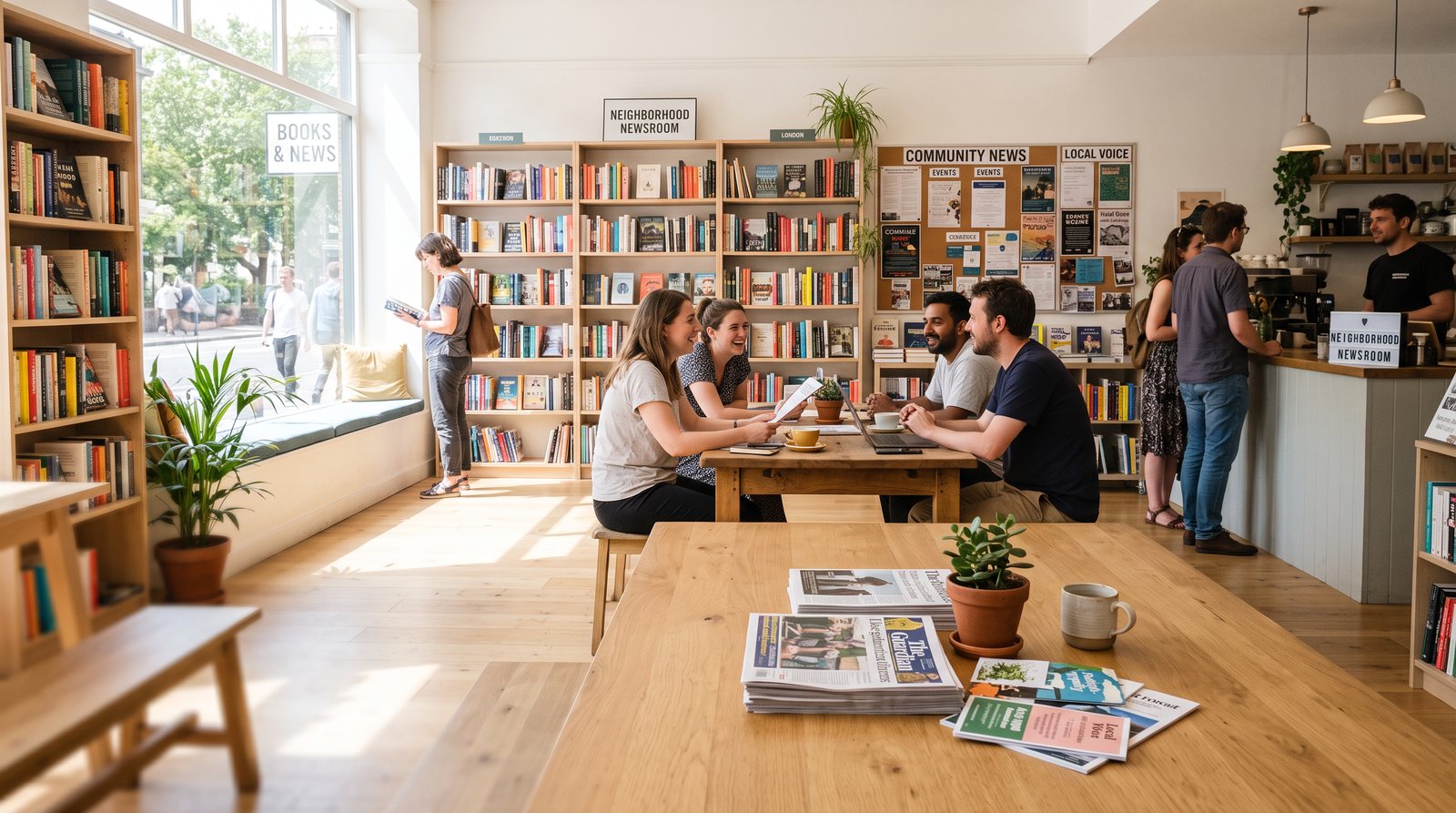
The traditional image of the independent bookshop—a quiet, dusty sanctuary for solitary readers—is undergoing a profound and necessary transformation. In neighborhoods where digital platforms have increasingly replaced physical gathering points, these shops are stepping into a vacuum left by the decline of local newspapers and the erosion of public common rooms. They are no longer merely retail outlets for bound volumes; they have become active sites of civic synthesis. This shift is not a rejection of their literary roots but a natural expansion of them, as the curation of books extends into the curation of community conversation and the dissemination of local news. By providing a physical space for the exchange of ideas, these bookshops are reclaiming their role as the intellectual heart of the neighborhood.
At the heart of this evolution is the bookseller, whose role has transitioned from a simple clerk to a community moderator and information curator. In a bookshop that functions as a neighborhood newsroom, the selection of titles on the front table often reflects the immediate concerns and interests of the surrounding streets. A local planning proposal, a shift in regional ecology, or a debate over public infrastructure finds its way into the shop's displays, providing a curated bibliography for the neighborhood's current events. This form of information sharing is deliberate and slow, contrasting sharply with the rapid, often unverified flow of digital social feeds. It offers a space where information is not just consumed, but contextualized within the history and values of the local area.
The architecture of these modern bookshops has adapted to support their new function as civic hubs. We see the introduction of long, communal tables that invite lingering, community boards that serve as physical precursors to digital forums, and flexible spaces that can be quickly converted from retail floors to lecture halls or workshop areas. These are not accidental design choices but a practical response to the need for accessible public spaces that are neither home nor work, yet remain essential for the health and vitality of a democratic society. By providing the physical infrastructure for face-to-face interaction, the bookshop facilitates a type of news-gathering that is rooted in proximity, shared experience, and mutual respect.
Beyond current affairs, these shops serve as living archives of neighborhood identity and local memory. They often stock self-published local histories, zines from nearby schools, and pamphlets from community groups that would never find a place in a major retail chain or a global online marketplace. This archival function ensures that the neighborhood’s story is told by its inhabitants rather than by external algorithms or distant corporate interests. The bookseller acts as a gatekeeper of this local memory, ensuring that new residents can quickly access the historical context of their new home. This creates a sense of continuity and belonging that is essential for building a resilient and connected community.
In an era where information is frequently used to polarize and isolate, the bookshop offers a rare venue for nuanced and difficult conversations. The newsroom model encourages people to engage with ideas that are physically present, making it harder to ignore the humanity of those who hold different views. When a community meets to discuss a local issue in a room surrounded by the breadth of human thought represented on the shelves, the conversation tends to be more restrained, thoughtful, and productive. The bookshop provides a neutral ground where the primary goal is understanding rather than winning an argument, a quality that is increasingly rare in the often-combative digital public square.
The newsroom bookshop also functions as a center for skill-sharing and lifelong learning for all ages. Workshops on investigative techniques, local history research, and even digital literacy are becoming common features of their programming. By teaching neighbors how to find, verify, and interpret information, the bookshop strengthens the community's collective intelligence and resilience. This educational aspect is a direct response to the complexity of the modern world, where the ability to navigate information is as critical as the information itself. The shop becomes a place where the tools of the newsroom are democratized and shared with the public, empowering individuals to take an active role in their community.
Maintaining such a space requires a different economic model, one built on the principle of care and community investment rather than just profit maximization. Many of these shops operate with the support of community memberships, crowdfunding, or as social enterprises, reflecting a shared understanding that their value extends far beyond their balance sheets. The neighborhood newsroom is an investment in social capital that pays dividends in community cohesion and informed citizenship. When residents choose to buy a book or attend an event at their local shop, they are not just making a purchase; they are funding a piece of civic infrastructure that protects and nurtures the neighborhood’s social fabric.
As we look to the future of urban design and community health, the independent bookshop stands as a model of durability and relevance. It has survived the rise of e-commerce and the decline of traditional media by leaning into its most unique and irreplaceable asset: physical presence. By becoming a neighborhood newsroom, the bookshop has secured its place as an essential component of the modern city. It remains a room where the next question is always easier to ask, where the news is personal and grounded, and where the story of the neighborhood is still being written, one book and one conversation at a time. This enduring presence is a testament to the power of community and the written word.