Food
A new generation of cooks is treating the pantry like a research archive.
Modern culinary enthusiasts are transforming the traditional pantry into a sophisticated research archive, utilizing rigorous documentation and ancient preservation techniques to explore the scientific potential and historical depth of everyday ingredients.
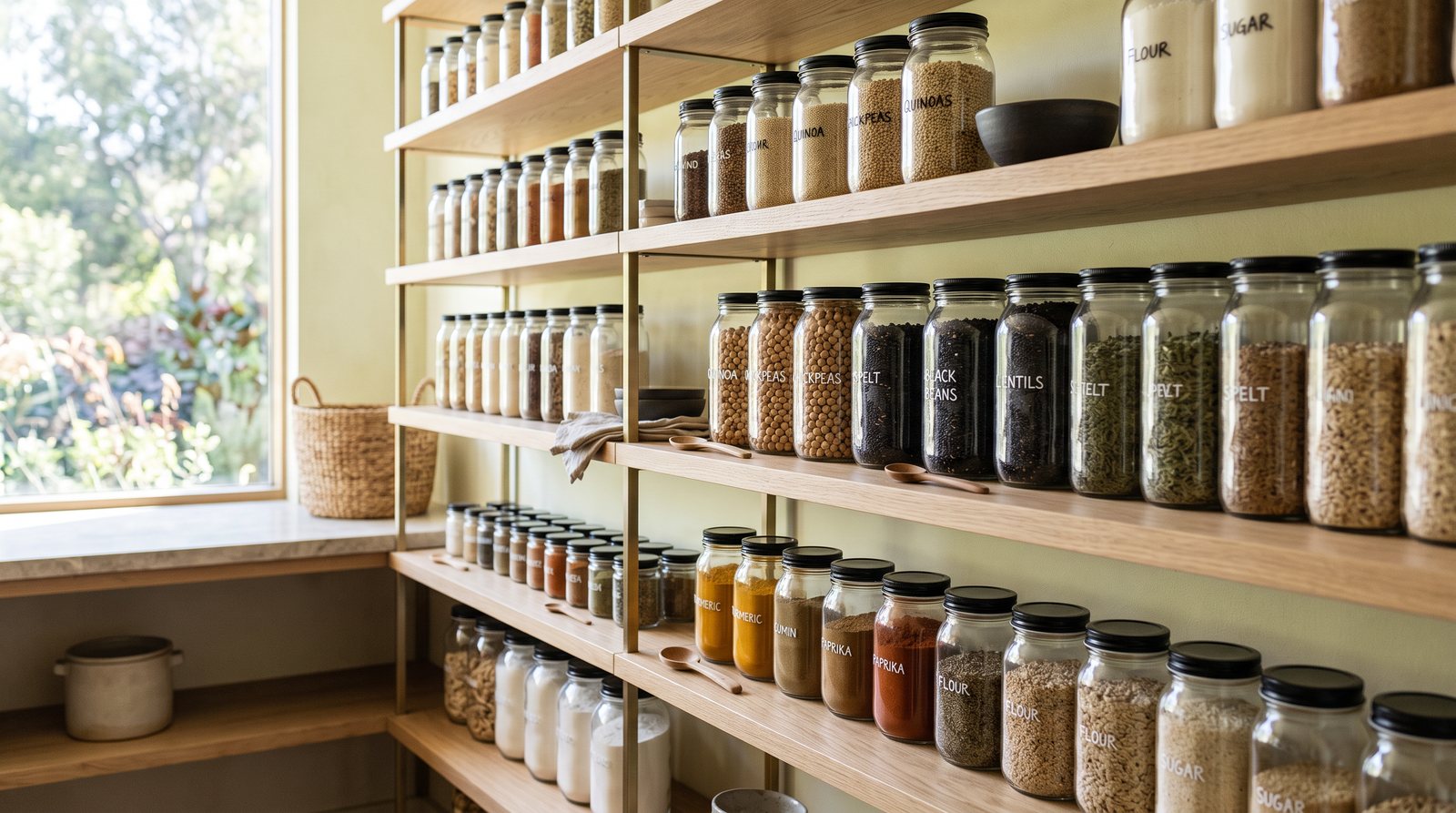
The traditional kitchen pantry is undergoing a profound conceptual shift. This space is being reimagined as a dynamic research archive—a repository not just of food, but of biological data and historical continuity. This transition, documented by observers at Common Table, reflects a broader cultural movement toward a more deliberate and inquisitive engagement with the materials of sustenance. Today’s cooks are no longer content with the passive accumulation of ingredients; they are instead adopting the roles of archivists and researchers, treating every jar, vessel, and bundle as a subject of active study. By documenting the life cycles and chemical transformations of their staples, these individuals are turning the domestic kitchen into a site of rigorous intellectual inquiry, where the act of preservation is as much about knowledge as it is about nourishment.
Central to this archival approach is the application of a systematic methodology that mirrors the record-keeping practices of scientific laboratories. Modern culinary archivists maintain detailed logs that track a multitude of variables, from the subtle shifts in ambient humidity to the precise temperature fluctuations within a fermentation chamber. Every ferment is assigned a record detailing its origin and the specific conditions that shaped its development. This level of rigor allows for the replication of successful flavor profiles and, perhaps more importantly, provides a framework for understanding the failures. By analyzing the data points associated with a batch of misaligned miso or an overly acidic vinegar, the cook gains a deeper understanding of the complex biological systems at play. This is not merely about consistency; it is about building a personal library of empirical evidence that informs every future decision made at the stove.
In this research-driven kitchen, fermentation serves as the primary tool for capturing a specific moment in time and space. Whether cultivating the delicate threads of Aspergillus oryzae on steamed grains or monitoring the slow acidification of a local fruit vinegar, these cooks are essentially bottling the environment. Each vessel acts as a temporal record, preserving the unique microbial signature of a particular season’s harvest and the specific terroir of the cook’s surroundings. The resulting products are more than just condiments; they are tangible archives of ecological interactions. A three-year-old garum or a deeply aged shoyu becomes a historical artifact, offering a sensory window into the conditions of the past. By viewing fermentation through this lens, the culinary archivist acknowledges that flavor is not a static quality but a living, breathing history that continues to evolve long after the initial processing is complete.
The tools found in these contemporary research kitchens reflect a commitment to technical precision that complements, rather than replaces, the cook’s intuition. Digital scales, pH meters, and refractometers have become essential components of the archival toolkit. These instruments provide the empirical data necessary to manage the delicate balances of salt concentration, acidity, and sugar content that govern biological preservation. By integrating such technology, cooks are able to navigate the fine line between safety and innovation, ensuring that their experimental outputs remain within the bounds of stability while pushing the boundaries of traditional flavor. This reliance on data creates a feedback loop where sensory observation is validated by measurement, allowing for a more nuanced and confident exploration of the scientific principles that underpin the culinary arts.
For the culinary archivist, the sourcing of ingredients is an act of preservation that extends into the field and the forest. Heritage and heirloom varieties are treated with the same reverence that a historian might accord to a rare manuscript. These cooks recognize that every seed carries a genetic signature and a cultural story that has been shaped by centuries of human and environmental interaction. By actively seeking out varieties that have been overlooked by industrial agriculture, they are participating in a form of genetic archiving that helps to maintain the biodiversity of the global food system. The use of these ingredients is not merely an aesthetic choice; it is a deliberate engagement with the history of domestication and a recognition of the unique chemical complexities that these older varieties offer. Each dish prepared with such materials becomes a living citation of a nearly forgotten agricultural past.
The research archive of the modern pantry is built as much on texts as it is on ingredients. Cooks are increasingly turning to historical documents, agricultural manuals, and oral traditions to rediscover and refine forgotten techniques of preservation. By mining these sources, they are able to revive ancient methods like salt-curing, cold-smoking, and air-drying—practices that were once fundamental to survival but were largely marginalized by the advent of modern refrigeration. However, this is not a simple exercise in nostalgia. Instead, these practitioners apply contemporary scientific understanding to these traditional methods, optimizing the processes to achieve greater clarity of flavor and improved safety. This synthesis of ancient wisdom and modern inquiry creates a bridge between generations, allowing the culinary archivist to honor the foundations of the past while contributing to the evolution of the craft.
A critical component of the research-driven kitchen is the systematic analysis of what was once considered waste. Ingredients that would typically be discarded—fruit peels, vegetable stalks, and animal trimmings—are scrutinized for their potential as sources of concentrated flavor. Through techniques such as enzymatic hydrolysis, dehydration, and infusion, these scraps are transformed into essential components of the pantry archive. This perspective encourages a deeper engagement with the entire lifecycle of food, treating every part of an organism as a valuable resource for research. The resulting oils, powders, and essences form a library of flavors that are often more intense and complex than the primary ingredients themselves. This commitment to resourcefulness is not just an ethical stance; it is a practical application of the archival mindset, where every fragment is preserved and cataloged for its potential utility.
Ultimately, the transformation of the pantry into a research archive redefines the role of the cook within the domestic and professional sphere. By embracing the responsibilities of the researcher, the historian, and the scientist, these individuals are elevating the act of food preparation into a sophisticated intellectual pursuit. The kitchen is no longer a place of rote execution, but a vital laboratory where knowledge is generated, preserved, and shared. As this movement continues to grow, the pantry will remain a central repository for this evolving body of work, serving as a testament to the patient, rigorous, and profoundly wistful study of the materials that sustain us. The work of Pia Verne demonstrates that the most meaningful innovations often begin with a single jar and a commitment to looking more closely at what we already have.