Learn
The 20-Minute Packing Table Reset
A low-drama reset for the tiny shop that starts packing orders on the kitchen bench and somehow ends up looking for tape, a marker and its own patience at the same time.
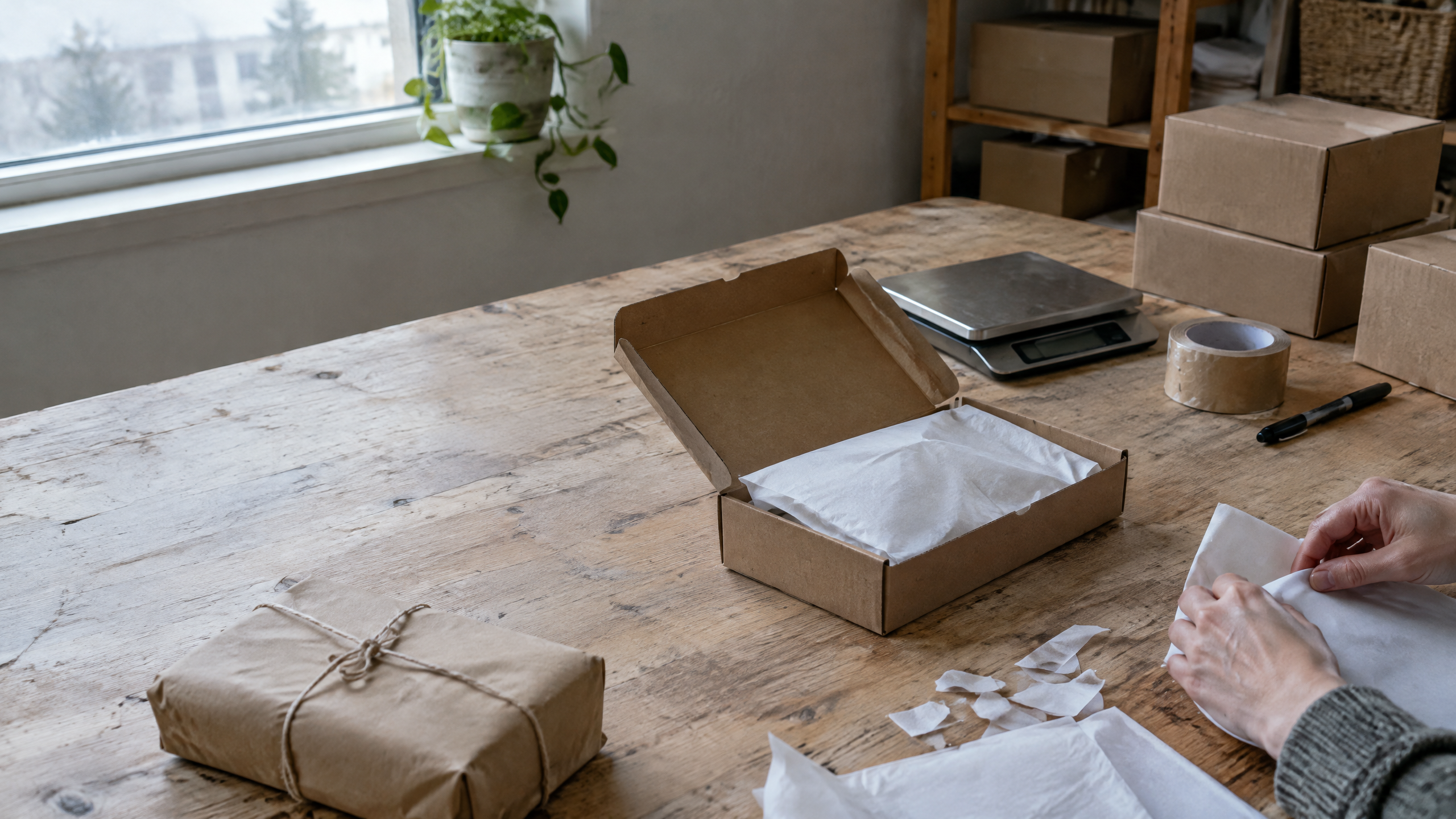
You know the feeling: an order comes in, which is lovely, and then you begin the small-business treasure hunt. Tape? Somewhere. Tissue paper? In a bag you put somewhere logical last Thursday. The thank-you cards? Emotionally unavailable. Ten minutes later, the parcel is technically packed but you are also annoyed at a pair of scissors. This is not because you need a warehouse, a barcode gun or a colour-coded operations dashboard that looks like it belongs at NASA. You probably just need a packing table that remembers the order of things when your brain is busy being founder, customer support, photographer and lunch planner at once.
The 20-minute reset is not a productivity ritual you have to perform under a tiny candle. It is one short setup before your next packing session. Start by emptying the surface completely. Not because minimalism is morally superior, but because anything that lives on the table gets mistaken for something you need right now. Put only the things you touch for almost every order back on it: mailers or boxes, tissue, tape, scissors, marker, packing slip, a small bin for little extras, and the product itself. If an item is used once a week, it can have a nearby home. The table should be a runway, not your entire stockroom trying to make eye contact.
Now divide the surface into three invisible zones: incoming, packing and outgoing. Incoming is where the picked products wait. Packing is the middle, where you wrap, check and seal. Outgoing is the finished side, where parcels sit only when they are genuinely ready to leave. This tiny sequence does something weirdly soothing: it stops half-finished orders from blending into finished ones. Use a tray, a piece of tape on the underside of the bench, three baskets, whatever you already own. The zones do not have to look Instagram perfect. They just have to make it obvious whether a parcel is waiting, happening or done.
Pack your most common order first, as a test. Notice every time your hand leaves the table. Did you turn around for a mailer? Reach down for a scale? Walk to another room for the label printer? That is the exact map of where your setup is wasting your energy. Move the thing you reach for most often closer, then do the same test again. A lot of small-shop ‘systems’ are simply making the next correct move easier than the random move. If you send one product size every day, keep that mailer right where your hand wants it. Save the fancy storage project for a rainy Sunday, not the middle of a dispatch rush.
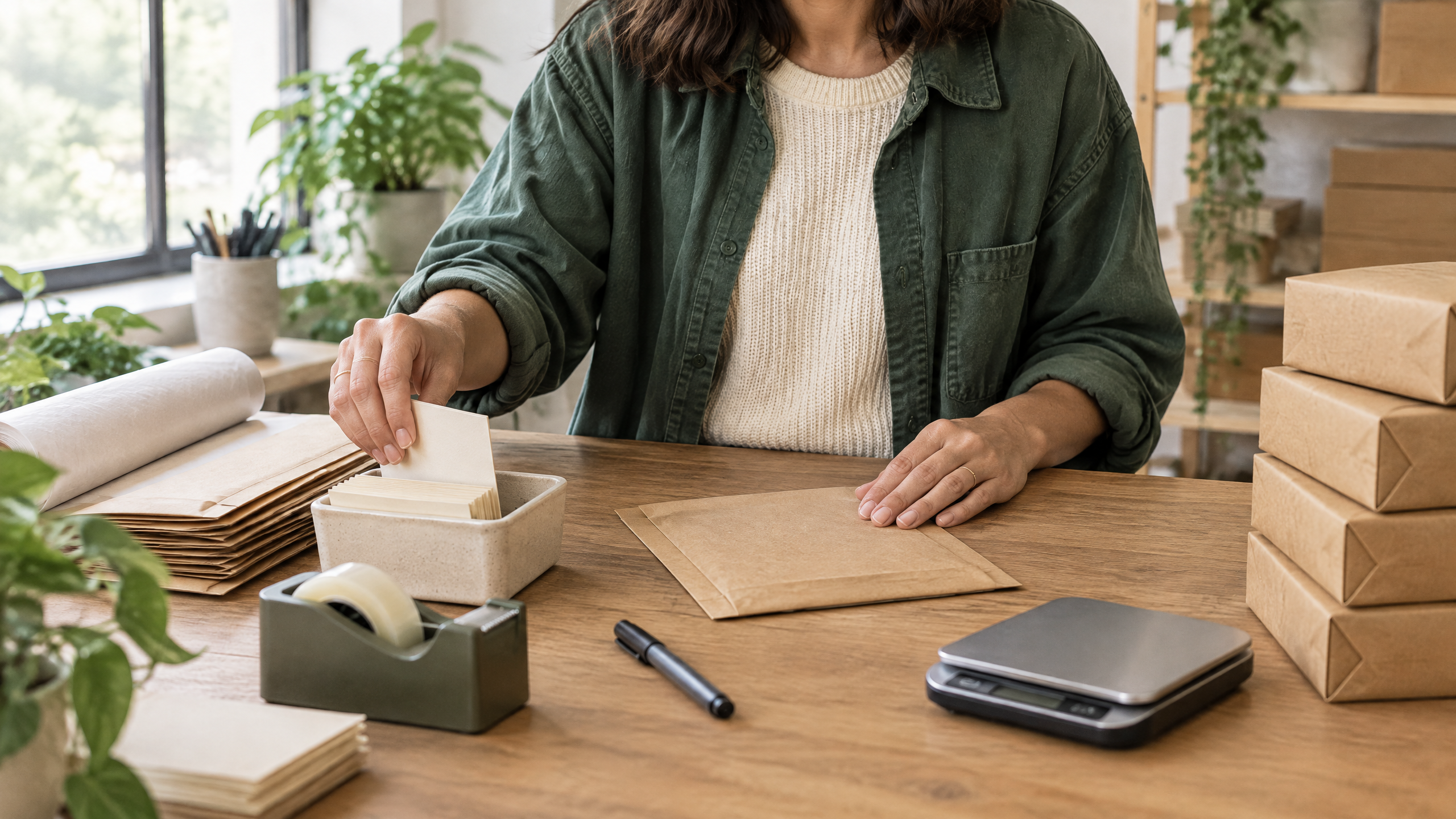
Keep a tiny problem pad nearby for things you cannot solve while packing: low tissue, a damaged box, a product photo you need for later, a customer question, an address that needs checking. Write it down once and keep moving. The packing table is a terrible place to start fifteen unrelated tasks. You are allowed to notice a problem without immediately becoming its project manager. At the end of the session, the pad gives you a clean little list of what needs attention. During the session, it lets you get parcels out without your brain trying to hold every loose thread at the same time.
For the customer-facing touches, choose one or two things you can repeat without resenting them. Maybe it is a care card, maybe it is tissue in your brand colour, maybe it is a short handwritten thank-you for first orders only. The goal is not to create an elaborate craft activity for every parcel. It is to make the package feel considered and recognisable at a pace you can actually keep. If a cute freebie makes your packing time double or quietly eats your margin, it is okay to retire it. A small shop can be warm without personally hand-decorating its own burnout.
Before you seal a parcel, make one quick check feel automatic: right product, right quantity, right address, right little extra if there is one. Say it quietly if that helps. People who pack a lot of orders are not robots; tiny mistakes happen when every parcel starts to look like the last one. A simple final check is kinder to your customers and future you. It is also a much better use of thirty seconds than writing a panicked apology email because two similar-coloured items swapped places at 4:57 p.m.
Do the reset once, then leave it alone for a week. Notice what still feels annoying. Maybe you need a smaller bin for packing cards. Maybe finished orders need a separate shelf. Maybe the real issue is that you are picking products one by one instead of in a small batch. That is useful information, not a failure of your table. Your next action is very small: clear the surface, set three zones, then pack one normal order and make one adjustment. You do not need a giant setup. You need the boring bits to quietly work while you save your energy for the part only you can do.