Cooking
The Taste Test That Ended a Family Argument
A blind roast-potato trial finally separated family lore from actual crunch—and crowned the batch made by the least dogmatic cook at the table.
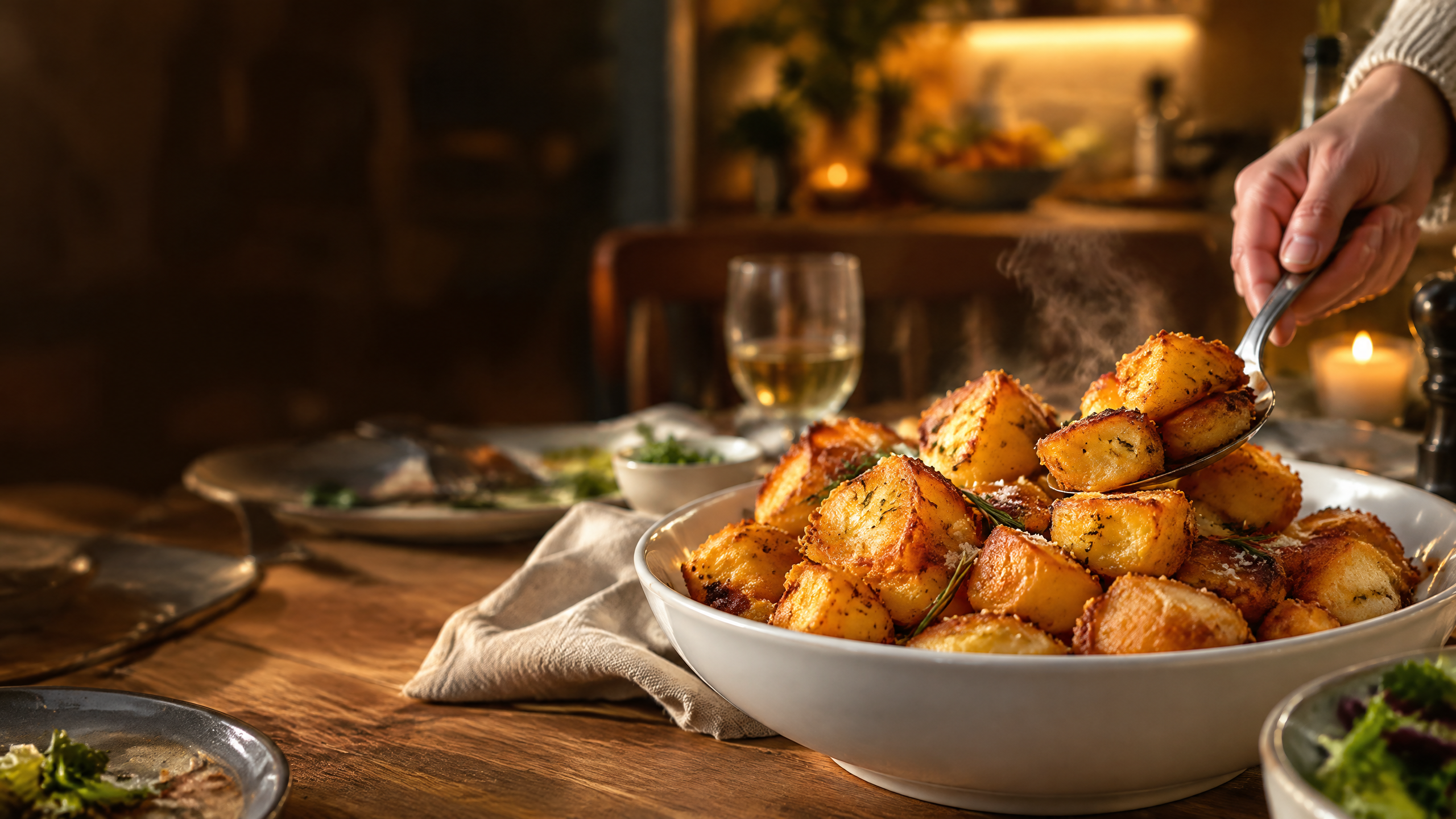
At 6:17 on Sunday, my mother raised tongs as if asking a roomful of diplomats for silence. Aunt Inez had just declared that a potato which had not been “properly roughed” was merely a beige apology. We had been litigating roast potatoes for so long that children hidden beneath the dining table now brought foil trays of their own. Mum favored a violent colander shake and oil hot enough to scold you from across the kitchen. Inez believed in a gentler toss, a slower roast, and the spiritual authority of duck fat. That day, with everyone hungry and nobody charitable, I proposed blind tasting. Suddenly, peace had a clipboard.
The dispute began after a winter lunch in 1998, when Mum’s potatoes arrived shatteringly crisp and Inez’s were velvety within, bronze at the edges, and accused by my uncle of “having ideas above their station.” Both batches vanished. Neither woman forgave the other for being applauded. Over the years, each method collected moral weight. Mum’s potatoes stood for decisiveness, thrift, and not fussing about a meal until it had something to say. Inez’s stood for patience, ceremony, and the belief that lunch should make people cancel their afternoon plans. By the time I was old enough to peel, choosing a technique felt less like cooking than choosing a constitutional system.
Inherited kitchen rules are rarely only rules. A person says, “Start with cold water,” but means, “Respect how I taught myself when the house was fuller.” “Never refrigerate a potato” carried a whole childhood of meals served at the exact second they were ready. We had become experts at defending texture and amateurs at noticing it. The test had to be plain enough to outwit our biographies: nobody would know which bowl belonged to whom, and nobody could make a speech until every crust had been heard from.
I bought four identical bags of potatoes and cut them into chunks the size of small soap bars. Each batch was salted from the same jar and cooked in the same oven on matching heavy trays. Batch A followed Mum: eleven minutes in simmering water, a fierce shake in the colander, then hot oil at 230°C. Batch B followed Inez: a slightly shorter boil, a patient steam-dry, duck fat, and a lower roast before a final blast. Batch C was my cousin Rafi’s contribution, lightly dusted with semolina after parboiling. Batch D was his last-minute amendment: parboiled potatoes drained, left uncovered in the refrigerator overnight, then roughened and roasted in hot oil. He called it a chance to become themselves, annoying because he was right.
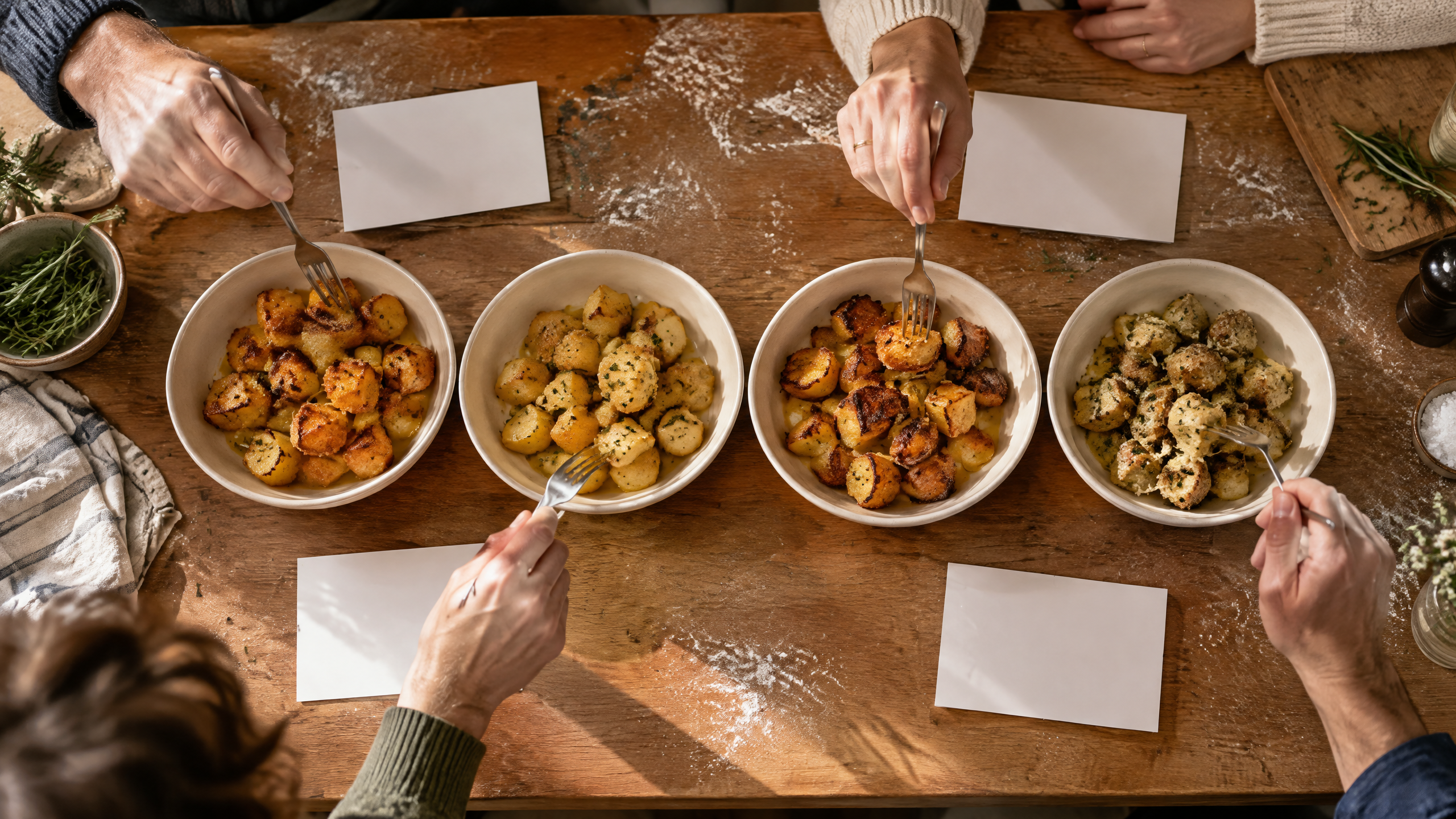
We served the four batches in plain cream bowls marked underneath, out of sight, with a little pile of flaky salt beside each. The judges were Mum, Inez, Uncle Tomas, my grandmother, Rafi, and me. We agreed to score crispness, interior, flavor, and the dangerously subjective category called “would you go back for another.” The first bites were loud. A had a brittle, theatrical shell and a center so fluffy it seemed to exhale. B smelled magnificent, all toasted richness and Sunday confidence, but its surface gave way before it snapped. C scattered a pleasing sandy crunch onto everyone’s napkins. D looked almost modest: craggy, russet, lightly blistered. Then its crust fractured in thin glassy sheets, revealing an interior as soft and warm as bread pulled from the center of a loaf.
The voting produced the silence usually reserved for a will being read. Mum placed A second. Inez placed B third. My grandmother, who has never let evidence interfere with an opinion, awarded B top marks for perfume and then ate three pieces of D while pretending to consider the matter. Uncle Tomas chose C because, he said, “At least it knows it is a potato.” But D won every other ballot. It was the only batch that scored high for both exterior and middle, and the only bowl emptied before we finished adding numbers. The surprise was not merely that it won. Neither reigning champion had made it.
Rafi turned over the bowl and grinned at the letter D as though he had forged a treaty. His overnight chill was not culinary theatre after all. Letting the parboiled pieces dry uncovered firmed their surfaces and gave moisture time to leave; the roughened edges then browned instead of steaming themselves soft. The method had quietly borrowed Mum’s aggression—the shake mattered—and Inez’s patience—the wait mattered more. It used ordinary oil, which offended Inez on principle, and required planning ahead, which offended Mum on schedule. In other words, it was the perfect family compromise: impractical only until you tasted it. We had spent twenty-eight years fighting over a single magic move. The winning potato was a sequence.
For anyone wishing to end a smaller domestic war, here is the useful version. Parboil peeled chunks in well-salted water until the outside is yielding but the centers still resist a knife, about ten minutes. Drain them thoroughly, return them to the warm pot, and shake just until their corners look furry. Spread them on a tray and refrigerate uncovered overnight. The next day, heat a generous layer of neutral oil in a heavy pan at 220°C, turn the chilled potatoes through it with salt, and roast until deeply gold, turning once, for roughly forty-five minutes. The fridge is not a shortcut; it is the quiet interval in which the final contrast gets built. Freshly cooked is not always the same thing as finished.
At lunch, Mum took another D and said it needed a little more salt. Inez took one too and said it could use duck fat “for character.” Then they looked at each other, each waiting for the old machinery to start. Instead, Mum slid the serving spoon toward Rafi. “Next time,” she said, “you’re in charge of the potatoes.” The argument did not end because one woman surrendered. It ended because the best answer contained a little of both of them, plus the irritating good sense of a teenager who had simply made room for time. By dessert, the bowl was scraped clean. Our family had mistaken a question of method for a question of loyalty. A potato, it turns out, can be crisp enough to crack a story open.