Shopping
The Night I Hired a Stranger to Choose My Clothes
After years of dressing for an imaginary future, I gave a sharply observant stranger forty-five minutes to choose one outfit—and learned how much camouflage can resemble good taste.

At 7:18 on a wet Thursday, I handed a woman named Noor my umbrella, my tote bag, and the most intimate document I possess: a list of reasons not to wear things. No white after coffee. No silk because public transport. No bright red unless one has recently been proposed to, acquitted, or invited to accept an award. I had spotted her in the concourse of a department store, wearing a chartreuse scarf with a navy work suit, and asked whether she would choose an outfit for me. She looked at my rain-beaded trench, then at my face, and said, “Only if you promise not to turn this into a committee meeting.” Reader, I agreed to be undressed by a stranger before I agreed to that.
The rules were simple. We had forty-five minutes, a modest budget, and the rack of a large, fluorescently merciless store where I had bought a dozen responsible sweaters in the last decade. Noor could pick one complete outfit; I could veto only fit or actual physical pain. This was not a makeover, which implies the old self is a shabby room needing demolition. It was a street experiment in temporary authorship. I wanted to know what someone else might see if they looked past the little treaty I had made with my wardrobe: be tasteful, be prepared, never create paperwork for anyone’s eyes.
My closet had become a waiting room for versions of me who were always five minutes from arriving. There were trousers for the job that would make me commute by bicycle, a linen dress for the holiday where I would become relaxed enough to spill olive oil, and a sharply shouldered jacket for a dinner at which I would announce a plan. I bought clothes the way some people buy notebooks: convinced their blankness would improve my character. In daily life, I wore charcoal, black, soft navy, and a beige so defensive it could have hired counsel. My principles sounded noble—versatility, longevity, “cost per wear”—but they were mainly camouflage with a receipt.
Noor moved through the shop with the brisk tenderness of a person selecting fruit. She touched a silver-grey skirt, rejected it. She held a cream blouse against me, frowned, and put it back. “Everything you choose is already apologizing,” she said, not cruelly. She finally pulled a sleeveless marigold knit dress from between two columns of office-safe blue. It had a square neckline, a narrow rib, and the terrible cheerfulness of a sunbeam that has entered a meeting uninvited. I laughed, which was a tactical error. “Exactly,” she said. “You don’t hate it. You’re afraid it will have a personality without permission.”
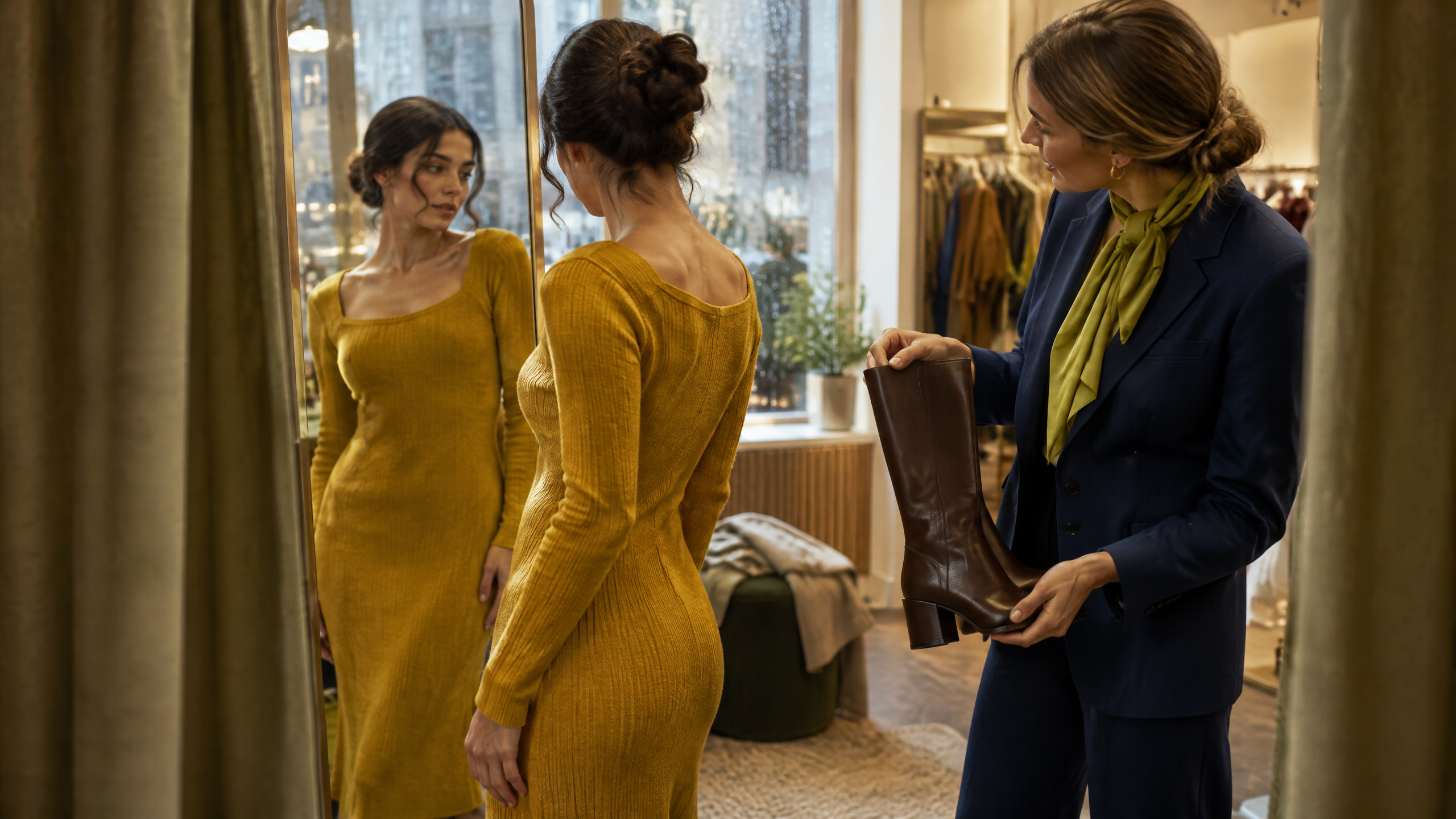
In the fitting room, the dress did what forbidden clothes do: it made the rest of my body look like it had been waiting to be introduced. The color warmed my shoulders, which I usually treat as administrative surfaces. It showed my knees, ordinary knees with a small pale scar from falling off a borrowed bicycle when I was thirteen. I immediately began prosecuting it. Too yellow. Too fitted. Too much skin for October. Noor, stationed outside the curtain with the patience of a hotel concierge, asked what I would wear to meet a friend I missed. I said I would wear jeans. “No,” she said. “What would you wear if she already knew everything?”
That question made the fitting room go quiet in a way changing rooms rarely do. Clothes are often discussed as messages to strangers: polished, powerful, creative, effortless, all the old banner headlines. But someone who knows you does not need the headline. They notice the elbow you keep covered, the jewelry you stopped wearing after your mother’s illness, the colors you reserve for occasions that never quite obtain official status. I thought of my oldest friend, Tamsin, who says I dress like an excellent solicitor in a town where all the laws are about feelings. I thought of how carefully I had edited myself for people who were barely looking.
Noor added dark brown boots, a thin gold cuff, and a cropped slate cardigan whose softness kept the dress from becoming a dare. The outfit was not wild. That was the humbling part. It was simply specific. The marigold did not make me look younger, braver, thinner, or more deserving of a good table. It made me look present, which is harder to buy and much more alarming. I stepped out to the mirror near the escalators, past a cosmetics counter glowing like a tiny airport. A sales assistant told me the color was lovely. I almost corrected her, as though loveliness were an invoice sent to the wrong address.
I wore the outfit home. On the train, no orchestra rose from the floorboards. Nobody fainted at my self-possession. A child stared at the yellow dress while eating a banana, which felt like a fair review. But I sat differently. I did not fold my arms across myself or tug the hem into a more reasonable negotiation. At my stop, I walked past the bakery where I usually look in only to imagine buying a loaf for a more organized life. This time I bought one, still warm through its paper bag, and called Tamsin from the pavement. “You sound pleased with yourself,” she said. “Don’t ruin it by explaining.”
The dress now hangs in my closet between black trousers and that optimistic bicycle jacket. I have not become a person who wears marigold to buy detergent, although I have worn it to dinner, to a gallery, and once on a Tuesday so dull it deserved a small act of resistance. What Noor chose was not a costume for a better life. She chose evidence that I had been using prudence to postpone being visible to myself. There is no moral requiring anyone to dress brightly, or let strangers near their hangers. Still, when I reach for the safe option now, I ask one useful, mildly annoying question: am I getting dressed for the day I have, or for the permission I keep pretending is on its way?