Learn
The Library of Things You Didn’t Know You Needed
A thermal camera enters a library’s lending shelf, revealing that the most useful thing a neighbourhood can borrow may be a way to see its shared problems.
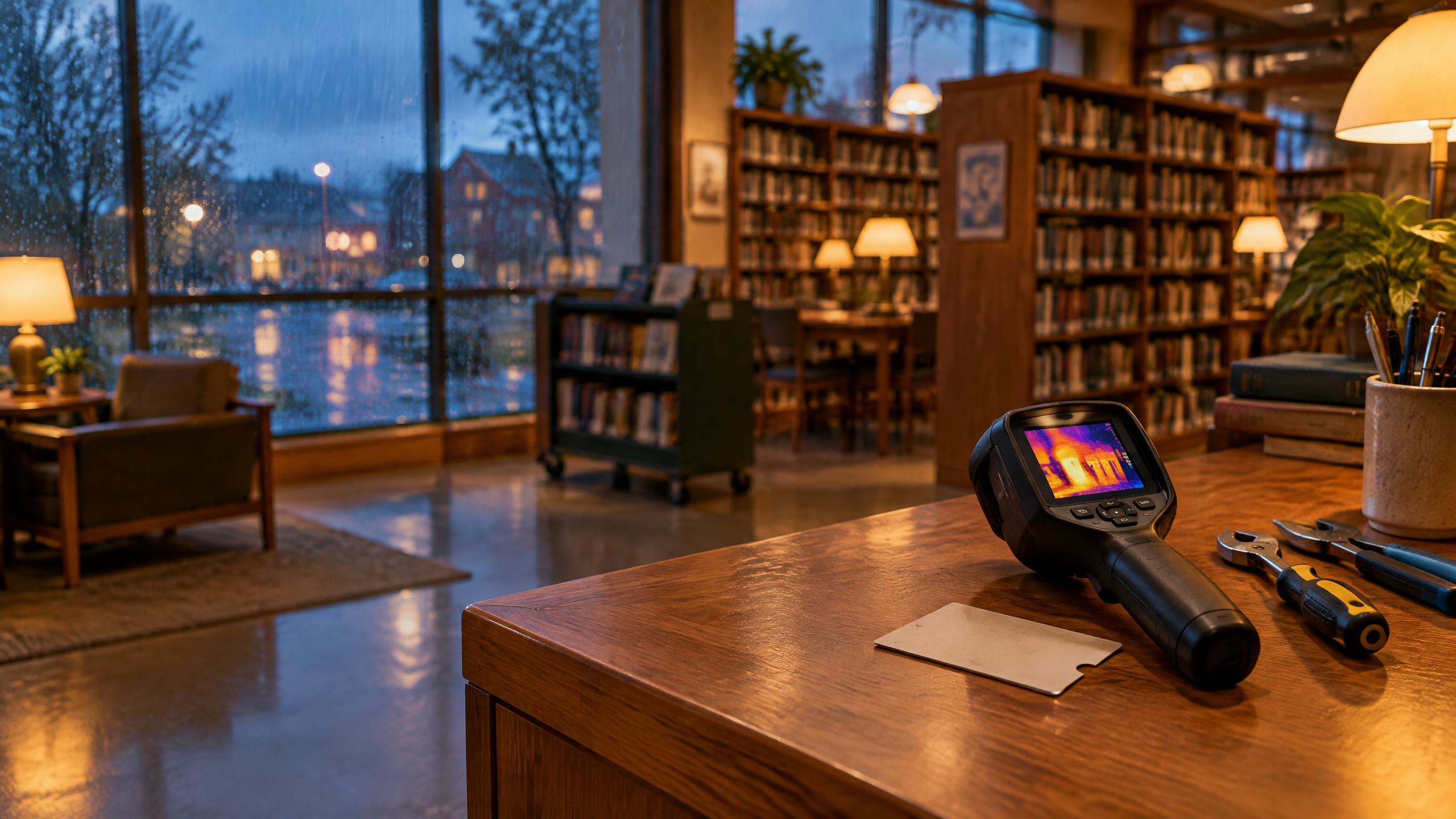
At 9:07 on a drizzly Tuesday, a woman named Celia checked out a thermal camera from the Grafton Branch Library and carried it home between the biographies and the returns chute. It looked like a chunky orange phone, not a revolution. Her upstairs bedroom had been cold since November, and her landlord had called the draft ‘old-house character.’ That evening, the camera turned the wall above her radiator a bruised blue. Cold was not a feeling, it turned out. Cold had a shape: a crooked ribbon where insulation had slipped behind the plaster. By breakfast, Celia had photographed the evidence, printed it at the library for twelve cents, and slipped one copy under her landlord’s door.
The camera was one of 68 objects in the branch’s new Library of Things: a drill with a cheerful yellow case, a pasta roller, a folding camp stove, a rug cleaner, a seed-starting lamp, a button-maker, a bike stand, and a box labelled ‘Borrow This Before You Buy One.’ The experiment began with a plain question from library assistant Noor Patel: what if a library’s job was not only to circulate stories, but to circulate capacity? The objects were chosen after neighbours taped wish lists to a bulletin board. People asked for tools they needed once, equipment too costly to gamble on, and small machines that seemed to require a garage, a credit card, or a confident uncle.
At first, the lending desk produced the kind of comedy that makes a new idea feel alive. A retired electrician taught three teenagers how not to drill into wiring. A father borrowed a waffle iron for a birthday breakfast and returned it with a recipe tucked into the manual. Two roommates tested a projector against their blank living-room wall, decided movie nights were worth rearranging the furniture, and started inviting the widow next door. Each loan came back with a little more than an object: a labelled cable, a practical warning, a note about which screw bit actually worked. The library had accidentally started collecting local expertise in the margins.
Celia’s blue ribbon, though, travelled farther. She showed the image to Mrs. Alvarez across the hall, who had been running a space heater beside her bed and blaming herself for the bill. Then they knocked on doors. By Sunday, nine apartments had borrowed the camera in twenty-minute slots, mapping their own blue seams around windows, vents, and thin exterior walls. Someone printed a hallway-sized heat map. Someone else brought cinnamon tea. The building’s group chat, previously devoted to missing packages and loud footsteps, filled with photos of weather stripping, loose radiator valves, and a child’s hand glowing bright red in the viewfinder.
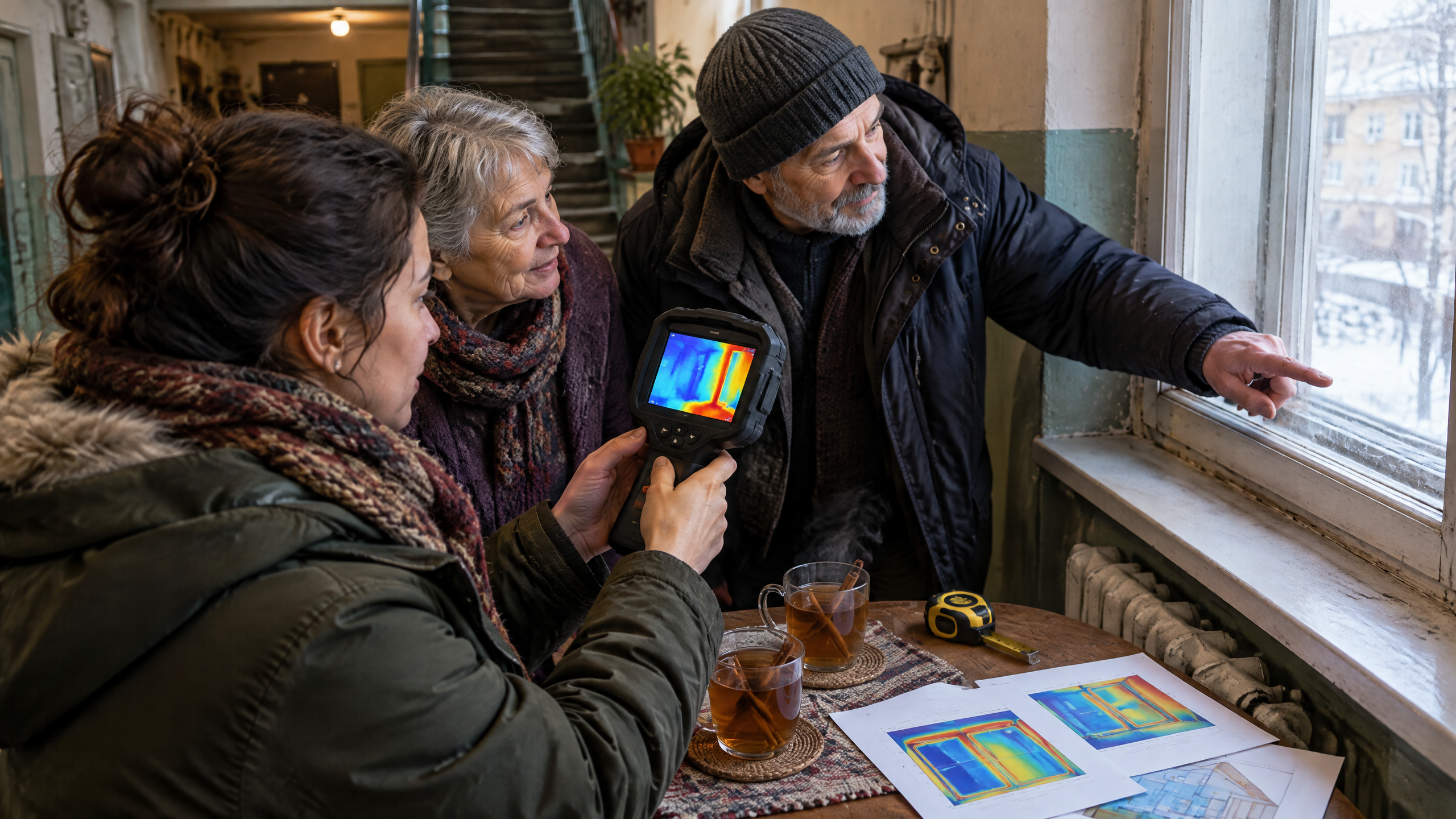
That was the quiet change: the tool made a problem discussable. A leaky window can feel like a personal failure, especially when every request for repair risks sounding like a complaint. But nine matching images made a pattern nobody had to apologize for. Together, the tenants wrote a one-page letter, calm and specific, and asked for a meeting. Their landlord arrived expecting an argument; he found a kitchen table crowded with colour printouts, cost estimates, and a neighbour who had borrowed the library’s laser measure. Within a month, window seals were replaced and the building’s ancient boiler timer was reset. The improvements were ordinary. The proof that ordinary people could assemble them was not.
Libraries have always lent more than paper, of course. A well-loved cookbook lends courage to feed six people; a mystery novel lends an evening somewhere else. But things make that promise physical. They let a person rehearse a version of life before paying for it: the gardener with no yard can test a composter; the would-be cyclist can learn a brake adjustment; the family hosting a memorial can borrow extra chairs. In a culture trained to treat ownership as readiness, a shared tool offers a different civic lesson. Readiness can be communal. You do not need to possess every answer to have access to one.
The messiness is part of the education. Objects come back late. A blender returns smelling faintly of garlic. Someone loses the square that keeps the tripod steady, and the library learns to stock replacements. The branch now runs five-minute ‘first try’ sessions at the desk, where no question is too basic and no one pretends an instruction sheet is enough. Volunteers repair what can be repaired. When something finally wears out, patrons vote on its replacement. That small ritual matters: it makes maintenance visible, and turns public resources from abstract budget lines into equipment with fingerprints on it.
Noor says the most borrowed item is not the thermal camera or the carpet cleaner. It is a compact label maker. At first she found that almost disappointingly unglamorous. Then she watched what people did with it: label pantry jars after a food-share delivery, mark planting trays at the community garden, organize donated cables for the youth music room, make a large-print set of switches for an older neighbour. The device does not solve hunger, loneliness, clutter, or access. It helps people name what they already have, which is often the first move toward sharing it.
Celia still checks out books, mostly mysteries now that her bedroom is warm enough to read in. On the night the new window seal went in, she stood with the thermal camera in the hall and watched the blue ribbon fade into a steady, harmless green. Her daughter asked if they could borrow it again next winter. ‘Maybe,’ Celia said, looking down the corridor where doors were opening for an impromptu soup swap. ‘Or maybe we’ll lend it to the next building.’ That is the library’s strangest and most generous trick: it sends an object out one door and returns a neighbourhood through another.