Travel
The Train Station Where Nobody Checks the Timetable
On a platform where the clock is ornamental, a missed connection becomes an invitation to travel by appetite, weather and chance.
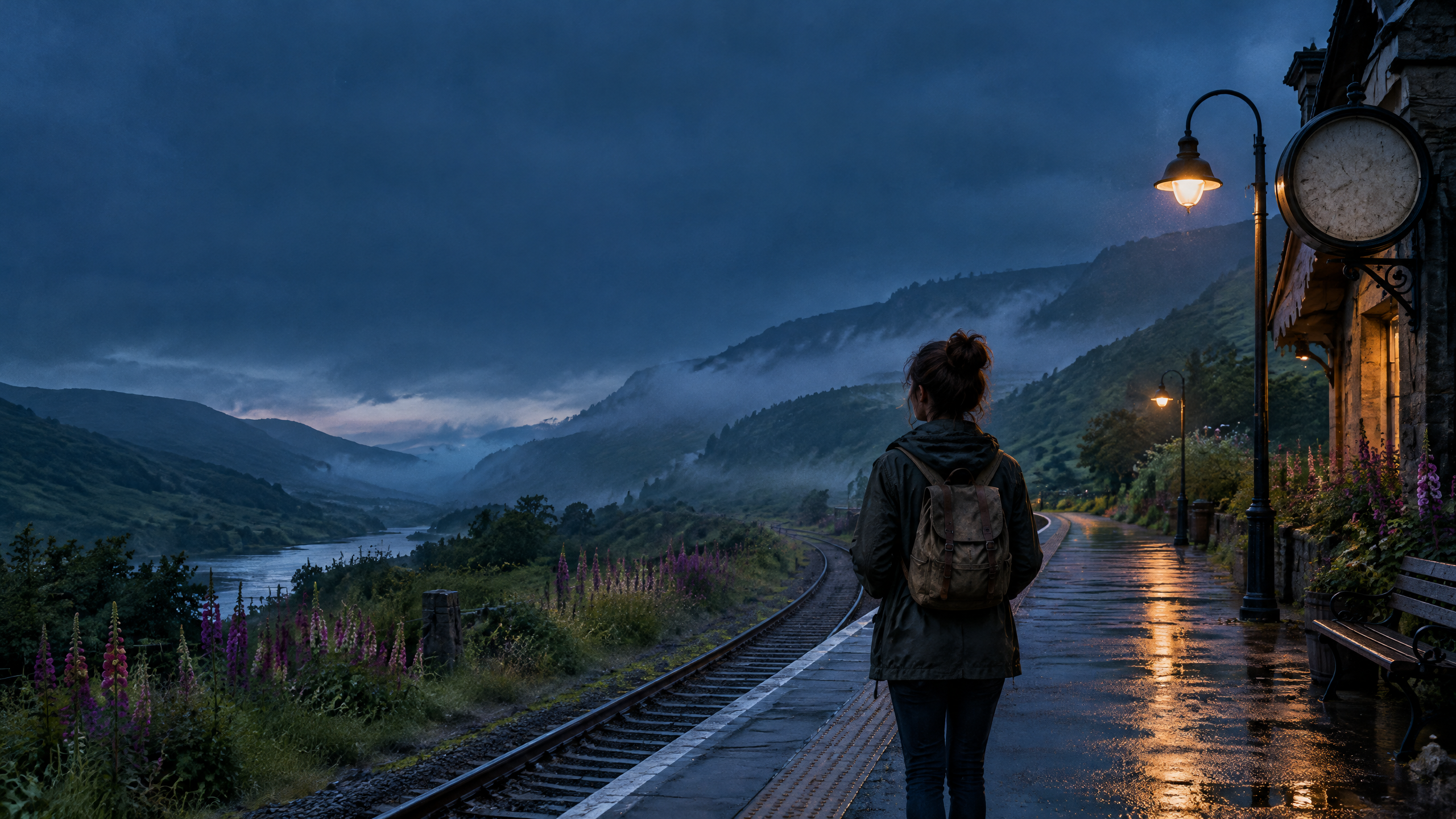
The train stopped at Marnel because I raised my hand. Not for any official reason—there was no name called over the speaker, no obedient crowd unzipping itself onto the platform—but because the conductor saw me standing in the doorway with my backpack on and gave a little shrug. Outside, a blue station sign leaned among foxgloves. The place had one track, a locked ticket office, and an enamel clock fixed permanently at 10:17. I had planned to change trains two towns later. Instead, the doors sighed shut behind me, the carriage slid away, and I was left with the odd, clean feeling of having been gently misplaced.
At first I did what a conscientious traveller does when the map has ceased to cooperate: I looked for confirmation. The timetable case held a faded grid under cloudy glass, its columns feathered by years of rain. A woman sweeping sunflower husks from the platform told me the next train might come at noon, or after the sheep crossed, or tomorrow if the river rose. She said this without irony, then nodded toward the village beyond the level crossing. “You’ve got the whole day,” she added. It sounded less like consolation than a local custom.
Marnel lay in a shallow valley smelling of warm stone, apples and diesel. Its main street narrowed into a lane before it had quite decided to be a street at all. I passed a bakery putting yesterday’s loaves in a crate marked FREE, a barber watering basil on his sill, and three boys using a broken suitcase as a boat in the gutter. Nobody hurried past me with the purposeful glare of a missed appointment. The town seemed to move by smaller signals: a shadow crossing a doorstep, a kettle whistling through an open window, a dog standing up because someone else had.
At the café beside the station, I asked the owner when trains actually ran. He placed a cup of coffee in front of me, black and fragrant with cardamom, and asked where I wanted to go. “North,” I said, naming the city where I had booked a museum ticket for the following afternoon. He laughed softly, not unkindly. “North is a direction, not an obligation.” Then he pointed to a chalkboard with no train times on it, only a list of arrivals: plums from Elen’s orchard; the travelling repairman; wind from the pass. By breakfast’s end, I had agreed to help carry wicker baskets to the market square.
The market appeared because people made it appear. A van backed into the square, its tyres popping on loose gravel, and doors opened all along the lane. Tables unfolded. Pears rolled from crates. A man in a green cap tuned a battered mandolin while two sisters hung strings of paper birds between the plane trees. My job was to hold the baskets steady while Elen, who had silver hair braided to her waist, arranged bruised fruit for jam and flawless fruit for strangers. She told me the station used to have six scheduled services a day, until landslides and budget meetings made the promises ridiculous. “So we stopped pretending the clock knew more than the hills,” she said.
By mid-afternoon, a dark seam of weather gathered over the pass. That was when the village postponed the train on purpose. The conductor, apparently also the mechanic and part-time beekeeper, walked through the square carrying a rain jacket and announced that the rails near the river would be checked after the storm. No one groaned. The baker brought out a tray of onion tarts; the mandolin player began a tune people already knew with their shoulders. Under the awning, I felt my old instinct to calculate intensify: battery percentage, hotel cancellation window, the cost of a new ticket. Then rain struck the canvas in great impatient coins, and a little girl handed me a paper bird before I could consult my phone.
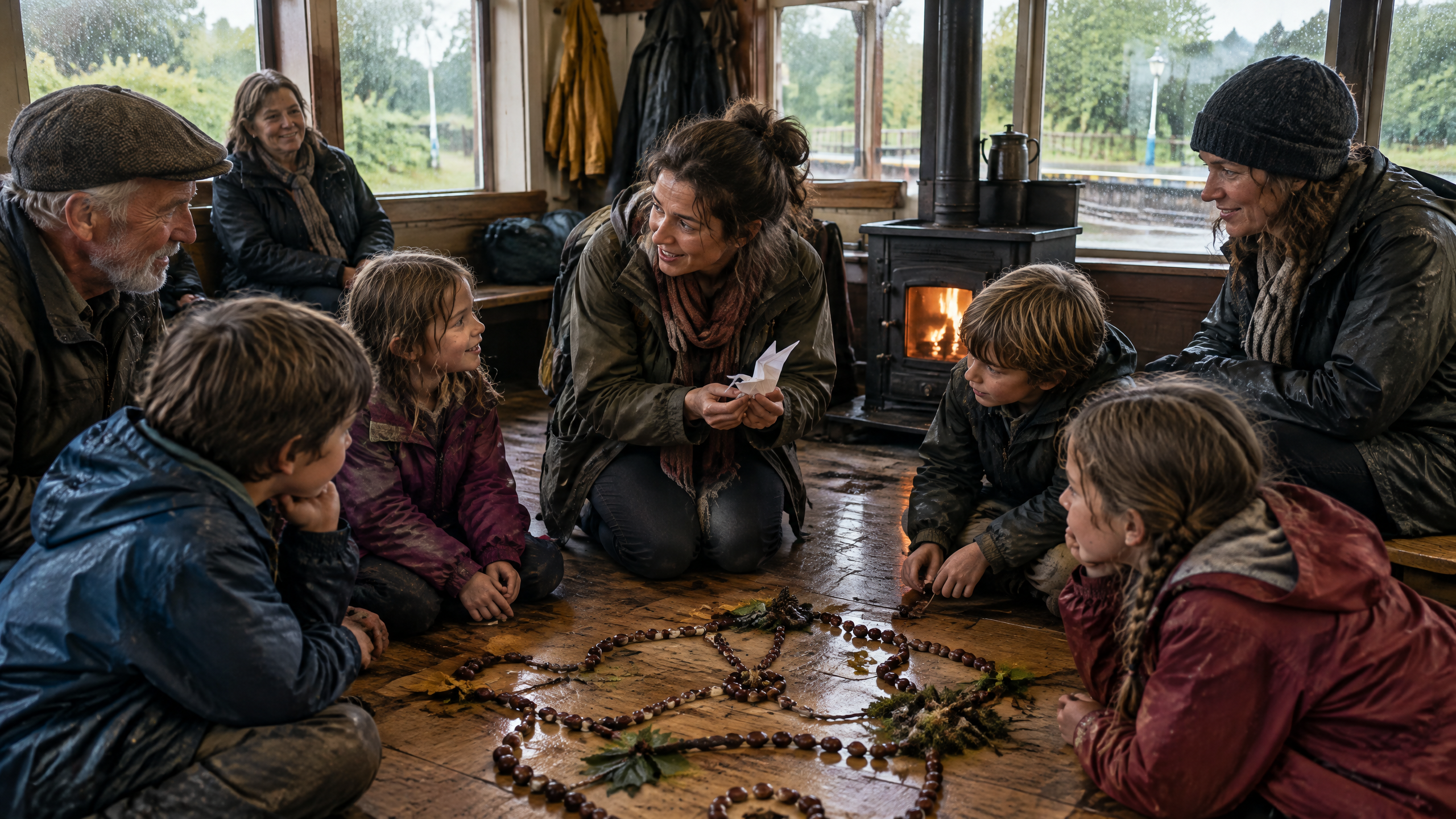
We spent the storm in the station waiting room, where a coal stove clicked and breathed. The children invented a route map on the floor with chestnuts, each station named for what could be found there: the place of wild mint, the bridge with the loud echo, the field where the moon looks cracked. Adults joined in with an ease that made me suspect this was not entertainment but practice. A retired postwoman told me she had met her husband during a fourteen-hour delay. A young mechanic said he had missed a job interview in the capital and opened his workshop instead. “A timetable is useful,” he said, setting another chestnut down. “It just shouldn’t get to tell the whole story.”
When the rain thinned, the conductor appeared at the doorway, damp at the shoulders. The river was clear, he said, and a train could leave before dusk—if there were enough passengers. I expected everyone to rise. Instead, the square outside exhaled into golden light, and people considered the question as if choosing a dessert. Elen still had pears to sell. The sisters wanted to finish their birds. The mechanic had promised to mend a neighbour’s lamp. I realised my own urgency had no audience here, no shared belief to strengthen it. I thought of the museum ticket, its allotted half-hour, its tidy barcode, and felt a surprising tenderness for the version of me who had booked it.
I did board the evening train, eventually. Elen pressed two pears into my hands, and the little girl’s paper bird rode in my pocket to the next city, where I rebooked the museum for another day. But Marnel altered the question I carried into every station afterwards. I still like knowing a platform number; I still run when the departure board blinks. Yet I no longer mistake an itinerary for a verdict. Some places ask to be reached. Others ask us to notice that we have arrived. At Marnel, the clock remained at 10:17, and for once it seemed perfectly on time.