Cooking
The 4 A.M. Bakery Rule
Before dawn, a tiny bakery runs on one generous rule: the first person through the door gets warmth before a receipt. It changes more than breakfast.
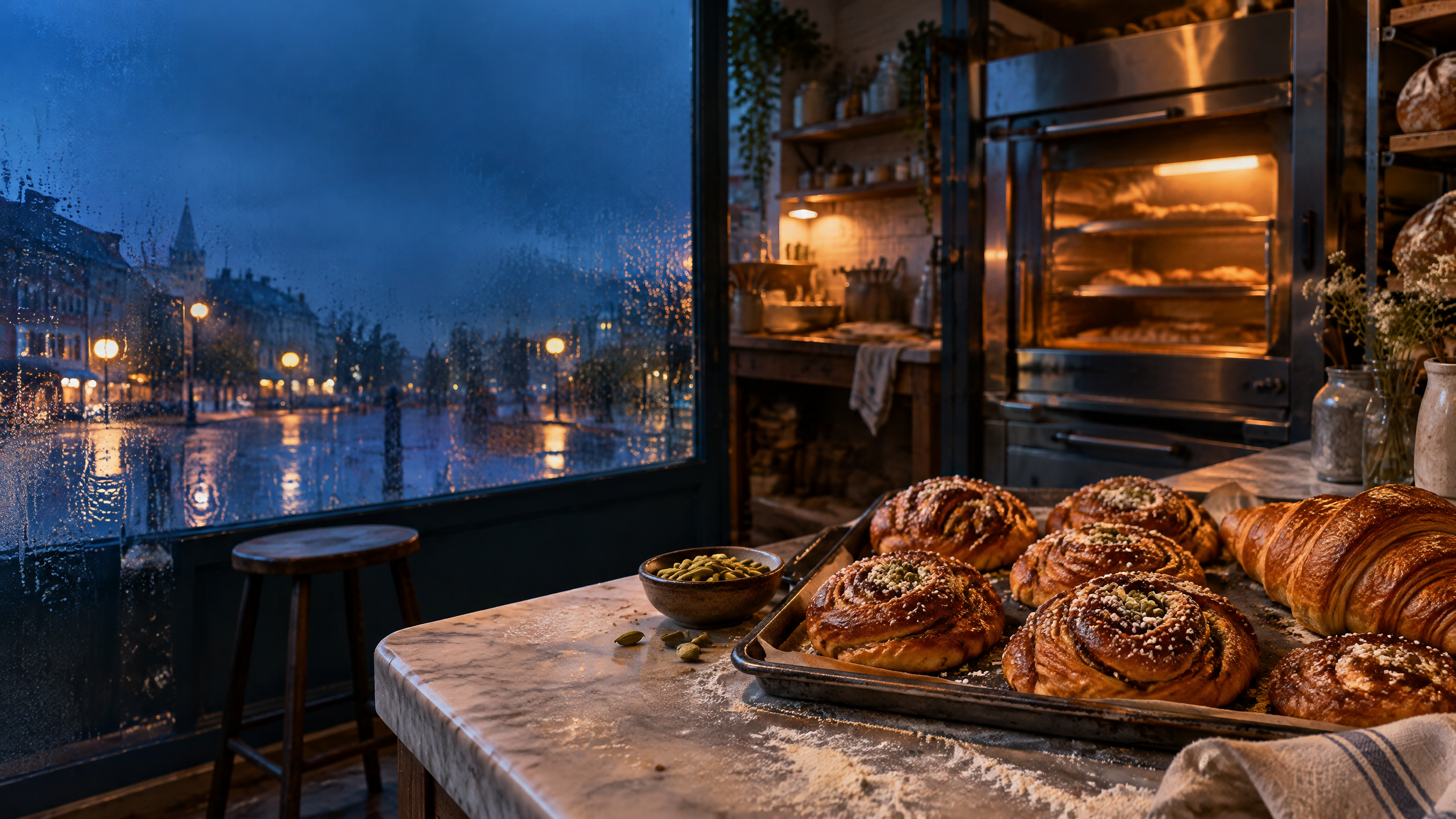
At 4:07 every morning, when the buses are still running on spite and the moon is hanging around like it forgot its keys, I put a small blue card beside the cash tin. It says: Never let the first person leave empty-handed. Not ‘paying customer,’ mind you. Person. The difference has kept my bakery afloat through rainstorms, rent jumps, a flour delivery that arrived smelling faintly of aquarium, and the year everyone learned to make sourdough badly in their own kitchens. It is my only rule, unless we count ‘do not argue with hot sugar.’
I learned it during my line-cook years, when my dinner service involved twelve burners, one chef named Rocco, and a ticket printer that sounded like a hostile insect. At 2 a.m., a dishwasher would wander through the back door looking wrecked, or a cabdriver would come in for coffee and stare at the mop bucket with the intensity of a philosopher. We fed them scraps, heel pieces, mistakes. The food was never glamorous. A bruised tomato sandwich can still make a person sit down. Sometimes especially then.
Now I run the sort of bakery with four tables, two ovens, and a front window that steams up before dawn. We open at three because the bread requires it, but the city has its own reasons for appearing. There are nurses unclipping their ID badges, young men in dress shirts who have clearly made several questionable choices, delivery riders warming their hands over tea, and widows who say they just like being up early. Nobody arrives looking as if they want a lesson in hope. They want a cinnamon roll, preferably one that does not ask questions.
The rule began with a man in a green suit and no coat during a January freeze. He came in at 4:01, patted every pocket, and announced that his wallet was at home ‘in a drawer with the other disappointments.’ I could have performed the little ballet of suspicion. Instead, I gave him a coffee and a still-warm cardamom bun. He ate half standing up, then started crying so quietly I nearly mistook it for the espresso machine. His daughter had been born that night; he was terrified to meet her because he had spent most of the pregnancy terrified to become his father.
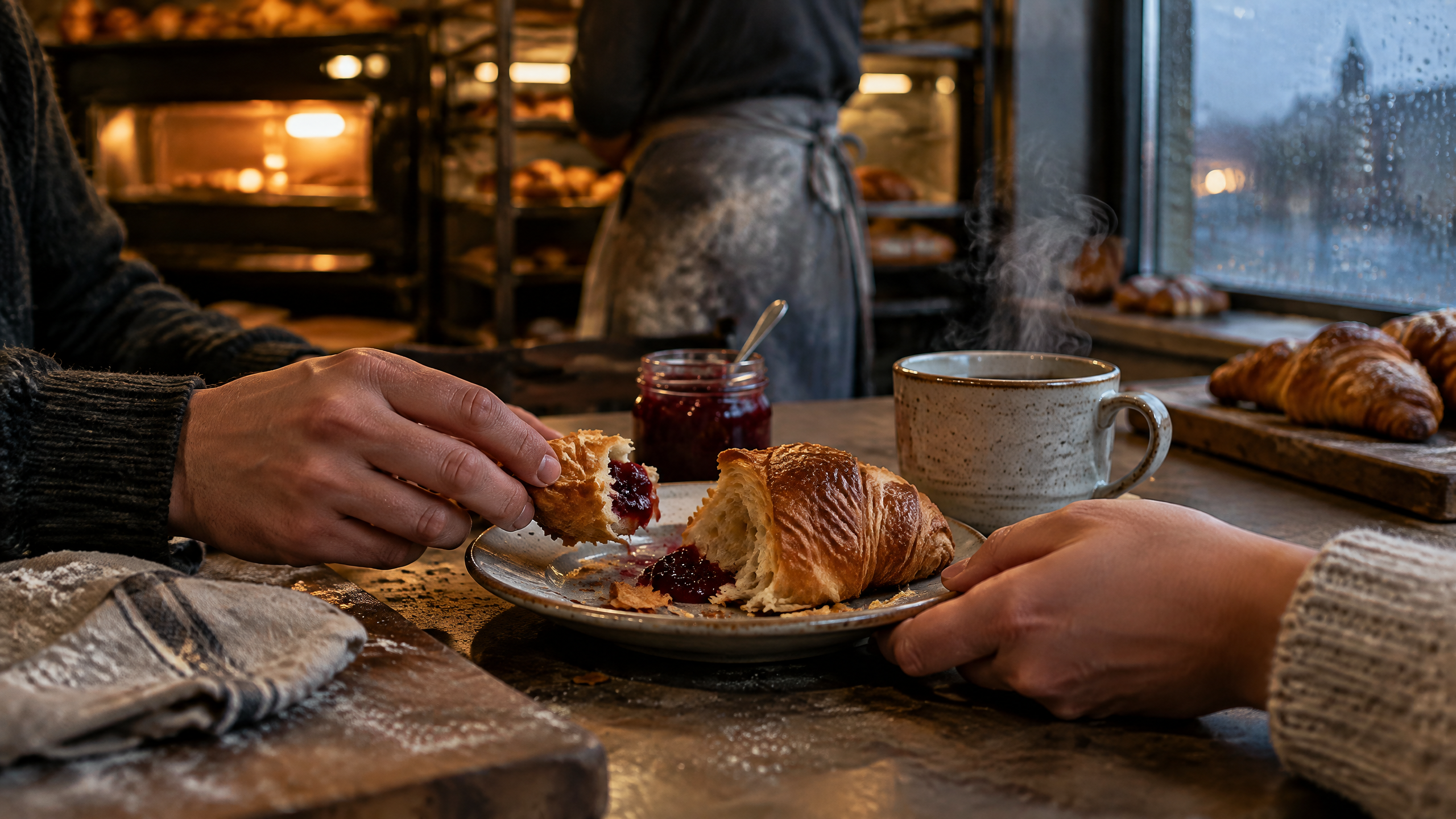
There is no appropriate pastry for that sentence. I had made a croissant with too much butter, which is to say I had made a croissant. I slid it across the counter. He laughed once, surprised at himself. By sunrise he had paid for it all, plus three buns for the next customer, and written a note on a napkin: ‘She has my ears. I’m going anyway.’ The napkin lives in the flour ledger, under March. I know, sentimental. Bakers are just dockworkers with feelings and better aprons.
The rule is not charity theater. I don’t announce it or photograph people receiving things. I keep a running number in my head, and some nights it is uncomfortably high. But hospitality is not a coupon code. It is a wager that a room can become less lonely if one person behaves as though another person belongs there. Most people repay it. They come back with exact change, a friend, a story, a bag of lemons from an aunt’s tree. Those who do not repay it have often already paid in a currency I cannot put in the till: they reminded the rest of us to look up.
Regulars have turned the rule into a loose, glorious conspiracy. Marta, who works nights at the hospital, leaves a five-dollar bill beneath the salt shaker when she can. Theo the trumpet teacher buys whatever loaf is closest to burning and calls it rustic. A teenager named Suki, who once accepted a free almond knot after missing her bus, now sweeps the threshold on Saturday mornings without being asked. She says it is because the crumb situation bothers her. I say it is because she has become one of us. We are both right, which is annoying.
The first person is not always broke or broken. Once it was a real-estate agent with excellent shoes and a face like a shut office. I offered him a coffee on the house; he blinked as if I had proposed marriage. Ten minutes later he told a stranger at the counter that he had not baked with his mother before she died, only watched her knead dough with a wedding ring she never removed. The stranger passed him the jam. That was the whole ceremony. A tiny plate, a plastic knife, two adults suddenly not pretending they were made of stone.
By noon, of course, the bakery looks ordinary again: fingerprints on the glass, a child negotiating aggressively for a cookie, me losing a fight with a sack of rye flour. That is the trick of food. Its miracles wear aprons and need mopping afterward. I cannot fix anybody’s father or grief or bus route. I can make sure that, at the hour when a city is least interested in being kind, the first hand on my door gets warmth before it gets a receipt. Then the ovens roar, the street lightens, and someone else decides they can stay.