Fiction
The Street That Appears at 4:44
At 4:44 every morning, a rain-dark alley becomes a train platform for things the city has forgotten. Tonight, Mara is carrying one memory she cannot decide whether to keep.
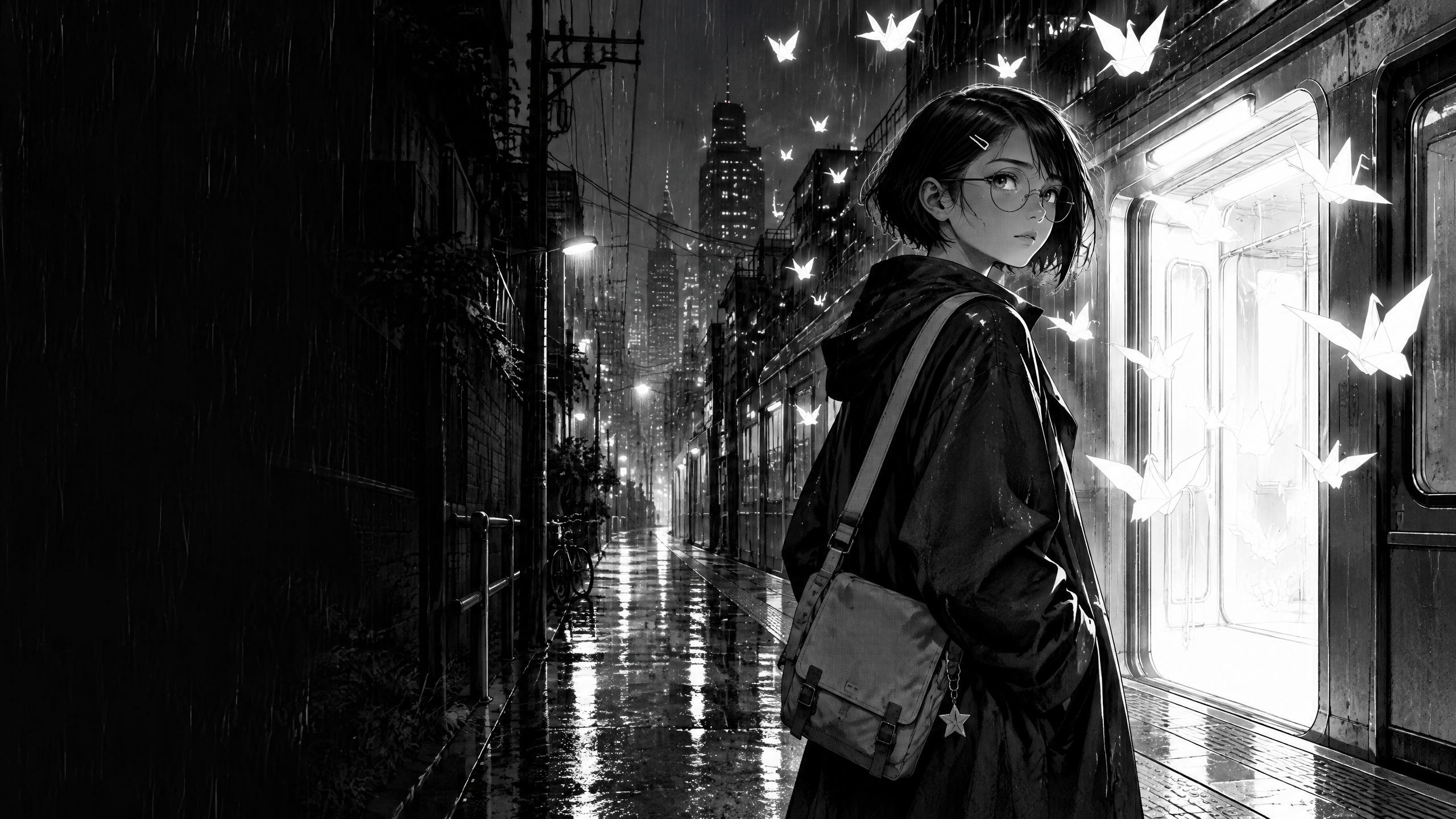
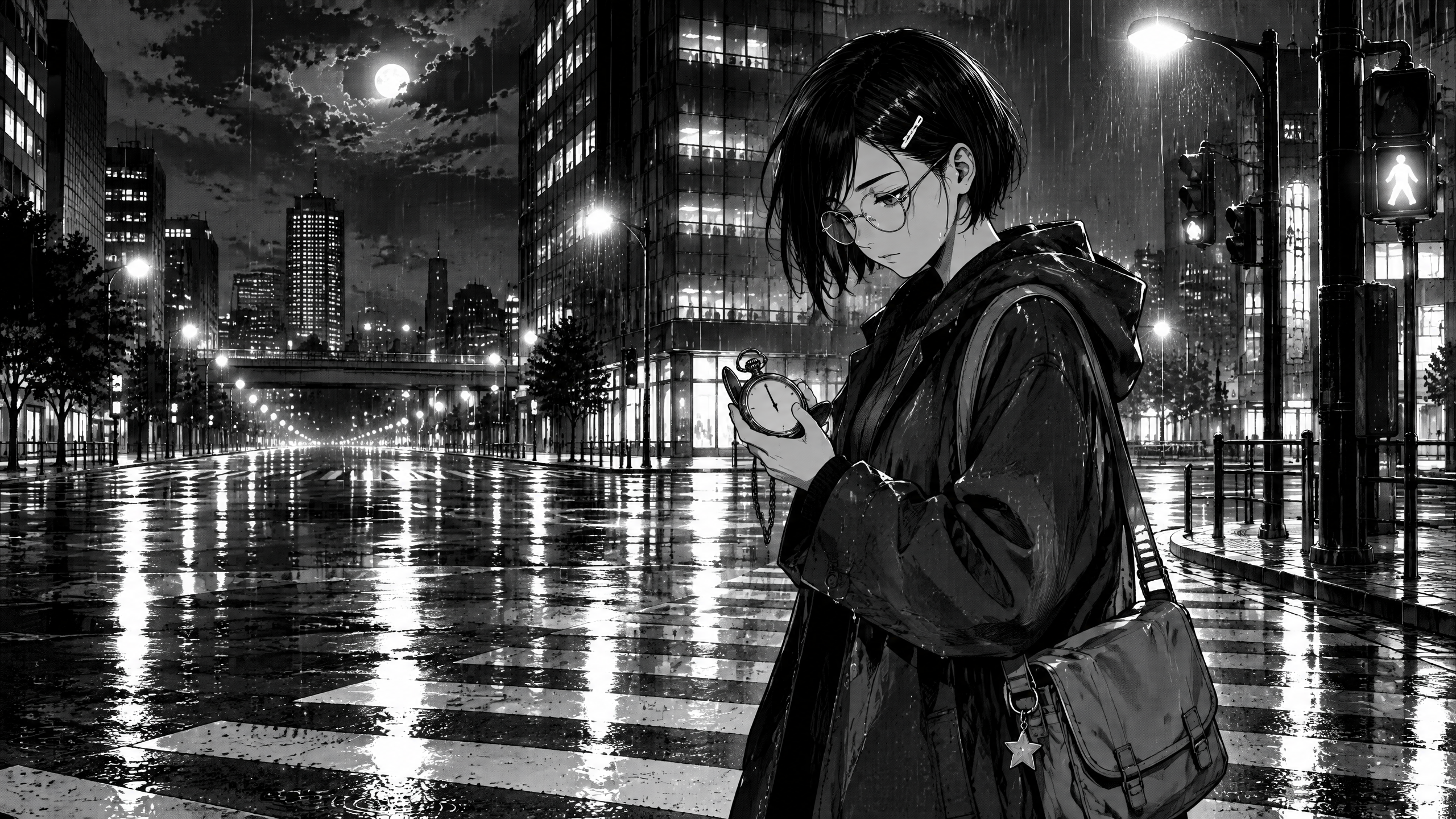
Mara first saw the alley on the night she missed the last ordinary train. Rain had polished the lanes of Sable City into long black mirrors, and the pocket watch in her messenger bag had begun tapping against her sketchbook like a fingernail on a window. It was her grandmother’s watch, brass and stubborn, stopped for decades at 4:44. Mara had carried it since the funeral because giving it a drawer felt too much like choosing an ending. When the pedestrian lights blinked white, the watch sprang open by itself. At the far end of a street she had walked a hundred times, a narrow passage glowed between a florist and a locked noodle shop.
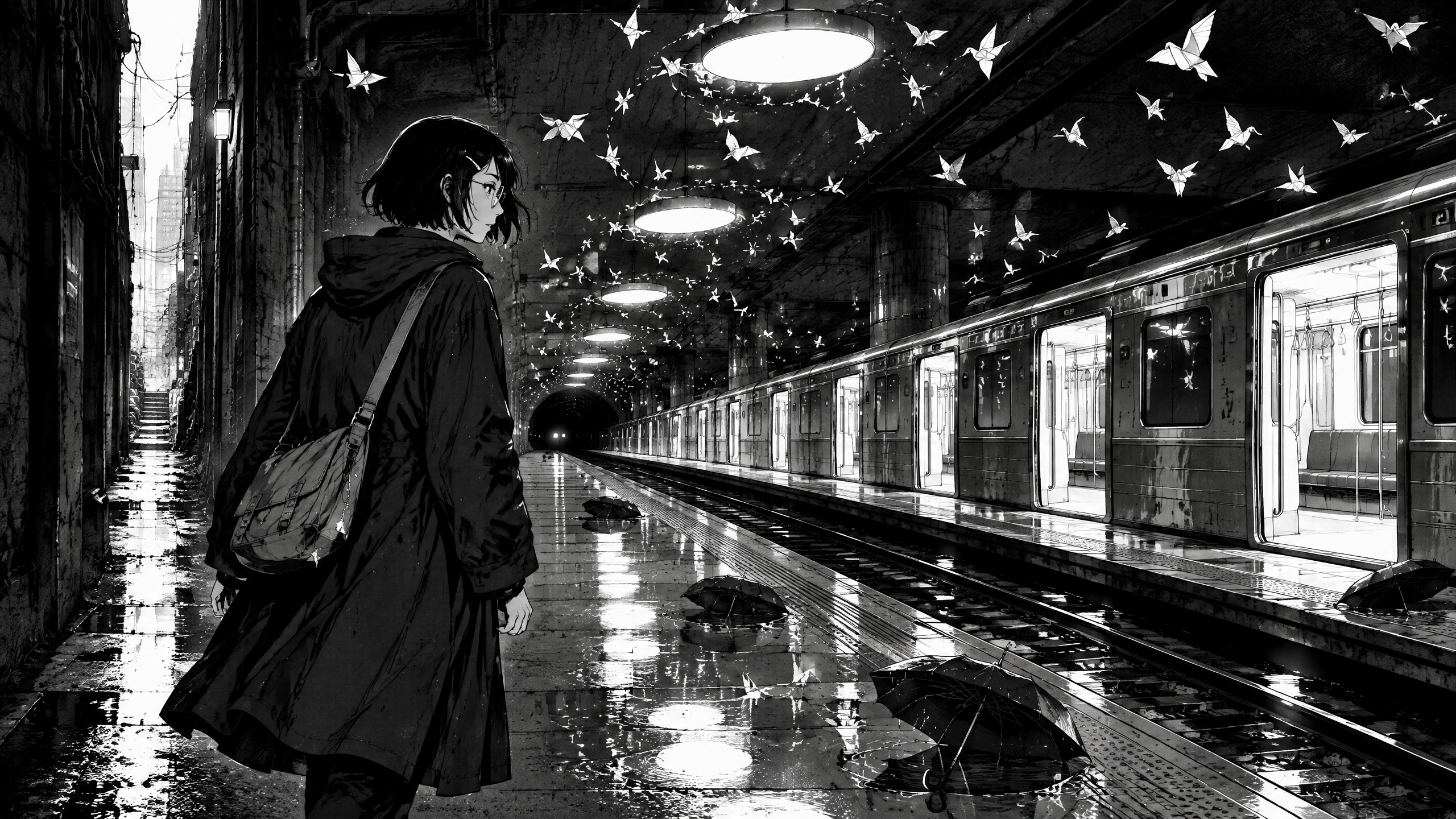
Mara knew it should not have been there. The passage was too deep, and rain fell inside it without reaching the floor. Still, she stepped in. Her small enamel hairpin flashed in the reflected light as she pushed wet black hair from her glasses. The city noise thinned behind her. In its place came a soft, regular chime—one note every few seconds, polite enough to be mistaken for imagination. At the end of the passage waited a platform, a silver train, and a flock of paper birds turning beneath the lights. None of the signs carried words. None of the people waiting looked surprised to see her.
The doors opened. A woman in a dark conductor’s coat stood inside, older than Mara’s grandmother had been and somehow younger than the rain. She held a puncher shaped like a crescent moon. “One object only,” she said. Her voice was dry as a match struck in a quiet room. Mara looked at the watch in her hand. “What kind of train is this?” The conductor pointed through the carriage windows. Outside was not a tunnel but a slow river of lit windows: kitchens where nobody ate, bedrooms where apologies stayed unsaid, classrooms after everyone had gone home. “The line carries things people are tired of carrying,” she said. “Not objects. The part underneath them.”
Mara sat beside the window because the empty seats seemed to be watching. Across from her, a folded paper lantern rested on green vinyl. It opened and closed with each motion of the carriage, though there was no wind. In its thin light, Mara saw a scene she had not remembered in years: herself at seven, waiting backstage at a school concert while her grandmother knelt to fix the broken strap on her shoe. Her grandmother had told her, “Being scared means you’re paying attention.” Mara had always remembered the sentence. What she had forgotten was the way her grandmother’s thumb trembled, and how both of them pretended not to notice.
The train carried that tiny tremor through her like a note held too long. Mara gripped the pocket watch. Since the funeral, she had told everyone she was fine. It was a useful word, smooth enough to roll over anything. But the truth was that she had become afraid of the watch because it made grief feel specific. Not a giant dark cloud, not a clean lesson, but the smell of citrus soap on an old coat; the double tap of her grandmother’s cane; a hand shaking while tying a child’s shoe. The memories were ordinary enough to keep, which made them dangerous. They could surprise her anywhere.
At the last station, the doors opened onto an archive without walls. Shelves rose into darkness, holding jars full of warm light. Some contained a first laugh, some a lost recipe, some the exact sound of a person saying a name. The conductor led Mara down a narrow aisle. “Choose carefully,” she said. “We do not erase. We only take away the sharpest edge.” Mara found an empty jar waiting under a brass label with no letters. The pocket watch ticked once. Then the scene of her grandmother’s trembling hand lifted out of her mind, bright as a filament, and hovered over the glass.
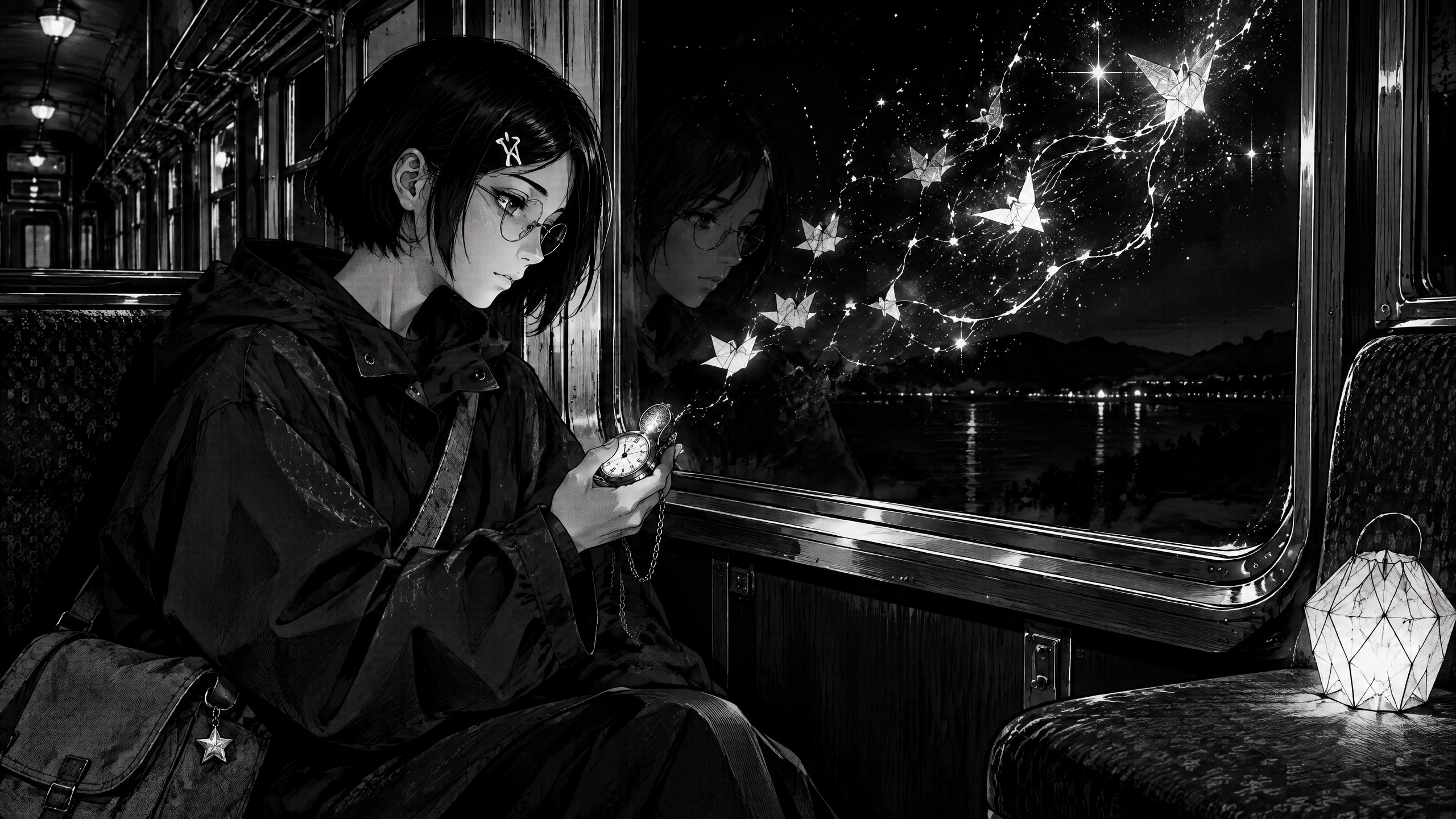
For a moment, Mara almost let it go. She imagined waking tomorrow able to wear the watch without feeling the floor tilt. She imagined visiting her grandmother’s apartment without standing in the hallway, unable to enter. The promise was not happiness; it was quiet. And quiet was tempting. Then a paper bird landed on the jar’s rim. It had been folded from a page of Mara’s old sketchbook. In the bird’s crooked wing she recognised a drawing she had made after the funeral: two hands, one young and one old, joined by the smallest possible line. She had forgotten making it. The archive had not.
“If I give this to you,” Mara asked, “will I still know she loved me?” The conductor did not answer immediately. Far down the shelves, a jar flickered and went dim. “You will know the fact,” she said at last. “But perhaps not the weather of it.” Mara understood then. Love was not only a sentence you could repeat without breaking. It was the trembling thumb, the citrus soap, the stupid joke told at breakfast three times in a row. It was inconvenient detail. It hurt because it had a shape. Mara closed the empty jar with both hands and placed it back on the shelf.
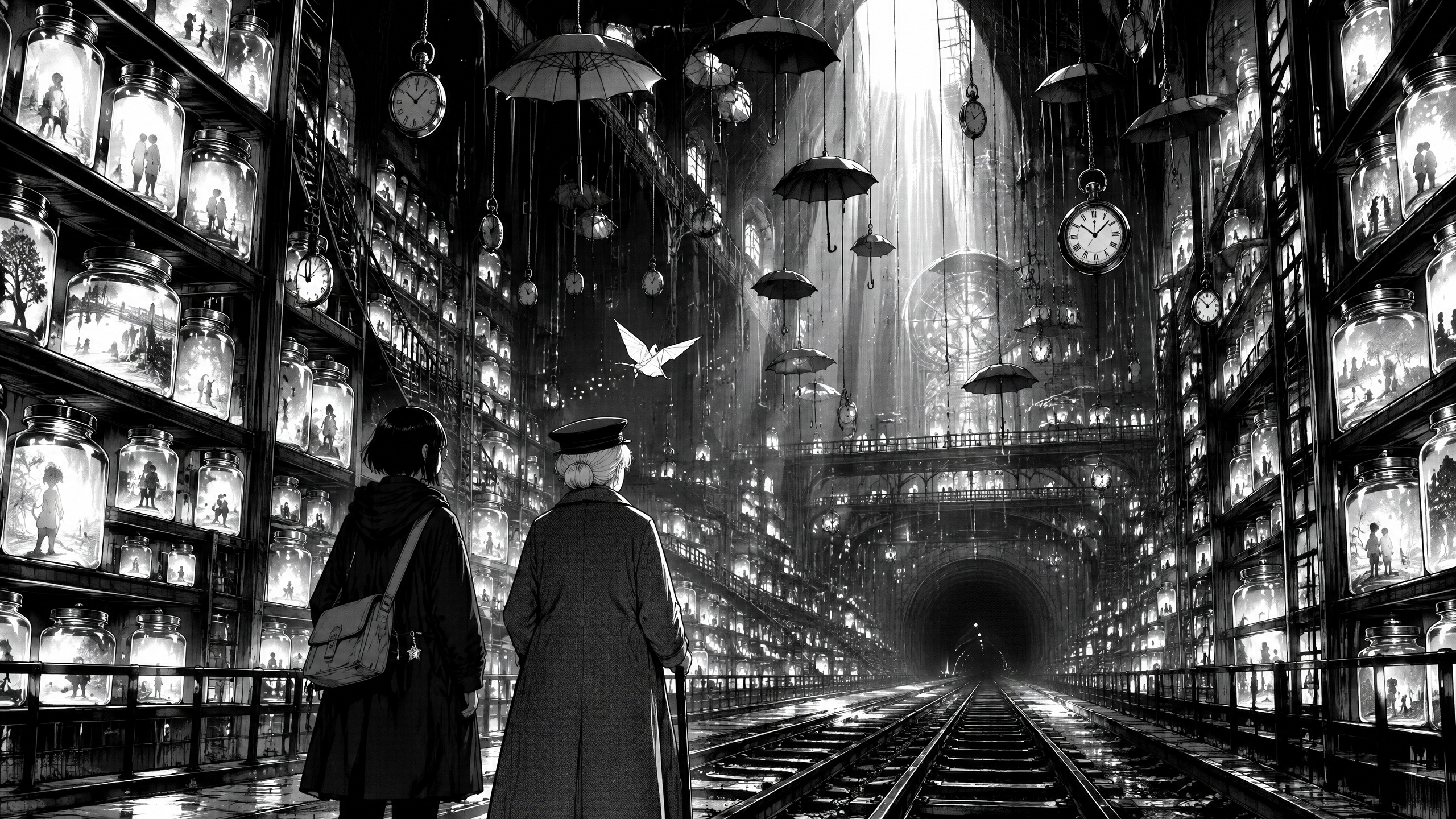
The conductor watched her return the watch to her bag. “Then why did you come?” she asked. Mara looked through the archive’s tall windows. Beyond them, the city had begun to pale toward morning. “I thought I wanted less of it,” she said. “Maybe I just wanted a place where I could look at it without being alone.” The conductor’s face softened, almost imperceptibly. She pressed the moon-shaped puncher into Mara’s palm. It made no hole, but the pocket watch started ticking, steady and alive. “There are other ways to travel light,” she said. “Not all of them involve leaving something behind.”
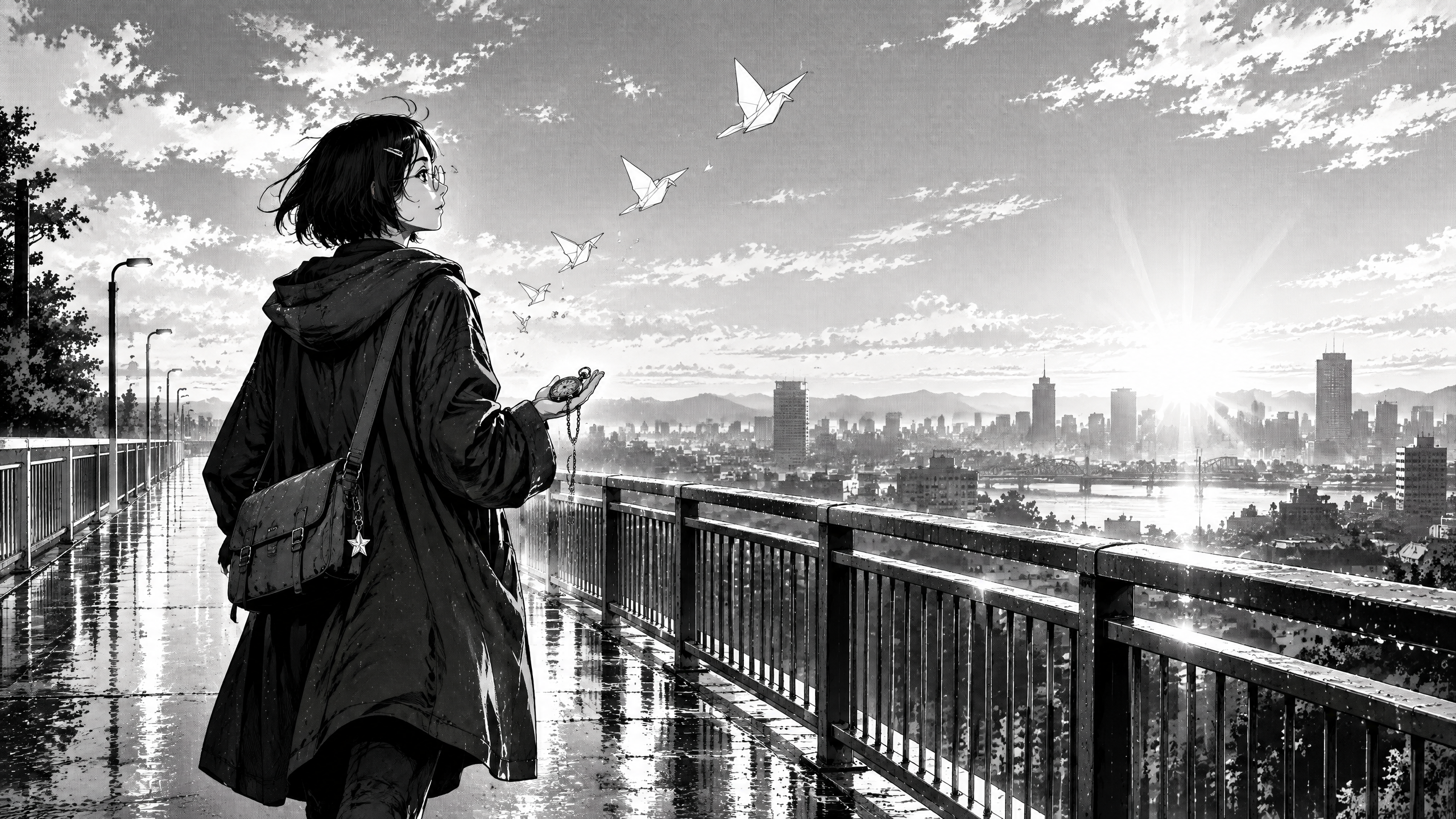
When Mara stepped back onto the bridge above the waking city, the secret platform was gone. The alley ended at a brick wall damp with rain. In her palm lay a paper bird, its wings folded around a tiny silver thread. She tucked it beside the watch and walked toward the first tram of the day. At 4:44 the following morning, the watch opened again. Mara did not look for the alley. She sat at her desk, drew the trembling hand she remembered, and let the lines be uneven. Outside, the city kept every street it had promised. Somewhere underneath it, a train waited for anyone who mistook forgetting for the only kind of peace.