Atmospheric science
Volcanic air is offering a cleaner measure of a shifting climate.
High atop the volcanic peaks of Hawaii, atmospheric scientists are isolating the earth’s baseline air to track the precise chemical signature of a changing planet, turning an active crater into a vital instrument for global climate monitoring.
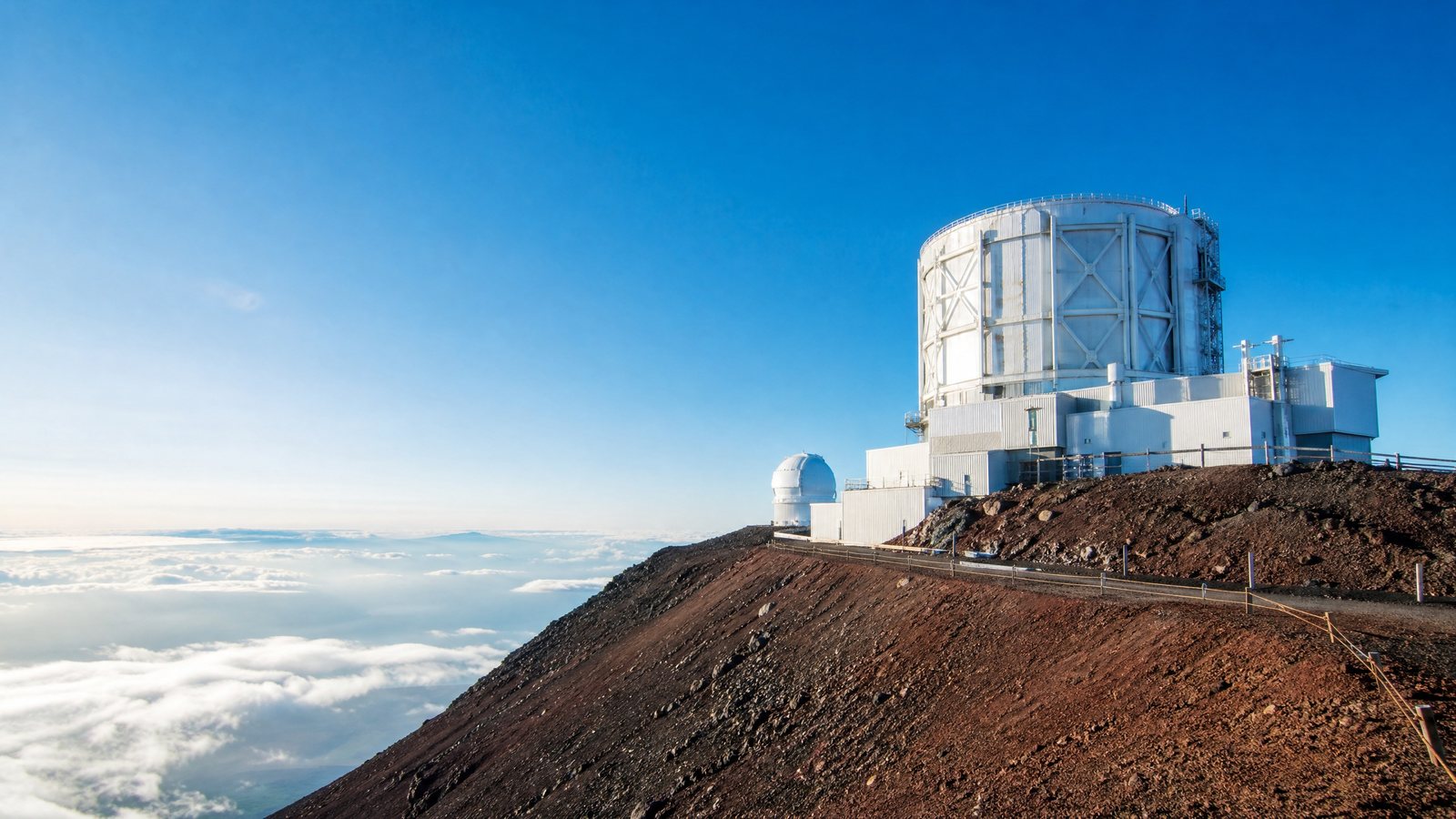
The Mauna Loa Observatory sits as a stark, white sentinel against the dark, volcanic slopes of Hawaii’s largest shield volcano. Located at 3,397 meters above the Pacific, the facility is far removed from the bustling life below [1]. Here, the landscape is a barren expanse of basaltic rock and thin air, where the earth’s geological past meets the urgent questions of its atmospheric future. The choice of this location was a deliberate search for isolation. By rising above the thermal inversion layer that traps local pollutants, the observatory gains access to a layer of the sky that is representative of the planet as a whole. This is a landscape defined by its distance—from industrial centers, carbon-cycling forests, and the immediate noise of human activity.
Central to the work at Mauna Loa is the pursuit of what scientists call "baseline air." This is the air of the "well-mixed" atmosphere, a sample that has traveled thousands of miles across the open ocean, losing the specific chemical signatures of any single city or forest. In the lower altitudes, the concentration of gases like carbon dioxide fluctuates wildly, driven by the daily cycle of plant photosynthesis and localized emissions. However, at the heights of Mauna Loa, the trade winds deliver a more stable and uniform sample of the global background. This air provides a cleaner measure of the shifting climate, allowing researchers to see underlying trends often obscured by the chaotic signals of the surface [1]. To capture this baseline, the observatory’s intake manifolds face the prevailing winds, drawing in the sky before it touches the ground.
The modern era of atmospheric monitoring began here in 1958, when Charles David Keeling established the first continuous measurements of atmospheric carbon dioxide [3]. Before Keeling’s arrival, the scientific community lacked a precise way to track how human activity was altering the composition of the air. His early data revealed a surprising rhythm: a seasonal "breath" where CO2 levels dropped in the summer as Northern Hemisphere forests grew and rose in the winter as they went dormant. Yet, beneath this natural oscillation, Keeling identified a steady, year-over-year increase in the total concentration of the gas. This record, now known as the Keeling Curve, has become the most iconic graph in climate science. It serves as a continuous ledger of the human impact on the atmosphere, a testament to the power of patient, high-altitude observation.
There is a profound irony in placing a climate observatory on the slopes of an active volcano. Mauna Loa itself is a source of carbon dioxide, occasionally venting plumes of volcanic gas from its summit crater just six kilometers away [2]. However, the scientists at the National Oceanic and Atmospheric Administration (NOAA) have developed sophisticated methods to navigate this volcanic paradox. Local volcanic emissions are characterized by a different chemical signature and higher variability than the global baseline. By monitoring wind direction and the sudden spikes in concentration that accompany volcanic outgassing, researchers meticulously filter out the local noise. The result is a data set that remains remarkably pure, proving that even in the shadow of an active eruption, the global signal can be isolated.
The process of measuring the air is one of extreme technical precision. The instruments housed within the observatory are calibrated against international standards with a level of care that borders on the ritualistic. Every hour, the air is sampled and analyzed, with the results checked against reference gases of known concentrations. This constant calibration ensures that a measurement taken today is directly comparable to one taken decades ago. The "cleaner measure" offered by the site is not just a product of its geography, but also of its infrastructure. The facility operates with a minimal footprint, using electric vehicles and strictly controlled access to prevent local contamination. In the cleanrooms of the observatory, the atmosphere is treated as a precious resource that must be handled with sensitivity.
| Era | Atmospheric CO2 Concentration (ppm) | Significance | | :--- | :--- | :--- | | 1958 | 315.71 | Commencement of Keeling's measurements [3] | | 2022 | 420.99 | Surpassing 420 ppm threshold [1] | | 2026 | 426.98 | Current observed baseline (August 2026) [1] |
The data coming off the mountain today is more urgent than ever. Recent measurements from the NOAA Global Monitoring Laboratory show atmospheric carbon dioxide levels reaching unprecedented heights, with weekly averages now frequently exceeding 426 parts per million [1]. This is a staggering increase from the 315 parts per million recorded when Keeling first began his work. These numbers represent a fundamental shift in the earth’s energy balance. The volcanic air, once a symbol of pristine isolation, now carries the clear and unmistakable mark of the fossil fuel era. As the concentration of greenhouse gases continues to rise, the measurements from Mauna Loa provide the primary evidence for the scale and pace of global warming.
The importance of high-altitude research extends beyond just carbon dioxide. The observatory also tracks other atmospheric components, including methane, nitrous oxide, and the aerosols that influence how much sunlight reaches the earth’s surface. By studying the air, scientists can observe the long-range transport of dust from Asian deserts and smoke from distant wildfires. This makes the site a critical node for understanding the complex interactions between the land, the sea, and the sky. The thin, volcanic air acts as a lens, focusing the vast complexities of the global climate into a series of measurable parameters. It is a place where the grand scale of planetary change is reduced to the movement of a needle on a dial.
The legacy of researchers like Oren Vale, who have documented the shifting chemistry of our air, is one of quiet persistence. In an age of rapid change, the steady accumulation of data at Mauna Loa offers a form of objective truth. The record kept here is a mirror held up to the planet, reflecting the choices we have made and the challenges that lie ahead. The volcanic air remains a cleaner measure not because it is free of human influence, but because it allows that influence to be seen with such precision. It is a reminder that while the climate may be shifting, our ability to witness and understand that change remains our most vital tool for navigating the future.