Cooking
How to Make a Simple Carbonara Pasta
A simple carbonara is not a cream sauce. It is hot pasta, crisp cured pork, egg, Pecorino, pepper, and a little starchy water brought together quickly and off the heat.
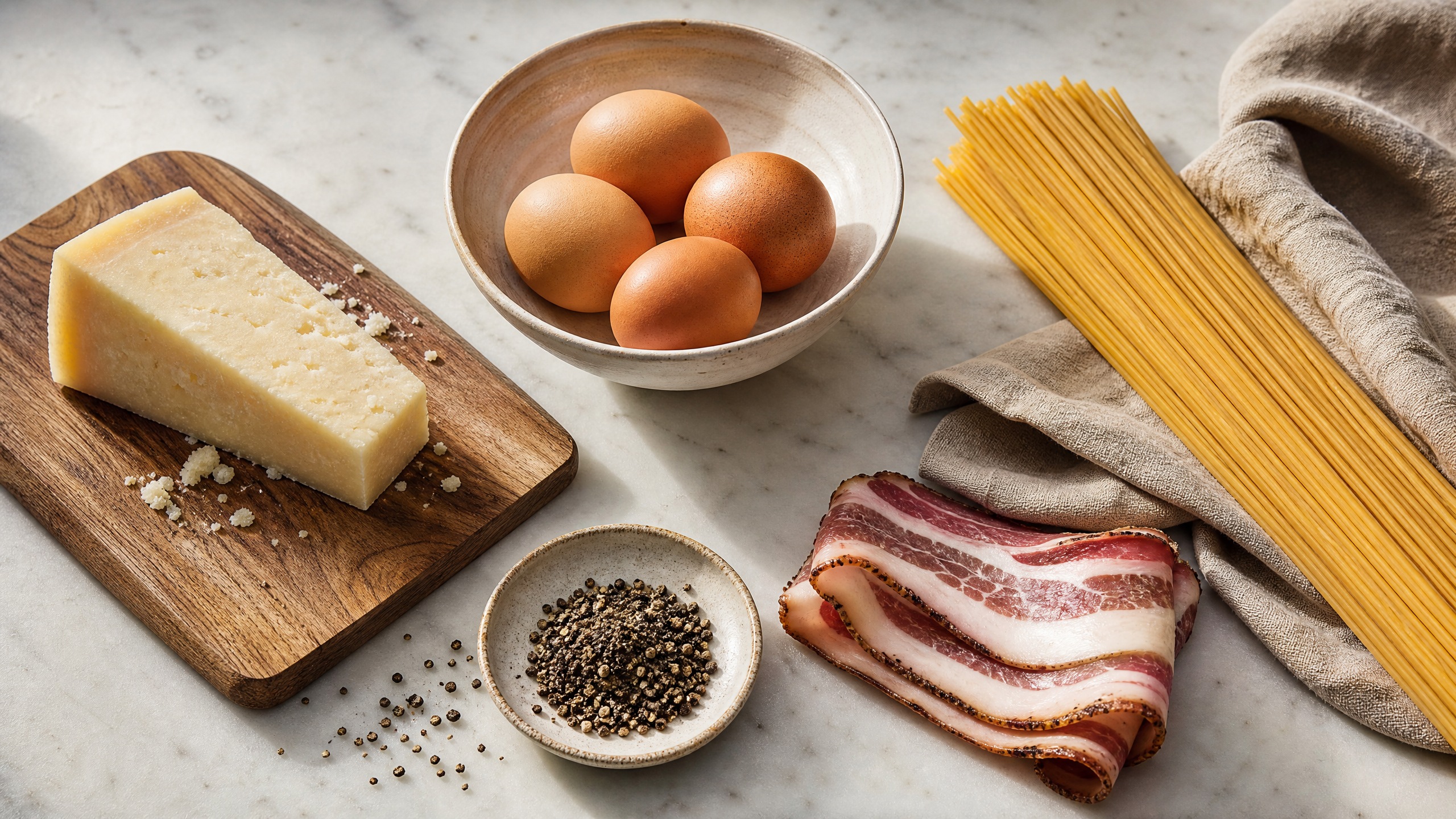
Carbonara is a fast dinner, but it rewards having everything ready before the pasta is cooked. For two generous bowls, use 200 g spaghetti, 100 g guanciale or pancetta, 2 egg yolks plus 1 whole egg, 55 g finely grated Pecorino Romano, plenty of black pepper, and salt. Keep a heatproof cup beside the stove for pasta water. You do not need cream; the glossy sauce comes from egg, cheese, rendered pork fat, and the starchy water from the pot.
Step 1 — Put a large pot of water on to boil. Salt it lightly; the Pecorino and cured pork will add plenty of savoury flavour later. In a bowl large enough to toss the pasta, beat the yolks and whole egg with the grated Pecorino and a generous amount of black pepper. It should look like a thick, pale paste. Set the bowl aside near the stove.
Step 2 — Cut the guanciale or pancetta into small batons. Put it in a cold frying pan, then set the pan over medium heat. Let the fat render slowly until the pieces are golden and crisp. There is no need for oil. Turn off the heat and leave the pork and its fragrant fat in the pan.
Step 3 — Add the spaghetti to the boiling water and cook until just al dente, following the packet time as a guide. Before draining, scoop out at least three-quarters of a cup of the cloudy pasta water. This water is the quiet ingredient that helps the cheese and egg coat every strand.
Step 4 — Move the drained spaghetti straight into the pan with the crisp pork. Toss it through the rendered fat for about 30 seconds. Keep the burner off. The pasta should be hot, but the pan must not be actively heating when the egg mixture goes in.
Step 5 — Tip the hot pasta and pork into the bowl containing the egg-and-cheese mixture. Toss quickly with tongs, adding pasta water one tablespoon at a time until the sauce becomes silky and clings to the spaghetti. If it looks tight, add another small splash. If it looks loose, keep tossing for a few seconds; the cheese and pasta will bring it together.
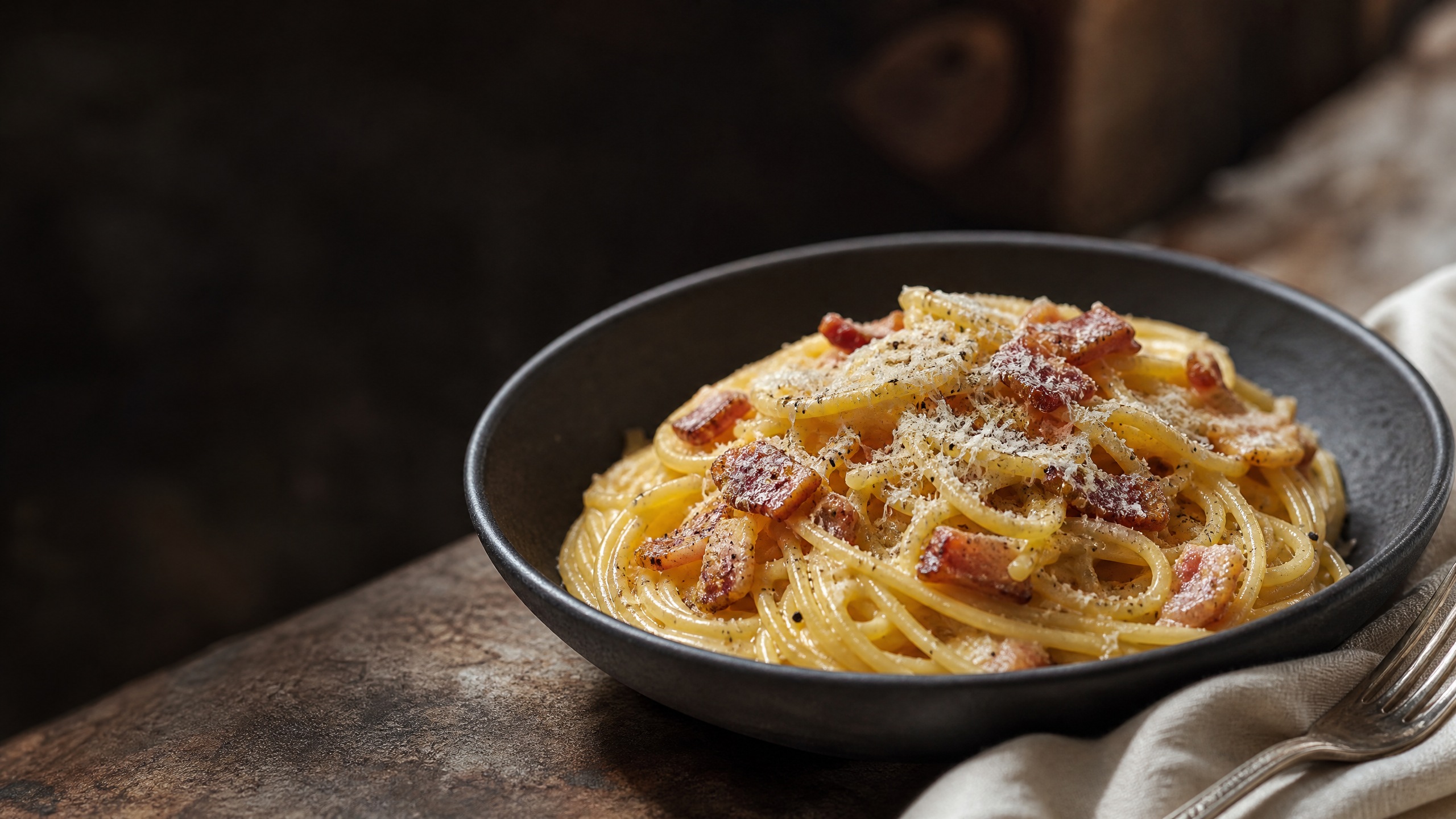
Step 6 — Divide the carbonara between warm bowls immediately. Finish with more Pecorino and black pepper. Eat it while the sauce is glossy. If the egg starts to look like scrambled curds, the pan was too hot; next time, leave it off the heat and let the warmth of the pasta do the work.
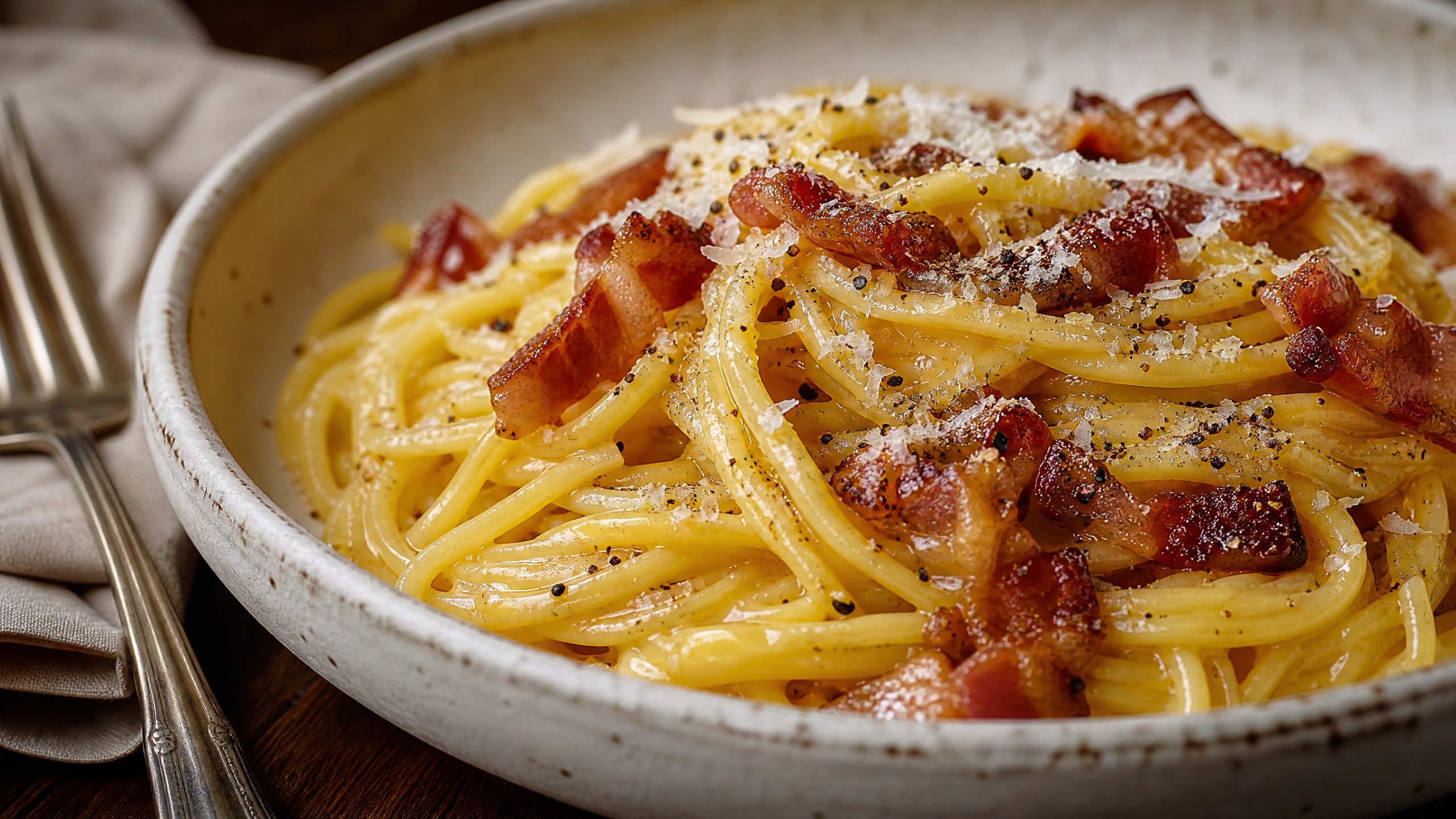
The simplest version has a useful rhythm: make the egg mixture, crisp the pork, cook the pasta, then toss everything off the heat. Once that order feels familiar, carbonara becomes less of a test and more of a quick, deeply satisfying dinner.