Genetics
The gentlest gene tools are changing what a lab can ask.
Advancements in high-precision genetic engineering are replacing the traditional blunt cuts of earlier methods with chemical conversions and targeted rewrites, allowing scientists to investigate the subtle nuances of DNA without triggering destructive cellular responses.
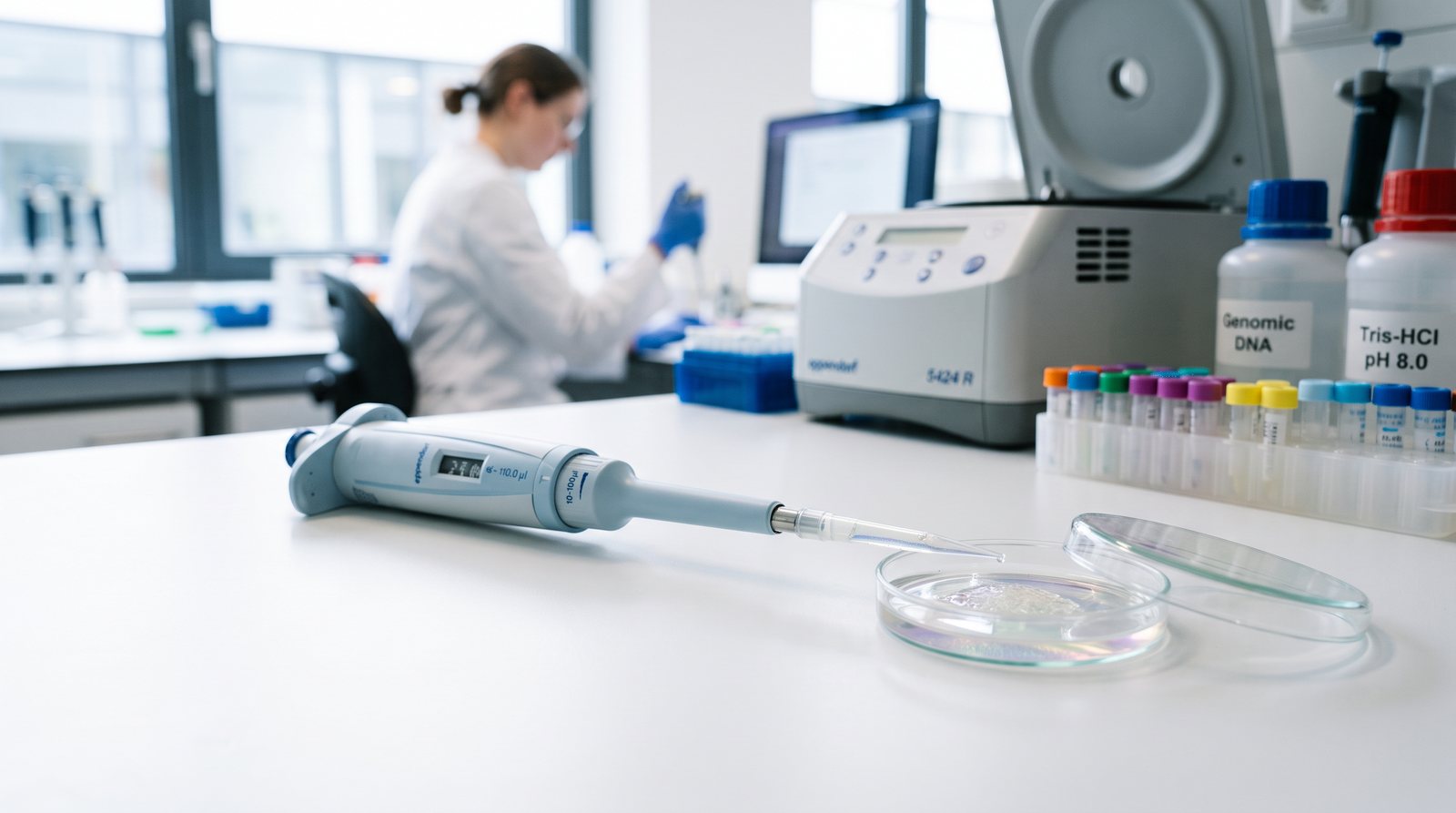
The landscape of genetic engineering is undergoing a profound transformation, moving away from the era of "molecular scissors" toward a more sophisticated period characterized by "chemical surgery." Early tools like CRISPR-Cas9 relied on cutting the double helix to trigger natural repair. While revolutionary, this approach was inherently blunt, relying on the cell to stitch its DNA back together—a process that often introduced random errors. Today, a new generation of high-precision tools is emerging, offering a far gentler touch. These methods do not seek to break the structural integrity of the genome but rather to rewrite its code through direct chemical conversion. This shift represents a fundamental change in how scientists interact with the building blocks of life, prioritizing preservation over disruption and allowing for a level of nuance previously considered unattainable in a laboratory setting.
Traditional genetic editing methods, though powerful, carry significant biological costs that are only now being fully understood. When a double-strand break is introduced into the DNA, the cell perceives it as a catastrophic event, immediately activating aggressive damage-response pathways. Non-homologous end joining, a common repair process, often results in unpredictable insertions or deletions, known as indels. Furthermore, these breaks can lead to larger, more dangerous chromosomal rearrangements or translocations, where entire segments of DNA are swapped between chromosomes. Beyond these physical mutations, the mere presence of a break can trigger cellular stress responses, such as the activation of the p53 protein, which can stall cell growth or even induce cell death. By avoiding the double-strand break entirely, modern "gentle" tools circumvent these chaotic outcomes, ensuring that the rest of the genetic sequence remains stable and the cell’s biological context is preserved.
Base editing represents one of the most significant leaps forward in this new era of precision. Instead of severing the DNA backbone, base editors utilize specialized enzymes to chemically transform one nucleotide directly into another. These tools are composed of a modified CRISPR protein that can find a specific location in the genome without cutting it, coupled with a deaminase enzyme that rearranges the atoms of a single base. This process allows for the direct conversion of base pairs—for instance, changing a Cytosine to a Thymine or an Adenine to a Guanine. This is vital as most human genetic diseases are caused by single-letter point mutations. By addressing these variations at the atomic level without triggering the cell’s alarm systems, base editing provides a cleaner, more predictable way to correct genetic errors or study their effects in a controlled environment.
Building upon the foundations of base editing, prime editing offers even greater flexibility, functioning essentially as a "search-and-replace" tool for the genome. This technique combines the targeting precision of CRISPR with a reverse transcriptase enzyme that can write new genetic information directly into a specific site. Prime editing handles all twelve base conversions and small indels without breaking both DNA strands simultaneously. This versatility allows researchers to make precise changes that were previously difficult or impossible to achieve. By writing the desired sequence directly into the target site, prime editing minimizes the reliance on the cell’s unpredictable repair pathways, offering a degree of control that is reshaping the boundaries of what can be accomplished in genetic research and therapeutic development.
The primary advantage of these refined tools lies in their ability to maintain the health and integrity of the living cell during the editing process. When traditional methods trigger a DNA damage response, the resulting cellular stress can confound experimental results, making it difficult to distinguish the effects of the genetic edit from the effects of the repair process itself. Gentle tools, by contrast, allow researchers to study genes in their native environment without the noise of a systemic stress response. This preservation is essential for observing how subtle genetic changes influence complex biological behaviors. By keeping the biological context intact, scientists can gain a much clearer and more accurate view of how life’s underlying instructions function in real-time, leading to more reliable data and a deeper understanding of fundamental biology.
The high-precision nature of modern genetic tools is revolutionizing the way scientists model human diseases in the lab. In the past, creating a cellular model of a genetic disorder often involved "knocking out" a gene entirely, which rarely reflected the reality of human pathology. Today, researchers can introduce the exact single-letter changes associated with a specific condition, allowing them to observe the precise impact of a mutation without the collateral damage inherent in older methods. This level of control is particularly valuable for studying rare disorders that arise from tiny, specific errors in the vast expanse of the genetic code. By creating models that more accurately mirror the human condition, labs can better understand the progression of diseases and test potential treatments with a higher degree of confidence that the results will translate to clinical success.
Beyond the well-studied protein-coding genes, these refined editors are opening new windows into the so-called "dark matter" of the genome—the vast regulatory regions that control when and where genes are expressed. Previously, these areas were difficult to study because even small disruptions could have large, unpredictable effects. With the ability to make subtle, targeted adjustments to promoters, enhancers, and other control elements, scientists can now probe the regulatory landscape with surgical precision. This allows them to uncover how the timing and intensity of gene expression shape the development and function of different cell types. By fine-tuning these regulatory switches rather than simply turning them on or off, researchers are beginning to understand the complex grammar of the genome, revealing the hidden layers of control that govern the complexity of multicellular life.
As these sophisticated tools become standard in laboratories worldwide, the focus of genetic research is shifting from simple disruption to nuanced modulation. The ability to edit the genome with such a light touch ensures that the biological context remains intact, providing a clearer view of life's underlying instructions than ever before. This era of precision marks a new frontier in our quest to understand and eventually repair the genetic code. While the ethical and practical implications of these technologies continue to be debated, the scientific community is moving toward a future where genetic intervention is characterized by chemical precision rather than structural breaks. By mastering the art of the gentle rewrite, we are not only learning to fix the errors in our code but also gaining a more profound appreciation for the intricate and delicate systems that sustain all living things.