Arts
The Black Made by Hand: How Ink Takes Form
From the harvest of pine soot to the ritual of the inkstone, explore the meticulous craftsmanship and quiet patience required to create the world's most enduring black.
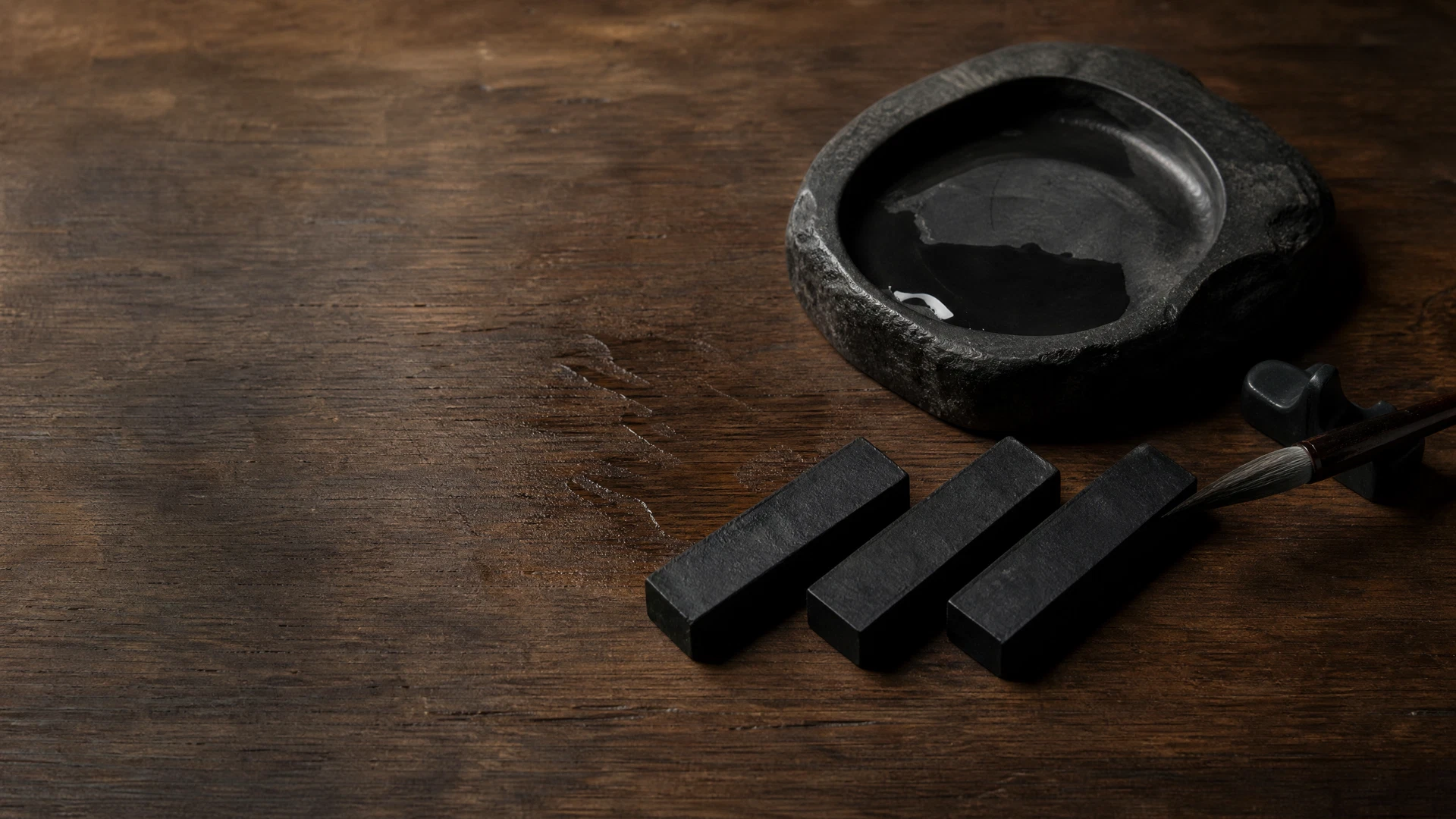
The permanence of a single stroke begins not with the brush, but with the patient alchemy of the solid black. To look upon a traditional inkstick is to witness a material that has survived the erosion of centuries, a dense compression of carbon and collagen that defies the fluid nature of its eventual purpose. In the quiet of a workshop, time itself seems molded into these rectangular forms, waiting for the touch of water to release its potential. Unlike synthetic dyes that saturate our world with instant color, handmade ink demands a slow engagement, a physical negotiation between the artist and the elements. It is a substance born of fire and bone, a testament to the human desire to fix a thought upon a surface with a finality that outlasts the hand that wrote it.
History has offered various solutions to the problem of marking, each with its own chemistry. In the Western tradition, iron gall ink emerged as a dominant force, a concoction of oak galls and iron salts that bit into the fibers of parchment with an acidic intensity. While it provided a durable script, its acidity often led to the destruction of the paper it sought to preserve. Carbon-based inks, by contrast, represent a different philosophy of permanence. Whether in the form of liquid lampblack used in ancient Egypt or the solid sticks of East Asia, carbon ink is chemically inert, sitting upon the surface of the paper rather than consuming it. It is a stable, lightfast black that remains as dark today as it was a thousand years ago.
The East Asian inkstick represents the pinnacle of carbon ink technology, a sophisticated composite of soot and animal glue. At its core, the process is a marriage of opposites: the ethereal lightness of airborne carbon and the grounding strength of hide glue. The soot provides the pigment, a fine dust collected from the incomplete combustion of organic materials, while the glue acts as the binder, ensuring the particles adhere to the substrate. This relationship is delicate; too much glue makes the ink brittle and difficult to grind, while too little allows the carbon to smudge and lift from the paper. Achieving the perfect balance requires an intuitive understanding of materials, a knowledge passed down through generations to feel the correct consistency.
The journey begins with the fire, specifically the controlled burning of pine wood or vegetable oils to harvest the necessary soot. Pine soot ink is prized for its deep, matte finish and subtle blue undertones, a result of the larger, more irregular particles produced by the resinous wood. In contrast, lampblack ink, derived from oils like rapeseed or sesame, offers a finer, glossier texture with a warm, brownish hue. The collection of this soot is a grueling, meticulous task, often performed in darkened rooms where hundreds of tiny lamps are lit, their smoke captured on ceramic surfaces. Each gram of powder represents hours of combustion, a concentrated essence of the forest, gathered and sifted to remove impurities.
Once the soot is harvested, it must be bound by a high-quality animal glue, typically derived from the hides of cattle or deer. This glue is more than a simple adhesive; it is the structural skeleton of the inkstick, providing the flexibility and strength needed to survive the molding and drying processes. The glue is soaked in water and heated until it reaches a specific viscosity, a process that fills the workshop with a pungent, earthy aroma. Aromatics like musk or cloves are added to mask the scent of the hide and act as natural preservatives. The hot glue is then poured into the soot, and the two materials begin their transformation into a singular, cohesive mass.
The mixing and kneading of the dough is the most physically demanding phase of the process. The artisan must work the soot and glue together while the mixture is still warm, using their weight to press, fold, and pound the mass repeatedly. This intensive labor serves to distribute the carbon particles evenly throughout the binder and to expel any trapped air bubbles that might cause the stick to crack later. A well-kneaded inkstick has a smooth, elastic quality, a dense uniformity that reflects the light with a dull sheen. It is a moment of physical connection, where the artisan's heat and force are transferred into the material, imbuing the black with latent energy.
After the kneading is complete, the ink is divided into precise portions and pressed into wooden molds. These molds are often works of art, intricately carved with landscapes, poetry, or auspicious symbols that will be embossed onto the surface of the finished stick. The pressure must be firm and even, ensuring that every detail of the carving is captured in the soft dough. Once removed, the inkstick is fragile and laden with moisture, a vulnerable object requiring extreme care. It is at this point that the artisan’s role shifts from one of active creation to one of patient stewardship, as the ink begins its long, slow transition from a wet mass to a solid stone.
Drying is the most perilous stage of the inkstick's life, a process that cannot be rushed without risking failure. To prevent the exterior from drying too quickly and causing the core to crack, the fresh sticks are often buried in trays of wood ash. The ash acts as a buffer, drawing out moisture at a controlled rate and protecting the ink from sudden changes in temperature or humidity. Over the course of several weeks, the sticks are moved through different grades of ash, each slightly drier than the last, until they are ready for air drying. This final phase can last months or years, a period of maturation that refines the ink's internal structure and longevity.
The resulting inkstick is a marvel of material engineering, a dense, resonant object that feels more like a piece of polished obsidian than a writing tool. Its surface is often decorated with gold leaf or colored pigments, highlighting the intricate carvings of the mold and turning the utilitarian object into a collector's item. Yet, for all its beauty, the inkstick remains a practical tool, its value defined by the liquid it produces. A fine stick will have a subtle, pleasant fragrance and a weight that feels balanced in the hand, a physical presence that commands respect. It is a storehouse of potential, a solid block of history that requires one final element to fulfill its purpose: the ritual of the grind.
To transform the solid stick back into liquid ink, one must use an inkstone, a flat slab of fine-grained rock that serves as the crucible for the creative process. The choice of stone is critical; it must be hard enough to resist wear, yet possess a microscopic texture—often described as "teeth"—that can effectively shave the carbon particles from the stick. Traditional stones are made of slate or volcanic rock, polished to a smooth finish that feels like silk. The process begins with a few drops of fresh water placed in the well of the stone, a small pool that will soon become the medium for the black. There is a profound simplicity in this arrangement, a return to the basic elements of earth and water.
The act of grinding is a meditative practice, a rhythmic motion that requires both patience and precision. The artist holds the inkstick vertically and moves it in a steady, circular pattern across the wet surface of the stone. There is a distinct sound to the grind—a soft, whispering hiss that changes in pitch as the ink thickens. The pressure must be light and consistent; pressing too hard will produce coarse particles that result in a gritty, uneven wash. As the water darkens and the viscosity increases, the liquid takes on a creamy, lustrous quality, a deep, bottomless black that seems to swallow the light. This is the moment where years of drying and kneading finally pay off in a fluid that flows effortlessly.
The limits of handmade ink are defined by its nature as a suspension of solids. Unlike chemical dyes that penetrate the fibers of the paper, the carbon particles sit on the surface, held in place by the thin film of glue. This creates a unique depth and texture, a range of tones from the palest silver-gray to the most intense obsidian. However, it also means the ink is sensitive to the quality of the paper and the amount of water used. If the ink is ground too thin, it may lose its luster; if ground too thick, it may peel over time. Furthermore, the organic binder remains susceptible to moisture, requiring careful storage to prevent brittleness. These constraints are the boundaries within which the artist must work.
In an era of instant digital reproduction, the handmade inkstick stands as a wistful reminder of a different relationship with the material world. It is a substance that demands time, effort, and a willingness to engage with the physical realities of soot and stone. To use such ink is to participate in a lineage that stretches back millennia, a shared experience of grinding and creating that transcends cultural boundaries. There is satisfaction in knowing the black on the page was once smoke and bone, a transformation guided by tradition that values the process as much as the result. In the end, the ink is more than just a mark; it is a testament to the enduring power of the handmade.