Travel
Rarotonga’s Emerald Peaks and Coral Shores Define the Quiet Soul of the South Pacific
Between the ancient inland road and the turquoise fringe of the lagoon, Rarotonga remains a sanctuary where volcanic spires touch the clouds and building heights never exceed the palms. It is a rare Polynesian refuge where tradition, stewardship, and a slow, rhythmic pace of life endure.
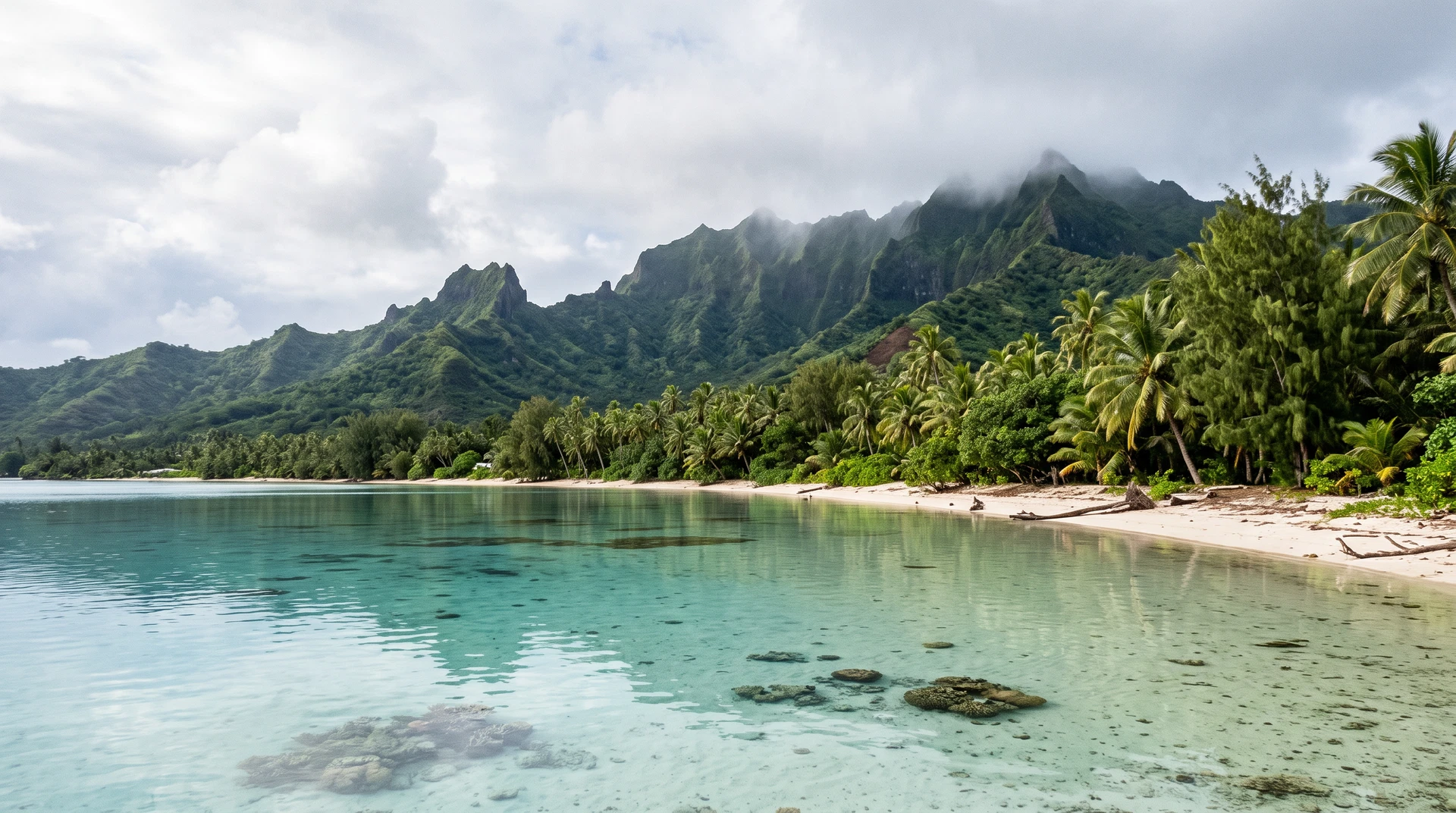
To approach Rarotonga from the air is to witness a concentrated explosion of green rising abruptly from the deep indigo of the South Pacific. This island is a singular, circular fortress of volcanic rock, wrapped in a ribbon of white sand and a protective collar of turquoise reef. There is an immediate sense of intimacy here; the entire landmass is only thirty-two kilometers in circumference, yet its presence is immense. The air carries the sweet scent of frangipani and the salt-spray of the Pacific, signaling a transition into a world where the clock is governed by the tides rather than digital demands.
The island’s interior is a jagged, impenetrable massif that defies the gentle stereotypes of tropical living. Te Manga, the highest point at 413 meters, often hides in a crown of mist, while the iconic Te Rua Manga—a singular rock spire known as The Needle—stands as a silent sentinel over the dense rainforest. These peaks are the island’s vertical heart, accessible only by steep, root-choked trails that demand respect. From the summit of the cross-island trek, the view reveals the island’s true geometry: a chaotic green center surrounded by a translucent lagoon that fades into the infinite blue of the open ocean.
Navigation on Rarotonga is defined by two concentric circles that tell the story of the island’s history. The modern coastal road, the Ara Tapu, traces the shoreline, connecting the villages and beaches that draw visitors to the water’s edge. However, a few hundred meters inland lies the Ara Metua, an ancient highway paved with volcanic stone in the 11th century. Walking this older path is a journey through time, passing through traditional plantations of taro and arrowroot. While the coastal road hums with the soft purr of scooters, the inland road offers a quieter, more grounded perspective on a civilization that has flourished for a millennium.
One of the most striking aspects of Rarotonga’s aesthetic is the absence of the vertical clutter that plagues many global destinations. A long-standing local ordinance ensures that no building on the island is permitted to stand taller than the tallest coconut tree. This simple, profound law preserves the island’s human scale and ensures that the mountains remain the dominant feature of the skyline. As a result, the resorts and homes are tucked away beneath the canopy, creating a landscape where architecture yields to nature. This commitment to visual harmony fosters a sense of tranquility, allowing the natural beauty of the palms to remain the primary focus.
The lagoon is the island’s living room, a shallow, crystalline expanse that serves as both a playground and a vital resource. In areas like Muri, the water is a kaleidoscope of blues, ranging from pale aquamarine to deep sapphire where the reef drops away. However, this beauty is fragile, and the local community is deeply committed to its preservation. The "Mana Tiaki" principles guide how visitors interact with this environment, emphasizing that we are guardians rather than just consumers. Using reef-safe sunscreens and avoiding any contact with the delicate coral or marine life are essential practices for maintaining the health of this complex and sensitive ecosystem.
Polynesian culture is not a performance on Rarotonga; it is the fabric of daily life. You see it in the meticulous care of the roadside gardens, the vibrant patterns of the local pareus, and the communal gatherings at the Punanga Nui Market. There is a deep-seated pride in the Cook Islands’ heritage, expressed through drumming, dance, and a profound connection to the land. This cultural stewardship is inextricably linked to environmental protection. To understand Rarotonga is to recognize that the health of the reef and the vitality of the culture are one and the same, a philosophy that ensures the island’s unique identity remains intact.
Life here moves at a pace that encourages observation over consumption. The mornings are for the markets, where the scent of freshly fried donuts mingles with the earthy aroma of locally grown coffee. The afternoons are for the lagoon, where the heat of the sun is tempered by the steady trade winds. There is a practical simplicity to the island’s offerings, from the roadside fruit stalls operating on an honesty system to the small, family-run eateries serving fresh tuna and island fries. It is a place that rewards those who are willing to slow down, to sit on a porch and watch the light change on the mountains.
As the sun begins to dip toward the horizon, the island takes on a golden hue that softens the jagged edges of the volcanic peaks. The trade winds usually die down, leaving the lagoon as smooth as a mirror, reflecting the darkening silhouettes of the palms. This is the hour when the island feels most ancient, a solitary speck of land in a vast ocean that has seen centuries of navigators come and go. Rarotonga does not try to be everything to everyone; it remains steadfastly itself, a volcanic sanctuary that offers a rare opportunity to reconnect with the fundamental rhythms of the earth and the sea.
Ultimately, the appeal of Rarotonga lies in its balance—a delicate equilibrium between the rugged interior and the gentle shore, between ancient history and modern convenience. It is a destination that asks for a lighter touch from its visitors, inviting them to participate in a way of life that values preservation over expansion. Whether you are trekking through the mist-shrouded forests of the interior or drifting over the coral gardens of the lagoon, the island leaves a lasting impression of a place that knows exactly what it is. In a world that is increasingly loud, Rarotonga stands as a quiet, emerald testament to the enduring power of the South Pacific.