Travel
Standing at the edge of creation amidst the volcanic thunder of Tanna Island
On the remote shores of Vanuatu, Tanna Island offers a raw encounter with the earth’s primal forces. From the glowing crater of Mount Yasur to the sprawling canopy of giant banyan trees, this is a landscape defined by enduring Kastom traditions and volcanic fire.
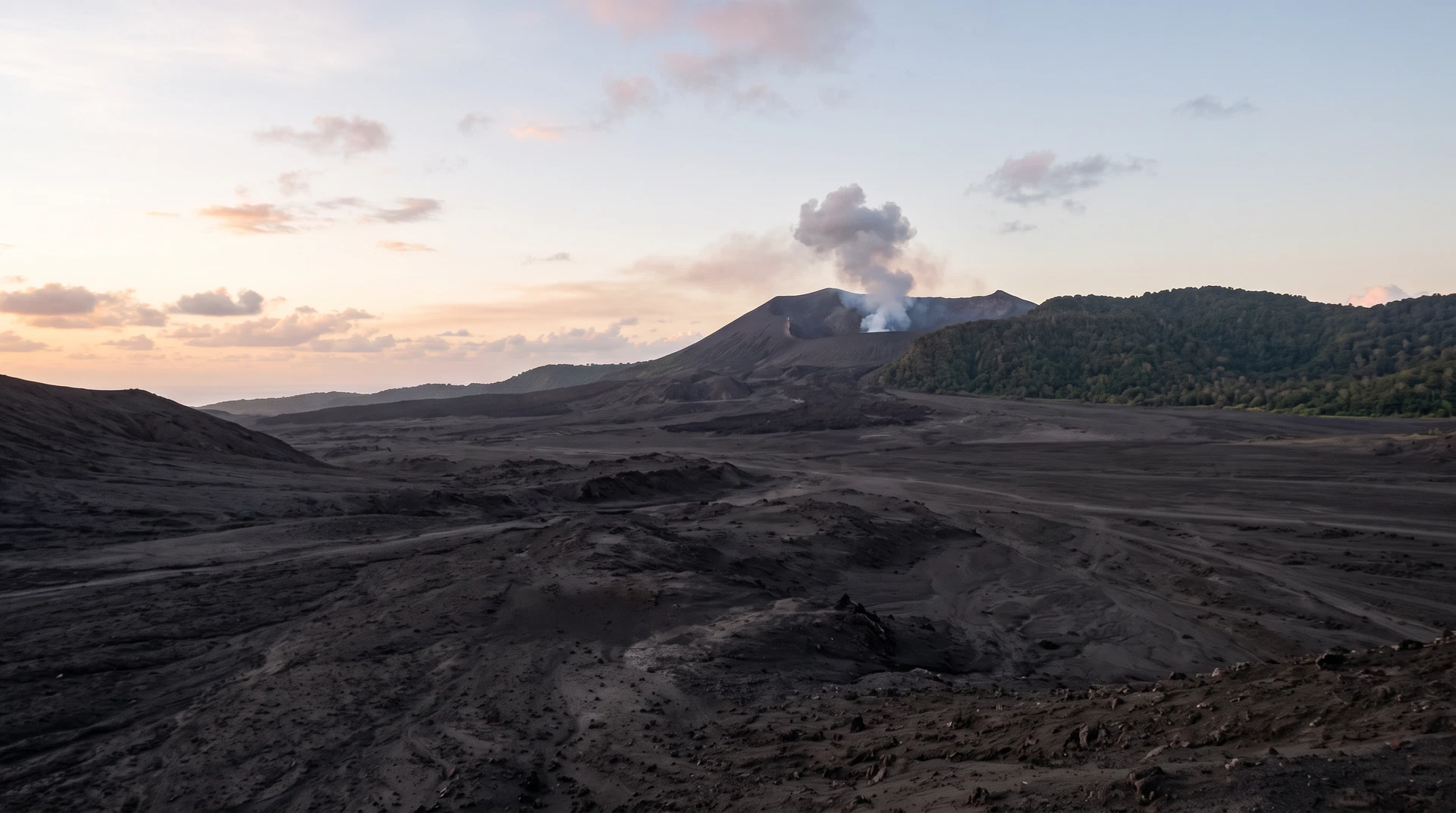
The approach to Tanna Island is an exercise in sensory anticipation. As the small propeller plane descends toward the grassy airstrip, the air shifts, carrying a faint, metallic tang of sulfur and the earthy scent of tropical rain hitting volcanic soil. This is not the manicured South Pacific of glossy brochures; it is a place where the geology is alive and the ground itself seems to breathe. To step onto the dark, ash-dusted earth is to enter a realm where the modern world feels like a distant rumor, replaced by the rhythmic pulse of a landscape that has remained largely unchanged for centuries.
At the heart of the island’s identity is Mount Yasur, a 361-meter-high stratovolcano that has been in a state of near-continuous Strombolian activity since at least 1774, when Captain Cook first recorded its glow from the sea. Unlike many of the world’s active peaks, Yasur is remarkably accessible, yet it demands a profound level of respect. Its eruptions are not merely seen; they are felt in the chest, a deep, percussive boom that vibrates through the soles of one's feet. The volcano is a living entity to the local people, a source of both awe and spiritual significance that dictates the rhythm of life on the island.
Navigating the slopes of Yasur requires a keen awareness of the Vanuatu Volcano Alert Level system, which strictly regulates access based on the intensity of the activity. On a clear evening, as the sun dips below the horizon, the true spectacle begins. Glowing incandescent bombs of lava are hurled hundreds of feet into the air, tracing fiery arcs against the darkening sky before crashing back into the crater with a sound like breaking glass. It is a primal display of the planet’s internal heat, a reminder of the thin crust we inhabit and the immense power that lies just beneath the surface.
Beyond the ash plains of the volcano, the island reveals a different kind of ancient power in its lush interior. Here, the world’s largest banyan trees stand as silent sentinels of time. One particular specimen, a colossal network of aerial roots and interlocking branches, exceeds 100 meters in diameter. Walking beneath its canopy is like entering a natural cathedral; the light filters through the dense leaves in dappled greens, and the air is still and cool. These trees are not just botanical marvels; they are central to the island’s social fabric, often serving as meeting places for community discussions and ceremonies.
The social architecture of Tanna is governed by "Kastom," a complex system of indigenous traditions and customary laws that have survived the pressures of colonization and globalization. In the villages, traditional vernacular architecture remains the standard, with houses constructed from woven bamboo, palm fronds, and sturdy local timber. These structures are designed to be resilient, capable of withstanding the tropical storms and seismic shifts that are part of life in the Vanuatu archipelago. Kastom is not a relic of the past but a living, breathing framework for land stewardship and social harmony.
For the visitor, engaging with Tanna requires a shift in perspective and a commitment to cultural etiquette. One does not simply wander into the interior; customary land ownership is taken seriously, and seeking community permission is a fundamental prerequisite for entering traditional territories. This process of asking and receiving is an essential part of the travel experience here, fostering a sense of mutual respect between the traveler and the host. It is a reminder that we are guests in a landscape where every hill, stream, and grove has a story and a traditional owner.
The practicalities of exploring Tanna are as rugged as the terrain itself. There are no paved highways crisscrossing the island; instead, a network of dirt tracks and footpaths connects the coastal settlements to the highland villages. Travel is often slow, dictated by the condition of the roads and the whims of the weather. Yet, this slow pace is exactly what allows for a deeper observation of the island’s nuances—the way the volcanic soil supports an explosion of fertility, the intricate patterns of the gardens, and the genuine warmth of the people who call this volatile paradise home.
Environmental stewardship is a shared responsibility on Tanna, where the fragile balance between human activity and the natural world is constantly tested. The islanders have a deep-seated understanding of their environment, practicing sustainable agriculture and resource management that has sustained them for generations. Visitors are encouraged to follow this lead, minimizing their footprint and respecting the ecological cautions that protect the island’s unique biodiversity. To travel here is to participate in a delicate dance of preservation, ensuring that the fire of Yasur and the shade of the banyans remain for those who follow.
As the day ends and the ash-gray plains are bathed in the long shadows of the setting sun, the duality of Tanna becomes clear. It is a place of violent creation and serene antiquity, where the destructive power of the volcano is matched by the enduring strength of the banyan and the resilience of Kastom culture. There is a profound sense of perspective to be found in the shadow of Mount Yasur—a realization that we are but brief witnesses to the long, slow processes of the earth. Tanna does not offer the easy comforts of a typical vacation, but it provides something far more valuable: a raw, unfiltered connection to the origins of our world.