Travel
The Garden Island of Fiji Where Time and Rainforests Converge in Taveuni
Taveuni stands as a volcanic sanctuary where prehistoric rainforests drape over jagged peaks and ancient legends breathe. From the rare Tagimoucia blooms to the invisible line of the 180th Meridian, this is Fiji at its most raw, lush, and profoundly timeless.
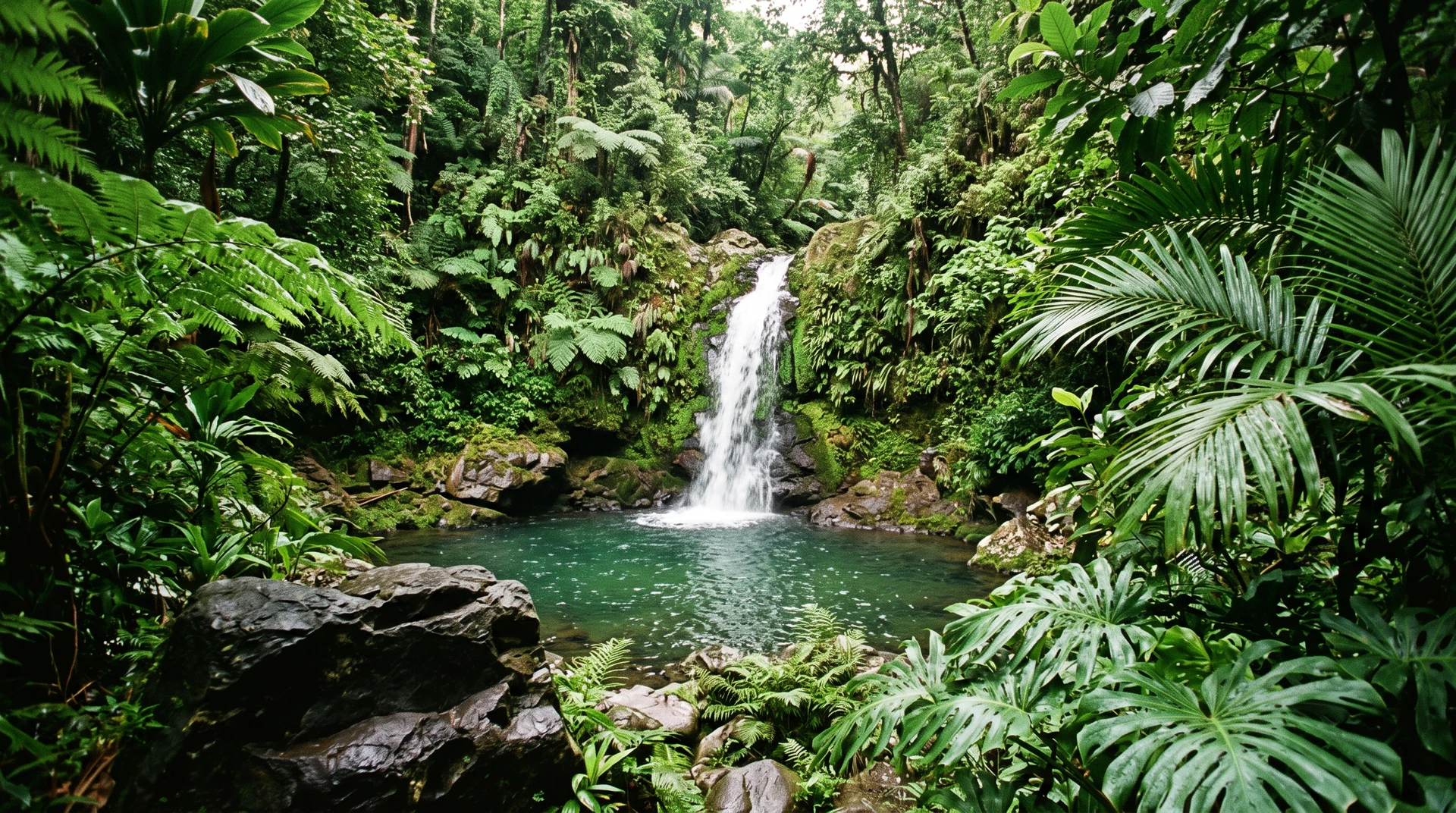
The approach to Taveuni is a study in green. While much of Fiji is celebrated for the horizontal brilliance of its turquoise lagoons, the "Garden Island" is defined by its verticality. A massive shield volcano rising from the sea, Taveuni’s peaks are almost constantly draped in a thick, moisture-heavy veil of clouds. As the small plane descends toward the airstrip, the scale of the vegetation becomes overwhelming. Ancient ferns, towering hardwoods, and tangled vines compete for every inch of the rich, dark volcanic soil. The air itself feels different here—heavy with the scent of damp earth, crushed ginger, and the salt spray of the surrounding strait.
One-third of this emerald landmass is protected within the Bouma National Heritage Park, a 15,000-hectare expanse that serves as a vital sanctuary for Fiji’s biodiversity. Walking into the park is like stepping back into a world before the arrival of man. The canopy is so dense that even at midday, the forest floor remains in a perpetual, cool twilight. The Tavoro Waterfalls are the park’s most celebrated feature, a series of three cascades that drop with increasing drama into deep, basalt-rimmed pools. The climb to the second and third falls requires a steady foot on the often-slippery paths, but the reward is a sense of profound isolation amidst the ferns.
Water is the lifeblood of Taveuni, and it manifests in ways both majestic and playful. Near the village of Waiyevo, the Waitavala Water Slide offers a natural amusement park carved by centuries of erosion. Here, a stream flows over a series of smooth, moss-slicked rocks, creating a natural chute that locals and visitors alike use to glide into the pools below. However, the island’s geology demands respect. During periods of heavy rain, these gentle slides can transform into dangerous torrents within minutes. Practicality dictates a keen eye on the sky; when the clouds darken over the central ridge, the water levels rise with alarming speed.
There is a peculiar geographical quirk that defines Taveuni’s place in the global imagination. At Waiyevo, a modest landmark marks the intersection of the 180th Meridian. It is one of the few places on Earth where a person can stand with one foot in today and the other in yesterday, straddling the invisible line that dictates the start of the new day. Standing there, surrounded by the rustle of coconut palms and the distant roar of the reef, the concept of time feels remarkably fragile. The island seems to exist in a state of chronological suspension, indifferent to the calendars of the world beyond its shores.
For those willing to endure a grueling trek into the island’s interior, Lake Tagimoucia offers a glimpse of Taveuni’s most exclusive resident. Located in a collapsed volcanic crater at an altitude of over 800 meters, the lake is the only place on Earth where the Tagimoucia flower (Medinilla waterhousei) thrives. The bloom is a striking combination of crimson outer bracts and delicate white petals, appearing like droplets of blood against the green. The plant is notoriously finicky, requiring the specific mineral composition of the high-altitude volcanic soil and the constant moisture of the mountain mists.
The island’s biological richness extends beneath the waves, where Taveuni earns its reputation as a premier destination for marine exploration. The waters surrounding the island are known as a global capital for soft corals, featuring vibrant underwater walls that drop into the deep blue. These vertical ecosystems are nourished by nutrient-rich currents, supporting a density of life that mirrors the complexity of the rainforests above. Divers and snorkelers encounter a kaleidoscopic world where soft corals in every imaginable hue cling to the volcanic rock, swaying in the rhythmic pull of the ocean. It is a place where the geological energy of the island seems to continue underwater, creating a seamless transition from the emerald heights of the volcanic peaks to the neon brilliance of the reef.
Life on the Garden Island moves at a pace dictated by the seasons and the sun. There is a tangible sense of community and stewardship among the residents, who recognize the island’s environmental sensitivity. The volcanic soil that supports the rare Tagimoucia also provides a bounty of local crops that are the mainstays of the economy. Visitors are encouraged to move with intention, staying on designated trails to prevent the erosion of the fragile topsoil and respecting the cultural cautions that protect the island’s heritage. This is a place where the spirit of the land is grounded in a deep connection to the environment—a relationship that has remained largely unchanged despite the slow encroachment of the modern world.
As evening falls, the island settles into a deep, resonant quiet. The calls of the forest birds fade, replaced by the rhythmic chirping of insects and the distant crash of the surf. To visit Taveuni is to realize that Fiji is more than just a destination for sun-seekers; it is a living laboratory of geological and biological history. The island does not cater to those looking for a sanitized version of the tropics. Instead, it offers a raw, visceral encounter with a landscape that is as demanding as it is beautiful—a place where the line between the present and the prehistoric is as thin as the mist over Lake Tagimoucia. It is a reminder that some corners of the world are best left to their own wild, volcanic rhythms.