Travel
The Amber Sanctuary Where the Southern Ocean Meets the Wild Heart of Australia
Floating off the coast of South Australia, Kangaroo Island serves as a sprawling haven for ancient species and geological wonders. From the golden hum of rare Ligurian bees to the salt-crusted granite of Remarkable Rocks, this wilderness offers a profound encounter with a pristine world.
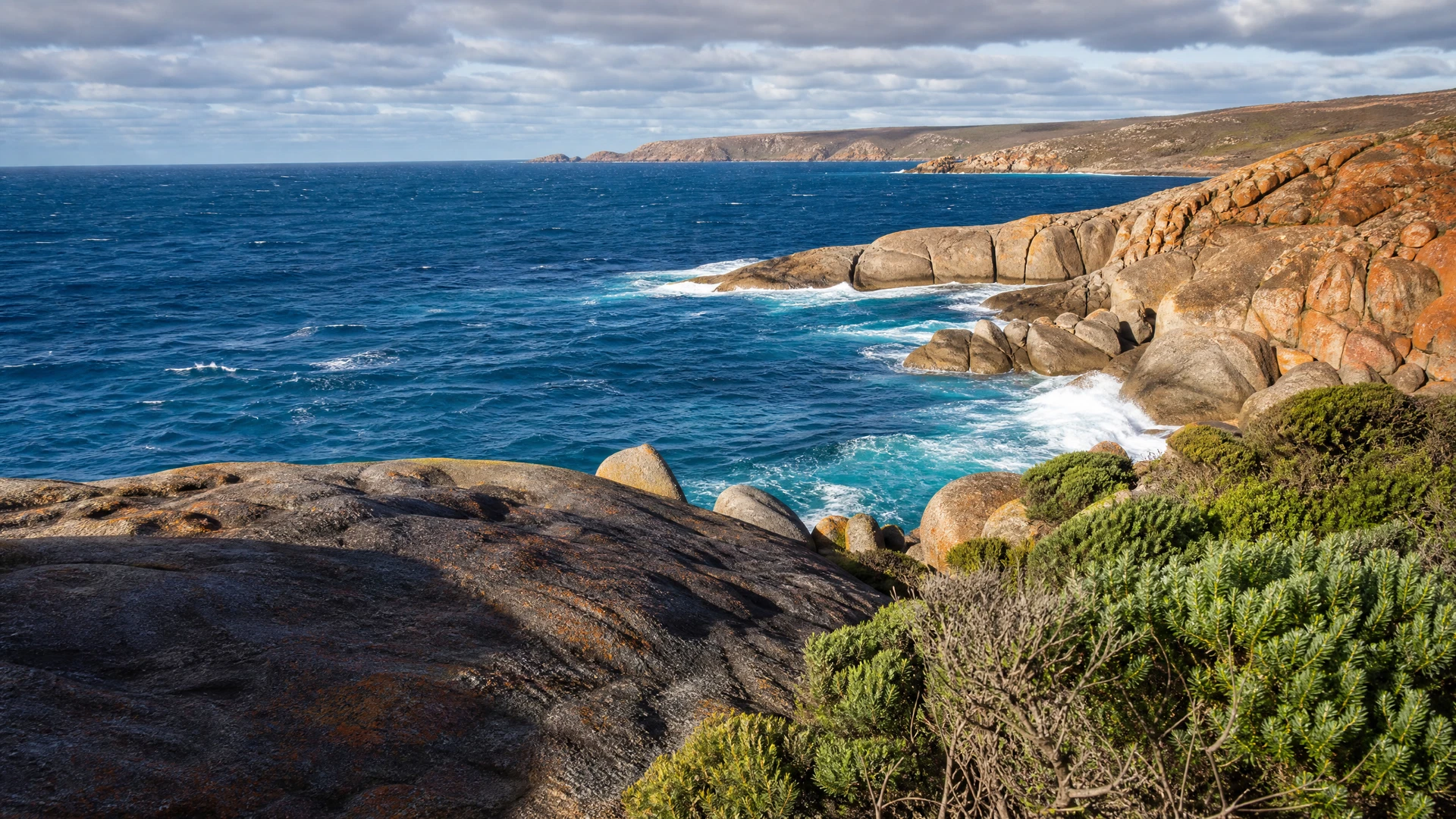
To reach Kangaroo Island is to step across a threshold of salt and memory into a realm that feels older than the continent itself. Separated from the South Australian mainland by the churning waters of Backstairs Passage, this landmass spans approximately 4,405 square kilometres, making it the third-largest island in Australia. Yet, its significance is not measured in hectares alone, but in the heavy silence that hangs over its eucalyptus-scented interior. Here, the air carries a clarity that seems to sharpen the horizon, where the deep indigo of the Southern Ocean meets the pale, sun-bleached scrub. Defined by its edges, the island is a sanctuary where the relentless tide has spent eons carving a rugged silhouette against the Antarctic wind.
The island’s name is not merely a label but a living promise, as native wildlife frequently outnumbers the human residents who call this wilderness home. More than one-third of the island’s vast expanse is preserved within a network of national parks and wildlife sanctuaries, ensuring that the evolutionary lineages of its inhabitants remain uninterrupted. Walking through the undergrowth, one might encounter the slow, rhythmic movement of a kangaroo grazing in the dappled afternoon light, or the sudden, startling flash of a crimson rosella through the canopy. There is a sense of unhurried existence here, a pace dictated by the seasons and the sun rather than the frantic ticking of a clock. It is a sanctuary in the truest sense, a refuge where the wild still dictates the terms of engagement.
Nowhere is the island’s ancient geological history more visible than at the Remarkable Rocks, a cluster of weathered granite boulders perched precariously above the sea. These massive formations, hollowed and smoothed by five hundred million years of wind, rain, and salt spray, stand like abstract sculptures on a natural plinth of stone. Their surfaces are mottled with bright orange lichen, glowing with an almost bioluminescent intensity against the grey-blue backdrop of the ocean. To walk among them is to feel the weight of deep time, a reminder that the landscape is a work in progress, constantly being reshaped by the elements. The rocks are a testament to the enduring power of the Southern Ocean, which continues to sculpt the island’s southern coastline with a fierce, beautiful indifference.
Inland, the island harbors a treasure of a different kind: the world’s only pure-bred Ligurian bee colony. These golden-hued insects were brought from Italy in the 19th century and have been protected by law since 1885, a far-sighted decision that has preserved their genetic integrity for over a hundred years. Because the island is isolated from the mainland, these bees have remained free from the diseases that have decimated colonies elsewhere in the world. Their presence is a subtle but vital thread in the island’s ecological tapestry, as they move from flower to flower, pollinating the unique flora that thrives in this Mediterranean climate. The honey they produce is a concentrated essence of the island, a sweet, floral record of the seasons captured in amber.
The preservation of this ecosystem is not an accident but the result of a rigorous commitment to biosecurity that begins the moment one boards the ferry. Visitors are met with strict regulations that reflect the island’s status as a biological ark; the importation of honey, bees, or even unwashed potatoes is strictly prohibited. These measures protect the island’s ecological health from external threats. This vigilance ensures that Kangaroo Island remains a pristine outlier, a place where the natural order functions as it has for millennia.
The island’s national parks, covering over 150,000 hectares, offer a diverse range of habitats, from the towering limestone cliffs of the north to the dense mallee scrub of the interior. In Flinders Chase National Park, the landscape feels particularly primordial, with vast tracts of wilderness that seem to stretch toward the end of the earth. Here, the wind carries the scent of damp earth and salt, and the sound of the surf is a constant, low-frequency hum that vibrates in the chest. The trails are invitations to observe the subtle shifts in light and shadow. It is a landscape that rewards the patient observer with glimpses of rare orchids or the quiet rustle of an echidna.
As the sun begins to dip toward the horizon, the island undergoes a transformation, the harsh midday light softening into a palette of gold and violet. The coastal formations take on a new depth, their shadows lengthening across the sand as the tide begins its slow, rhythmic retreat. In these moments, the isolation of Kangaroo Island feels less like a geographic fact and more like a spiritual state. There is a profound peace in knowing that such a place still exists, a wilderness that has not been tamed or paved over. The salt-crusted air feels cool against the skin, and the first stars begin to appear in a sky that is remarkably dark, free from the light pollution of distant cities.
Ultimately, Kangaroo Island is a place of quiet defiance, a sanctuary that persists in the face of a changing world. It is a reminder of what the earth looks like when it is allowed to be itself, a tapestry of stone, sea, and life that has been woven over countless generations. To visit is to be a guest in a house that was built long before our arrival, and to leave is to carry a piece of its stillness back into the noise of everyday life. The memory of the wind at Remarkable Rocks and the golden hum of the Ligurian bees remains, a wistful echo of a world that is as enduring as it is beautiful. It is a place that does not ask to be understood, only to be respected and remembered.