Travel
Where the crimson desert bleeds into a turquoise sanctuary of ancient coral gardens.
Spanning over six hundred thousand hectares of Western Australia’s remote Gascoyne coastline, the Ningaloo Coast represents a rare geological intersection. Here, the rugged red canyons of the Cape Range drop directly into the world’s largest fringing reef, offering a sanctuary for marine giants and subterranean wonders.
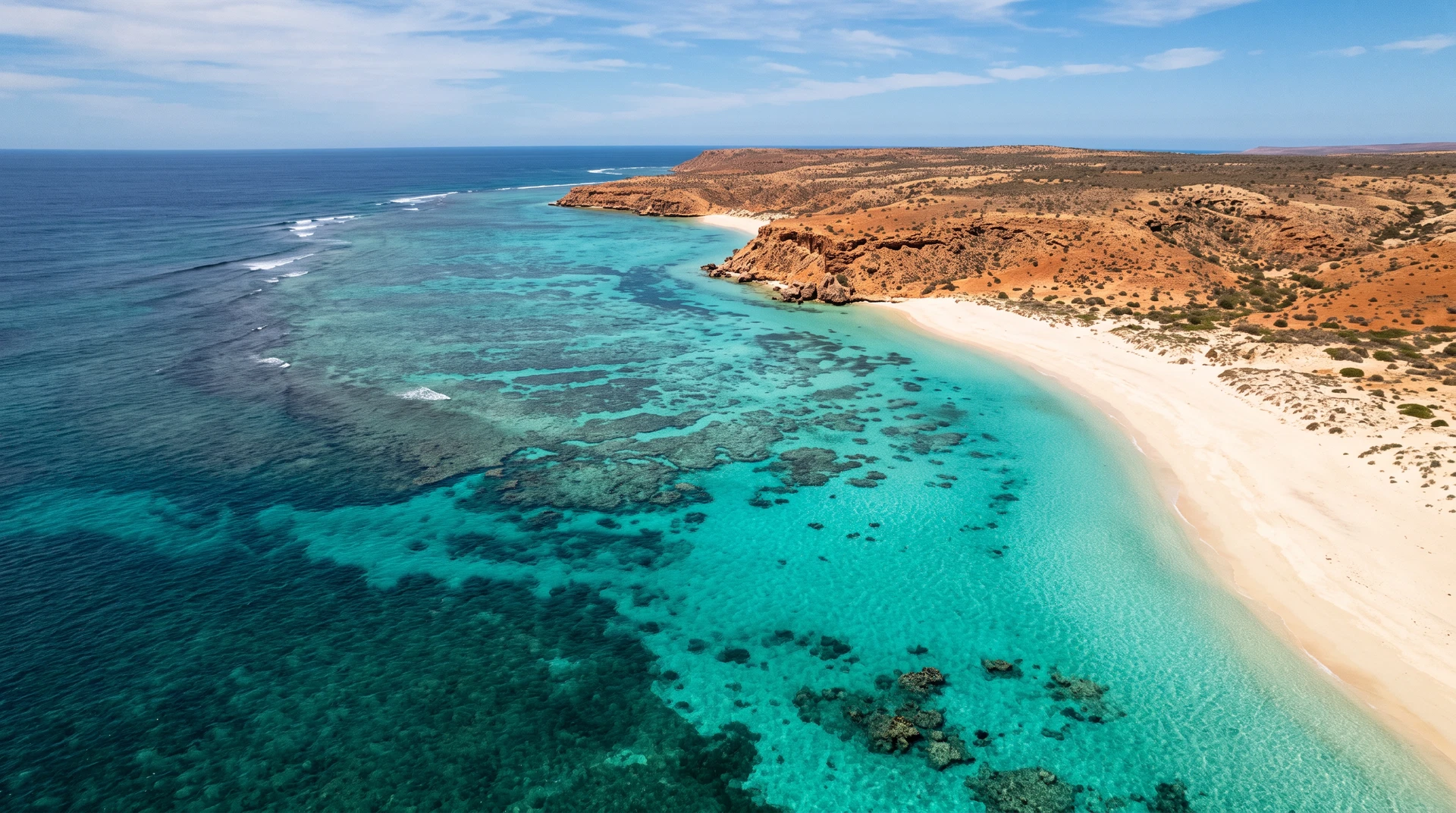
The approach to the Ningaloo Coast is a study in monochromatic endurance. Driving north through the Gascoyne region of Western Australia, the landscape is dominated by iron-rich, rust-red soil and the resilient scrub of the arid outback. It is a place where the sun feels personal, a weight upon the shoulders, and the horizon suggests a world that might simply evaporate. Yet, as the road bends toward the Indian Ocean, the palette shifts with startling violence. The red earth terminates abruptly against a ribbon of white sand and a sea so vibrantly turquoise it appears artificial. This is the threshold of a UNESCO World Heritage site protecting one of the most significant marine and terrestrial environments on the planet.
Unlike the Great Barrier Reef, which sits far offshore, Ningaloo is a fringing reef, a distinction that defines the visitor experience. In many places, the coral begins just a few meters from the beach. You do not need a lengthy voyage to reach this underwater kingdom; you simply walk into the water, submerge your face, and find yourself immediately immersed in a colorful metropolis. Over three hundred species of coral form the skeletal foundation of this ecosystem, creating a labyrinth of plate and staghorn formations that provide shelter for more than five hundred species of tropical fish. The proximity creates an intimacy that is rare, a sense of being granted a backstage pass to the ocean’s inner workings.
The seasonal arrival of whale sharks remains the coast’s most celebrated phenomenon. These gentle giants, the largest fish in the sea, migrate here between March and August to feed on nutrient-rich waters following coral spawning. Interacting with these creatures is a lesson in structured reverence. Western Australia enforces strict wildlife interaction protocols, requiring licensed operators and maintaining specific distances to ensure the animals are not distressed. Floating in the deep blue water as a fifteen-meter shark glides past, its skin a constellation of white spots against a dark gray canvas, is a humbling reminder of our own scale within the biosphere. The experience is managed with a precision that prioritizes the welfare of the species over the desires of the tourist.
Beyond the charismatic megafauna, the reef’s health is a testament to its isolation. The lack of heavy industry and low human population density have spared Ningaloo from many pressures facing other coral systems. The water remains remarkably clear, allowing sunlight to penetrate deep into the coral gardens. Schools of parrotfish crunch on the limestone, while green and loggerhead turtles navigate the currents with prehistoric grace. During the winter months, the soundtrack changes as the haunting songs of migrating humpback whales echo through the water. This coast is a vital corridor for life, a sanctuary where the ancient rhythms of the ocean continue undisturbed by the noise of the modern world.
The terrestrial side of the Ningaloo Coast is equally compelling. Cape Range National Park forms the backbone of the region, a series of limestone ranges carved by ancient rivers into deep, dramatic canyons. Mandu Mandu and Yardie Creek offer glimpses into geological history, where fossilized reef remains sit high above the current sea level. The limestone is a porous, honeycombed structure known as a karst system. This hidden architecture holds subterranean water bodies home to rare, endemic cave-dwelling species that have evolved in total darkness. These creatures, isolated for millennia, represent a biological frontier as mysterious as the deep ocean, highlighting the incredible diversity hidden within the arid landscape.
The intersection of these two worlds—the arid and the aquatic—creates a unique ecological tension. Red kangaroos and emus are common sights along the shoreline, often foraging just steps from where the waves break. The vegetation on land has adapted to the harsh, salty conditions, with hardy spinifex and saltbush clinging to the dunes. This contrast is most evident from the air, where the white line of the surf separates the deep indigo of the open ocean from the pale turquoise of the lagoon and the fiery ochre of the desert. It is a landscape that feels both ancient and immediate, a place where the processes of erosion and growth are visible in every grain of sand.
Stewardship here is a daily practice. The UNESCO listing reflects the global importance of Ningaloo, but its survival depends on the collective efforts of researchers, rangers, and visitors. The fragility of the karst system and the sensitivity of the coral require a light touch. Visitors are encouraged to be mindful of their impact, from using reef-safe sunscreen to ensuring no waste enters the water. The management of the site is a delicate balancing act, providing access to this extraordinary wilderness while ensuring that the very qualities that make it special are not eroded. It is a commitment to preservation that ensures future generations can experience the same raw beauty that exists today.
Leaving the Ningaloo Coast is a slow process of re-adjustment. The intensity of the colors and the raw power of the landscape leave a lasting impression. It is a destination that demands something of its visitors—a willingness to travel long distances, to endure the heat, and to respect the rules of the wild. In return, it offers a glimpse of a world that remains largely unchanged by human hands, a sanctuary where the desert and the reef exist in a beautiful, precarious harmony. As the red dust of the Gascoyne settles behind you, the memory of the turquoise water remains a vivid, cooling presence in the mind, a reminder of the Earth's enduring wild edges.