Travel
Vertical Solitude Amidst the Soaring Quartz Spires of Hunan’s Ancient Forest Labyrinth
Deep within China’s Hunan Province, the quartz-sandstone pillars of Zhangjiajie rise like frozen sentinels through a sea of swirling mountain mist. This primeval landscape, China’s first national forest park, offers a surreal journey through vertical peaks that defy gravity and the modern imagination.
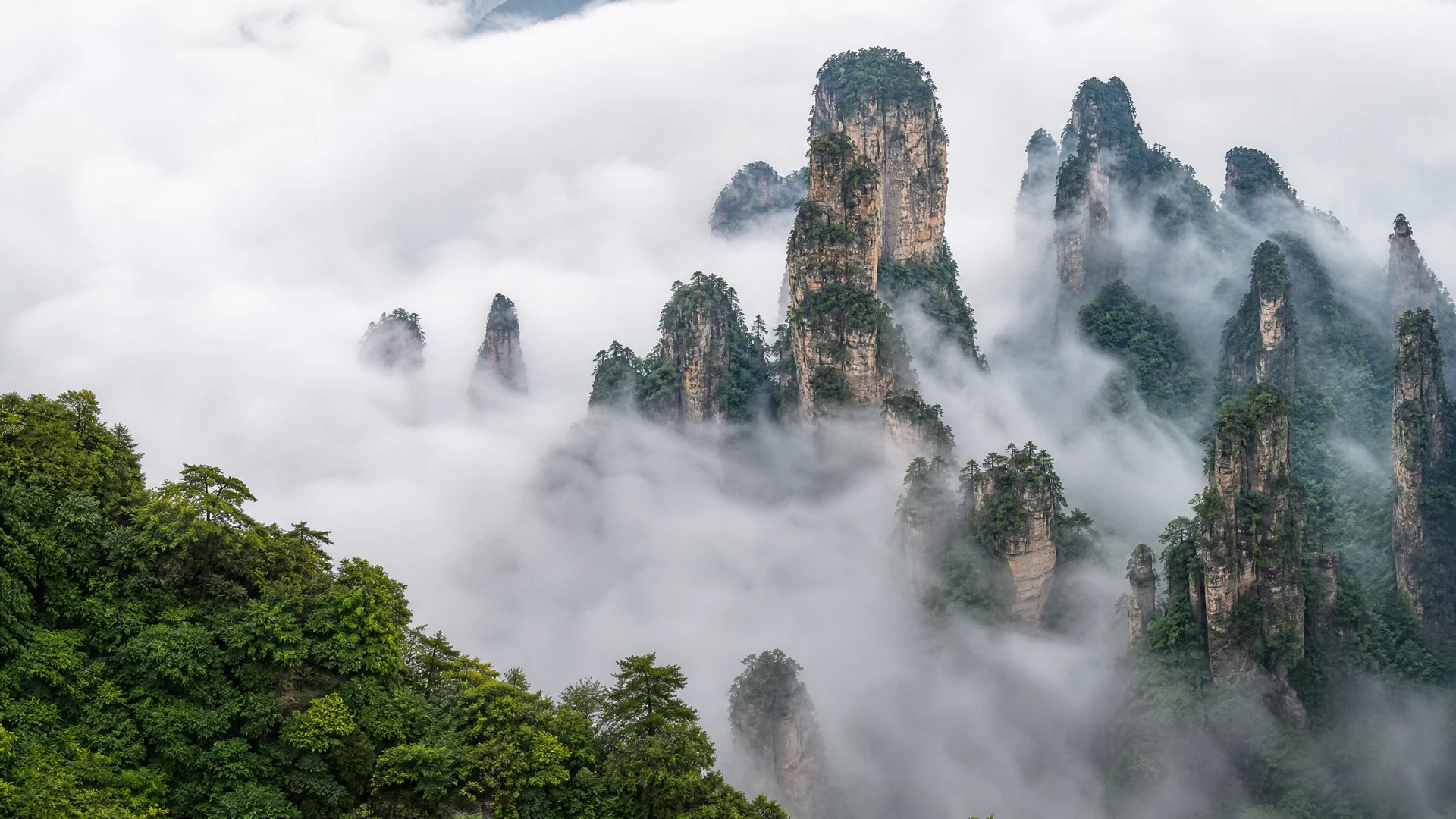
The first encounter with Zhangjiajie is not a sight so much as a profound suspension of belief. Standing at the railing of a lookout point in the Wulingyuan Scenic Area, the ground beneath one's feet feels secondary to the sheer, vertical drama unfolding in the void. Below, a labyrinth of narrow quartz-sandstone pillars stretches toward the sky, their summits crowned with resilient pines that cling to the rock with an almost desperate tenacity. It is a landscape that feels less like a product of terrestrial geology and more like a fragment of a dream, or perhaps a vision from an ancient ink wash painting brought into three-dimensional reality.
This geological marvel was formally recognized in 1982, when it became the first national forest park in the People’s Republic of China. A decade later, its global significance was cemented with a UNESCO World Heritage designation, acknowledging the unique natural processes that carved these three thousand spires over millions of years. The pillars are composed of quartzose sandstone, a material that has withstood the relentless erosion of wind and rain while the softer rock around it fell away. The result is a forest of stone, where individual peaks often exceed two hundred meters in height, standing as solitary monuments to the slow, patient work of the elements.
To walk among these giants is to navigate a vertical world that challenges one's sense of perspective. The park is divided into several distinct areas, including the famous Yuanjiajie and Tianzi Mountain, each offering a different perspective on the stone forest. In the early morning, the valleys are often choked with a dense, white vapor that transforms the pillars into islands floating in a pale sea. This ethereal atmosphere famously served as the visual template for cinematic worlds of floating mountains, yet no screen can truly capture the physical sensation of the damp mountain air or the way the light filters through the canopy to illuminate the moss-covered stone.
Practicality, however, is as much a part of the Zhangjiajie experience as poetry. The sheer scale of the terrain necessitates a sophisticated infrastructure of cable cars, elevators, and shuttle buses to move visitors across the rugged landscape. These systems are essential for managing the high density of visitors who flock to the park, particularly during the peak seasons of spring and autumn. While the mechanical hum of a cable car might seem at odds with the primeval surroundings, it provides a necessary vantage point, lifting travelers above the crowded trails and offering a bird’s-eye view of the labyrinthine gorges that would otherwise remain hidden.
Stewardship is a constant concern in such a popular and delicate environment, where the balance between access and preservation is thin. The sandstone formations, for all their imposing height, are surprisingly fragile and susceptible to the elements. Foot traffic is strictly managed to prevent erosion, and visitors are encouraged to remain on designated paths to protect the park’s biodiversity. Zhangjiajie is home to several endangered plant species that thrive in the microclimates created by the deep ravines and high peaks. The effort to allow millions of people to witness this beauty while ensuring its preservation for future generations requires constant vigilance from park authorities.
Beyond the famous vistas, the park offers a quieter, more intimate encounter with the natural world for those willing to wander. Away from the main lookout points, the sound of the crowds fades, replaced by the rush of hidden waterfalls and the distant calls of macaques echoing through the trees. The vegetation here is lush and varied, ranging from dense broad-leaved forests to the hardy shrubs that survive on the exposed rock faces. There is a profound sense of isolation to be found in the shadows of the pillars, a reminder that despite the infrastructure, this remains a wild and unpredictable corner of the Wuling Mountains.
The weather in Zhangjiajie is a fickle companion, capable of shifting from brilliant sunshine to torrential rain in a matter of minutes. Yet, many regulars argue that the park is at its most beautiful when the weather is at its worst. Rain brings out the deep oranges and reds of the sandstone, while the subsequent mist adds the necessary layer of mystery that defines the region’s character. It is during these quiet, damp intervals that one can truly appreciate the wistful nature of the landscape—a place that seems to be constantly receding into its own shadows, even as it stands boldly against the sky.
Leaving Zhangjiajie often feels like waking from a trance, the transition back to the horizontal world feeling abrupt and strange. The verticality of the landscape stays with you, a phantom sensation of height that makes the flat world outside the park feel strangely two-dimensional. It is a place that demands a slower pace and a keen eye for detail, rewarding those who take the time to look beyond the grand spectacle and notice the small, quiet miracles of life clinging to the edge of the abyss. In the end, Zhangjiajie is not just a destination to be seen, but a testament to the enduring power of the natural world.