Travel
Where the volcanic spine of Hokkaido meets the drifting ice of the Okhotsk Sea
At the northeastern edge of Japan, Shiretoko National Park remains a rugged sanctuary where seasonal sea ice and primeval forests converge. This UNESCO-protected peninsula offers a rare glimpse into an untamed world where brown bears roam and Steller’s sea eagles dominate the winter skies.
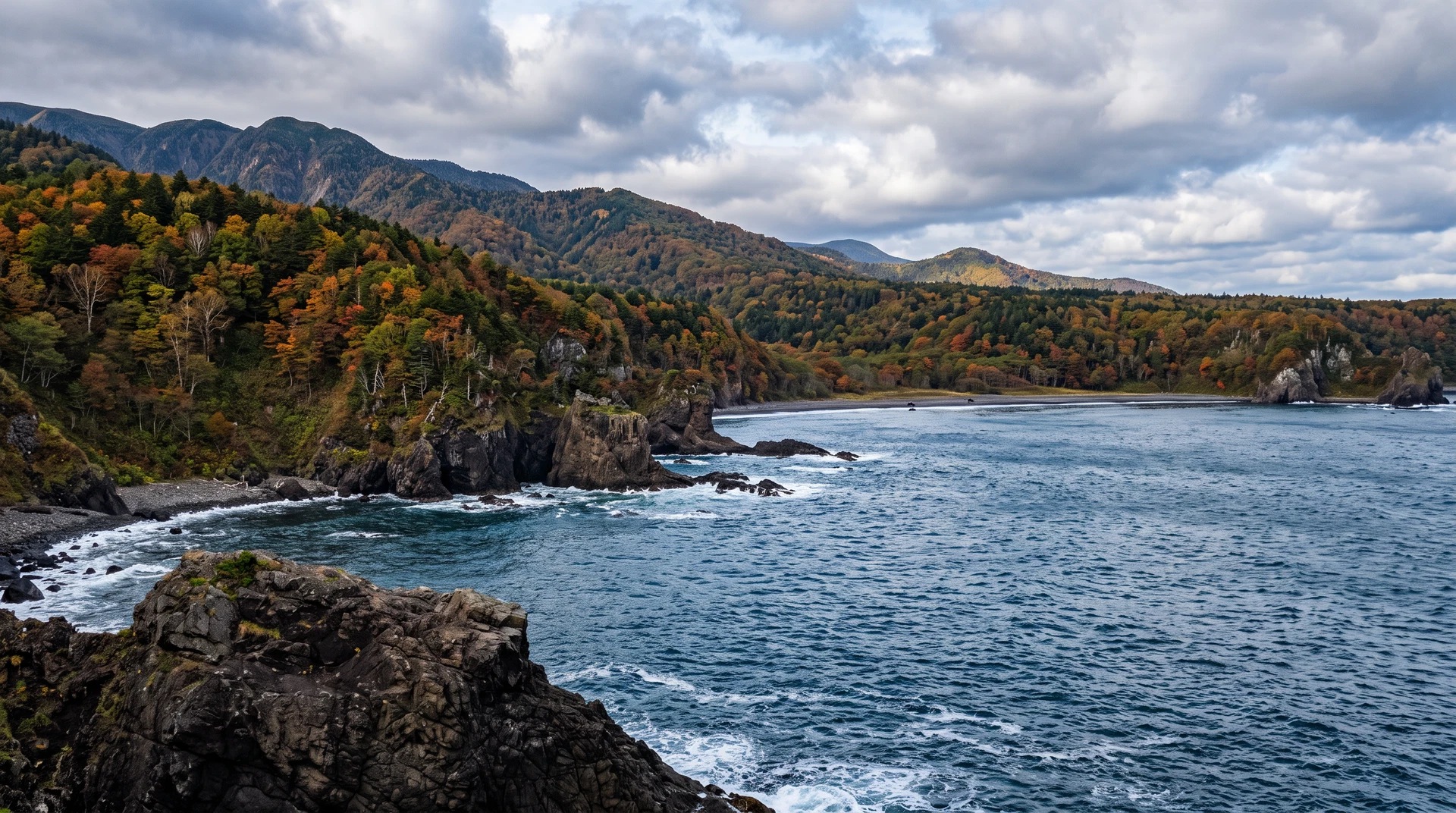
The name Shiretoko is derived from the Ainu word *sir etok*, meaning "the end of the earth." Standing at the tip of this narrow, volcanic peninsula in northeastern Hokkaido, it is easy to understand why the indigenous people chose such a descriptor. The landscape does not merely fade away; it terminates in a dramatic collision of jagged peaks and the restless waters of the Sea of Okhotsk. Here, the infrastructure of modern Japan yields to the sovereignty of the natural world, leaving visitors to navigate a territory defined by its raw ecological integrity and seasonal extremes.
Central to Shiretoko’s identity is its integrated marine-terrestrial ecosystem, a complex web of life that begins far to the north. Every winter, the Sea of Okhotsk becomes the lowest latitude in the Northern Hemisphere to host seasonal drift ice. These massive floes, known as *ryuhyo*, arrive from the Amur River, carrying a wealth of nutrients that spark a biological explosion. As the ice melts, it releases phytoplankton that feeds a vast array of marine life, from tiny crustaceans to massive sea lions. This cycle is the engine that drives the entire peninsula, sustaining everything from the fish in the streams to the predators in the high forests.
The presence of drift ice transforms the coastline into a surreal, shifting mosaic of white and deep blue. For travelers arriving in the winter months, the experience is defined by the sound of grinding ice and the sight of vast, frozen plains extending toward the horizon. This is the prime season for observing the Steller’s sea eagle, one of the world’s largest raptors. These birds congregate on the floes, their dark plumage and bright yellow beaks standing out against the stark landscape. It is a spectacle of survival that highlights the park's role as a critical refuge for endangered species.
Moving inland, the terrain rises sharply into the Shiretoko mountain range, a spine of volcanoes that dictates the peninsula's climate. The Shiretoko Pass, connecting Utoro and Rausu, offers sweeping views of Mount Rausu and, on clear days, the distant Kuril Islands. However, this road is subject to strict seasonal closures, often remaining buried under snow for half the year. This enforced isolation preserves the park’s character; here, the rhythm of human activity is secondary to the demands of the weather and the needs of the resident wildlife.
Shiretoko is famous for harboring one of the world’s densest populations of brown bears. These formidable creatures are the true masters of the landscape. To manage interactions, the park has implemented sophisticated protocols, particularly around the Shiretoko Goko, or Five Lakes. Visitors walking the ground-level trails must undergo mandatory briefings or be accompanied by licensed guides. These measures are essential for ensuring that the bears can continue to inhabit their ancestral territories without undue stress from tourism, maintaining the delicate balance between human curiosity and animal sovereignty.
The Five Lakes themselves reflect the surrounding volcanic peaks in their still, dark waters. Formed by the eruption of Mount Io, these ponds are linked by trails winding through ancient forests of Sakhalin fir and Mongolian oak. The air is thick with the scent of damp earth, and the silence is only broken by the occasional call of a nutcracker or the rustle of a Sika deer. It is a place for slow, observant walking, where the details of the forest floor—moss-covered stones and delicate ferns—are as compelling as the grand vistas of the mountains.
Along the western coast, the landscape takes on a vertical character, with steep cliffs dropping hundreds of feet into the sea. Numerous waterfalls, such as Furepe-no-Taki, spill over these edges, their waters disappearing into the surf below. Some of these falls are geothermal; at Kamuiwakka, hot spring water flows into a river, creating natural thermal pools accessible to those willing to hike upstream. The experience of soaking in warm, mineral-rich water while surrounded by the cool, salt-tinged air of the Okhotsk coast is a reminder of the volcanic energy that continues to shape this region.
Practical travel in Shiretoko requires preparation and a respect for the environment that goes beyond typical tourism. The gateway towns of Utoro and Rausu provide essential services, but facilities are minimal inside the park. There are no convenience stores or vending machines in the heart of the wilderness. Visitors must carry out all waste and be prepared for sudden weather changes, even in summer. This lack of commercial development is a deliberate choice, reflecting the park's UNESCO status and the commitment of the local community to preservation over profit.
As the sun sets over the Sea of Okhotsk, the sky turns a deep, bruised purple, casting long shadows across the snow-dusted peaks. In these moments, the silence of Shiretoko becomes almost tactile. It is a silence that invites reflection on the fragility of wild places in an increasingly connected world. The park stands as a vital link between land and sea, a place where the ancient cycles of ice and migration continue uninterrupted. For those who make the journey, the reward is a profound sense of connection to a landscape that remains beautifully at the end of the earth.
To experience Shiretoko is to accept a position of humility. Whether watching the sunrise from a boat in the Nemuro Strait or navigating the mist-shrouded trails of the interior, one is constantly reminded that nature holds the upper hand. The success of the park’s conservation efforts lies in this mutual understanding—a recognition that the wilderness does not exist for our convenience, but for its own sake. By adhering to protocols and respecting the boundaries set by the land, we are granted the privilege of witnessing a world that is as enduring as it is delicate.