Travel
The Ancient Pulse of Taman Negara: Walking Through the World’s Oldest Living Rainforest
In the heart of Peninsular Malaysia, a 130-million-year-old wilderness defies the modern clock. From the mist-shrouded heights of Gunung Tahan to the swaying height of the world’s longest canopy walkway, Taman Negara offers a rare, immersive encounter with an ecosystem that has outlasted the dinosaurs.
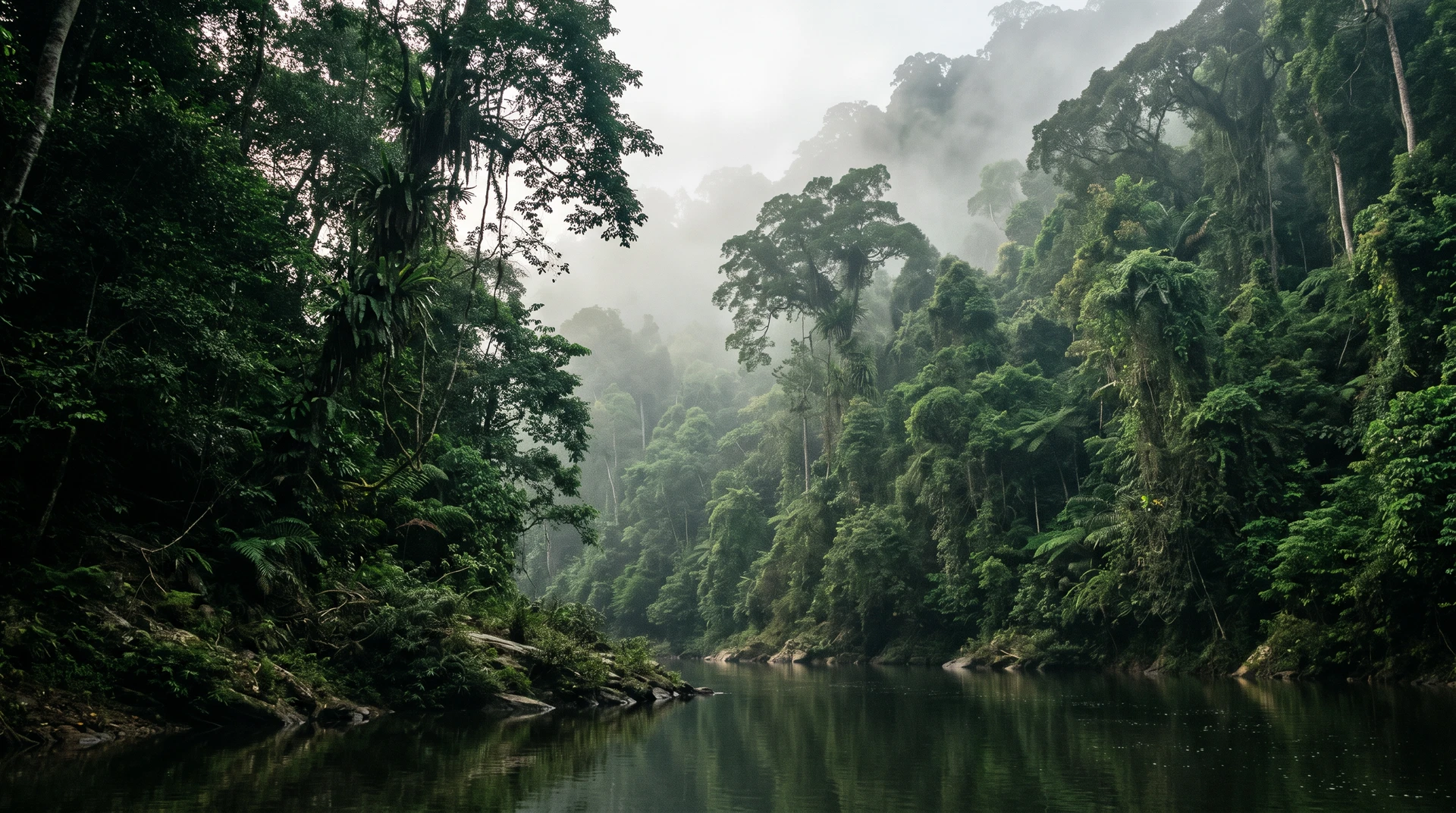
The approach to Taman Negara is a slow immersion into a green that feels older than the concept of color. Travelers arrive at the gateway of Kuala Tahan via a three-hour wooden longboat journey from Kuala Tembeling, a transition that serves as a necessary decompression from the frantic pace of modern Malaysia. As the boat pushes against the tea-colored currents of the Tembeling River, the palm oil plantations and secondary scrub give way to a formidable wall of primary rainforest. This is not merely a park; it is a 4,343-square-kilometer sanctuary where the air grows heavy with the scent of damp earth and the rhythmic thrum of cicadas. The river serves as the forest’s main artery, a liquid road that has carried travelers and indigenous Batek people through this wilderness for generations.
To stand within Taman Negara is to stand in a place that has outlasted the dinosaurs. Geologists and biologists estimate this forest to be over 130 million years old, making it one of the most ancient tropical rainforests on the planet. Unlike the Amazon or the Congo, which were significantly altered during the last ice age, this corner of the Malay Peninsula remained a stable refuge for life. This continuity is palpable in the sheer scale of the trees. Massive dipterocarps, their trunks buttressed by roots as tall as a man, soar nearly seventy meters into the sky, competing for the precious sunlight that rarely reaches the forest floor. The ground itself is a complex tapestry of leaf litter, fungi, and ancient root systems, a silent machinery that has been recycling life with relentless efficiency since the Cretaceous period.
The most iconic way to experience this vertical world is via the canopy walkway, a 550-meter-long suspension system that claims the title of the world’s longest. Suspended forty meters above the ground, the walkway is a series of narrow wooden planks and rope netting that sways gently with every footstep. Walking across it requires a certain level of physical composure, but the reward is an intimate look at the forest’s most active layer. Up here, the humidity breaks into a slight breeze, and the perspective shifts from the dark, mossy shadows of the roots to the vibrant, sun-drenched world of epiphytes and orchids. It is a space usually reserved for macaques and hornbills, offering a dizzying view of the complexity required to sustain such a massive volume of biomass.
Beyond the walkway, the terrain rises sharply toward the interior, culminating in the granite bulk of Gunung Tahan. At 2,187 meters, it is the highest peak in Peninsular Malaysia, a mountain whose name translates fittingly to "Mount Endurance." The trek to its summit is a grueling multi-day commitment that tests the limits of even seasoned hikers, requiring passage through dense jungle, river crossings, and high-altitude mossy forests. The peak is often shrouded in mist, creating an ethereal landscape of stunted trees and rare carnivorous pitcher plants. For those who make the journey, the summit provides a panoramic view of an unbroken sea of green, a reminder of how much of this peninsula was once covered in such formidable, beautiful shadows.
The biodiversity of Taman Negara is staggering, though it rarely reveals itself in the way a zoo might. This is a landscape of shadows and whispers. While the park is home to the Malayan tiger and the Asian elephant, these creatures are ghosts in the machine, their presence marked only by a fresh track in the mud or a distant, crashing sound in the undergrowth. Instead, the forest offers smaller, more frequent wonders: the iridescent flash of a kingfisher, the prehistoric silhouette of a great hornbill, or the steady march of giant forest ants. The complexity of the ecosystem means that every niche is occupied, from the smallest beetle to the largest predator, all governed by a set of biological rules that have been refined over millions of years.
Water defines the rhythm of life here as much as the trees do. The Sungai Tahan, a tributary that feeds into the main river system, is a clearer, cooler contrast to the silt-heavy Tembeling. Upstream, the Lata Berkoh rapids offer a place where the water churns over ancient boulders, creating natural pools that have been polished smooth by millennia of flow. Reaching these spots requires a skilled boatman who can read the subtle changes in the river’s depth and current. The water is stained the color of dark tea by the tannins of fallen leaves, a liquid infusion of the forest itself. It is here, away from the main settlements, that the silence of the jungle feels most profound, broken only by the occasional splash of a fish or the call of a distant gibbon.
Stewardship of such an ancient place is a delicate balance of bureaucracy and respect. The Department of Wildlife and National Parks, known as PERHILITAN, maintains a strict permit system to monitor the human impact on this environment. Visitors are required to obtain licenses for everything from entry to cameras, a practical measure that funds the ongoing protection of the park. There is also a seasonal respect for the weather; from November through January, the northeast monsoon brings heavy rains that can cause the rivers to swell and make high-altitude trekking dangerous. During these months, the forest reclaims its privacy, the trails becoming muddy torrents and the canopy dripping with a relentless, life-giving deluge that ensures the cycle of growth continues uninterrupted.
The Batek people, the indigenous nomadic hunter-gatherers of the region, remain the forest’s most enduring human presence. Their relationship with the land is one of deep, spiritual interconnectedness rather than ownership. While some Batek families have settled near the park’s entrance, many continue to live a traditional lifestyle deeper in the forest, moving their camps according to the seasons and the availability of wild tubers and honey. Their knowledge of the forest’s medicinal plants and hidden paths is a living library of information that predates modern science. Observing their ease within the dense undergrowth is a humbling experience for any traveler who finds themselves stumbling over roots or tangled in the ubiquitous thorns of the rattan palms.
As night falls over Taman Negara, the forest undergoes a dramatic sonic shift. The daytime chorus of birds and cicadas is replaced by the deep croaks of bullfrogs and the high-pitched hum of nocturnal insects. In the darkness, the jungle reveals its hidden light; bioluminescent fungi glow faintly on decaying logs, and fireflies dance in the clearings. It is in these moments, stripped of visual landmarks, that the true scale of the rainforest becomes apparent. It is a living, breathing entity that does not care for the passage of human time. To visit Taman Negara is to be reminded of our own fleeting place in the world, a brief guest in a green cathedral that has been standing since the world was young.