Travel
Ascending the Lion Rock where ancient gardens meet the clouds in Sri Lanka's heart.
Rising abruptly from the emerald canopy of the Matale District, Sigiriya stands as a testament to fifth-century ambition. This granite monolith, crowned by the ruins of King Kassapa’s sky palace, invites travelers to navigate a vertical labyrinth of history, art, and sophisticated hydraulic engineering.
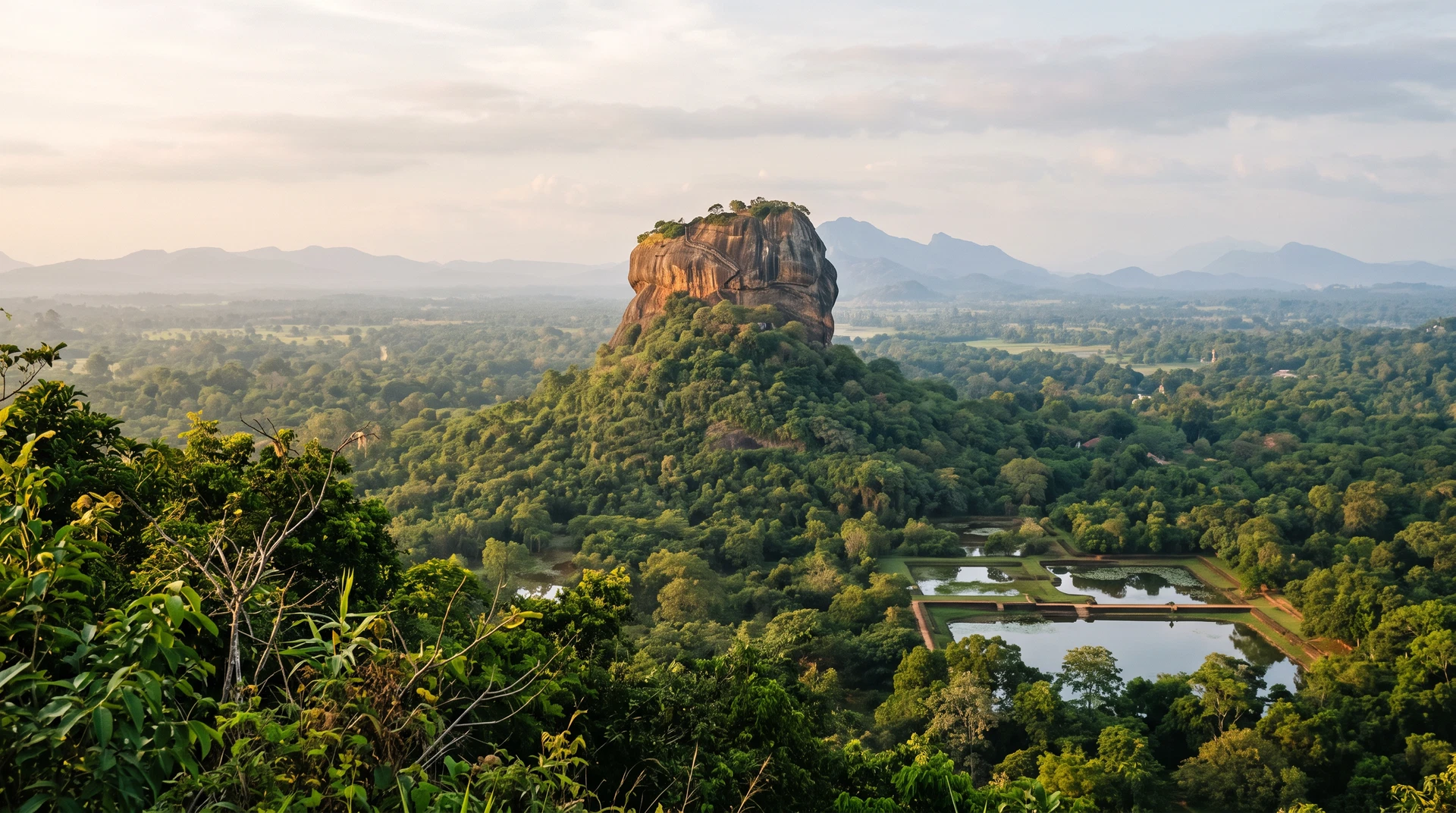
The approach to Sigiriya is a study in scale. One moment you are navigating the flat, verdant plains of Sri Lanka’s Matale District, and the next, a colossal 180-meter-high granite monolith erupts from the jungle floor. It is a geological anomaly that feels intentional, a sentinel of stone watching over the island for millennia. Known as the Lion Rock, this UNESCO site is a palace, a fortress, and a masterpiece of fifth-century urban planning. The air is thick with humidity, a sensory introduction to a site that demands both physical exertion and contemplative stillness.
Before the climb, one traverses the elaborate water gardens at the rock’s base. These are not merely aesthetic but marvels of ancient hydraulic engineering. Underground clay conduits and pressure-fed fountains, still functional after 1,500 years, demonstrate a sophistication that rivals the greatest civilizations of antiquity. Walking along symmetrical paths, the sound of trickling water provides a rhythmic accompaniment to the terraced lawns and stone-lined pools. It is easy to imagine King Kassapa I, who built this fortified capital, strolling through these gardens, seeking respite from the heat and the political turmoil of his reign.
The ascent involves over 1,200 steep and narrow steps. As you begin, the jungle canopy recedes, replaced by the sheer, weathered face of the rock. The steps are often cut directly into the granite, while others are supported by modern steel structures clinging to the cliffside. The physical toll is immediate but tempered by unfolding vistas of the surrounding plains. Each landing offers a new perspective on the landscape, a patchwork of forest and farmland shimmering in the tropical heat. It is a climb that demands respect, both for the terrain and for the ancient laborers who carved this vertical path.
Halfway up, a sheltered gallery houses the famous Sigiriya frescoes. These vibrant depictions of celestial maidens, the "Cloud Maidens," are celebrated examples of ancient Sinhalese art. The pigments remain remarkably vivid, a testament to the skill of fifth-century artists who applied them to the plaster. To preserve these delicate 1,500-year-old works, flash photography is strictly prohibited, a necessary caution against light-induced degradation. Standing in the quiet gallery, one feels an intimate connection to the past, observing the graceful lines and rich colors that have survived the ravages of time and the elements.
Continuing the climb, visitors encounter the Mirror Wall, a stretch of masonry once polished to such a high sheen that the king could see his reflection. Today, the wall is famous for the centuries of poetic graffiti etched into its surface. These inscriptions, written by visitors between the sixth and fourteenth centuries, offer a rare glimpse into the minds of ancient travelers. They wrote of their awe, their love, and their exhaustion, creating a cross-generational dialogue that bridges a thousand years. Reading the translations, one realizes that the human response to Sigiriya’s grandeur has remained remarkably consistent across the ages.
The final stage begins at the Lion Gate, where two colossal paws carved from stone flank the entrance to the summit stairway. Originally, the gate was fashioned as a seated lion, with the stairs leading through its open mouth. Today, only the paws remain, yet they convey the sheer scale and symbolic power of Kassapa’s vision. The lion was a symbol of royal authority, a warning to any who would challenge the king in his sky-high sanctuary. Standing between these massive stone claws, one feels a sense of trepidation and wonder, a prelude to the final climb toward the clouds.
The summit is a plateau of ruins, the skeletal remains of a pleasure palace that once stood atop the world. Here, the wind is constant, a cool relief from the climb, and the view is unparalleled. The foundations of royal apartments, the throne, and bathing pools are still visible, offering a layout of a life lived in isolation and luxury. From this vantage point, the Matale District is laid out like a map, a vast expanse of green punctuated by the glint of a distant reservoir. It is a place of profound silence, broken only by the rustle of the wind.
The story of Sigiriya is linked to the tragic ambition of King Kassapa I. Fearing retribution after seizing the throne, Kassapa abandoned the traditional capital to build this vertical fortress. His reign was a brief, brilliant flash in history, ending in a battle where he chose to take his own life rather than face defeat. Sigiriya stands as his monument—a blend of paranoia and unparalleled creativity. It is a reminder that even the most formidable fortresses cannot protect one from the complexities of power and the inevitability of change, a lesson etched into every stone.
Descending requires a different focus, as the knees absorb the impact of the 1,200 steps. The descent allows for a slower appreciation of the site’s stewardship. The careful preservation of the frescoes, the maintenance of ancient paths, and the protection of the surrounding ecosystem are all evident. Visitors are encouraged to move mindfully, respecting the cultural and environmental cautions that keep this site viable. The transition from the heights of the palace back to the humidity of the jungle floor is a grounding experience, a return to the reality of the present after a journey through the fifth century.
Sigiriya is more than a tourist destination; it is a sensory and spiritual encounter with the past. It challenges the body and enriches the mind, offering a perspective that is both literal and metaphorical. As the sun sets, casting long shadows across the water gardens, the rock takes on a golden hue, a final display of its enduring majesty. Leaving the site, one carries the weight of its history and the lightness of its beauty, a dual legacy that defines the experience of the Lion Rock. It remains a pinnacle of human achievement, a stone heart beating in the center of Sri Lanka.