Travel
The liquid silence of Kerala where ancient spice routes become emerald sanctuary.
In the southern reaches of India, a labyrinthine network of lagoons and canals offers a slow-motion escape from the modern world. Drifting aboard a traditional kettuvallam, travelers discover a delicate ecosystem where water is not just a landscape, but a way of life defined by rhythmic tides.
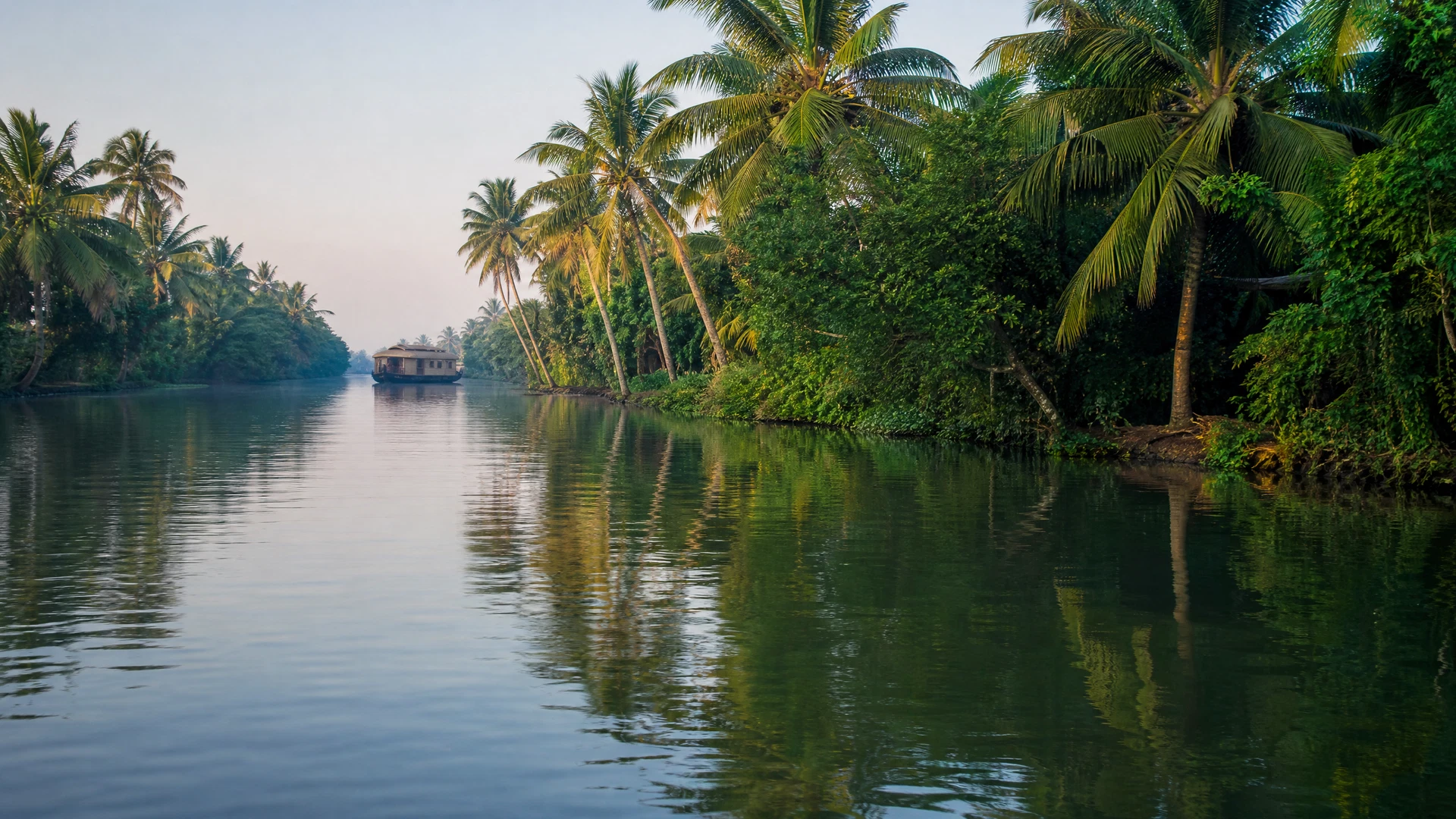
The transition from the humid, bustling streets of Kochi to the liquid threshold of the Kerala backwaters is less a journey and more a quiet surrender. Here, the geography of southern India dissolves into a nine-hundred-kilometer labyrinth of brackish lagoons, lakes, and narrow canals that run in a shimmering parallel to the Arabian Sea. To step onto the polished wood of a houseboat is to leave the frantic pace of the twenty-first century behind, replaced by a world where the only clock is the steady, rhythmic dip of a bamboo pole into the silted depths. The air carries a heavy scent of damp earth and ripening coconut, a prelude to the emerald immersion as the vessel slips into the mirror-like expanse of the Vembanad-Kol Wetland.
These waterways are fed by thirty-eight perennial rivers that tumble from the Western Ghats, carving a path through the landscape before spreading into the deltaic silence of the coast. For centuries, this network served as the vital circulatory system of the region, a watery highway for the transport of rice, spices, and coir. The vessels that navigate these channels today, known as kettuvallams, are themselves artifacts of this history. Originally sturdy cargo boats, their name translates to "boat with knots," referring to the planks stitched with coir rope and sealed with black resin from cashew kernels. No nails are used in their assembly, allowing the hulls to flex and breathe with the shifting pressures of the current.
As the kettuvallam drifts deeper into the interior, the scale of the landscape shifts from the panoramic to the intimate. The broad reaches of the lakes give way to narrow canals where the palm fronds overhead form a living cathedral, filtering the intense Indian sun into a dappled, jade-colored light. Along these banks, the boundary between land and water is perpetually blurred. Small houses, painted in turquoise and ochre, sit inches above the waterline, their steps often submerged during monsoons. Life is lived in a public, serene fashion. Women wash clothes against stones, children paddle canoes to school, and fishermen cast thin nets into mangrove shadows, all moving with a grace that suggests the water is their natural element.
The ecological significance of this region cannot be overstated, as the Vembanad-Kol system is recognized as a Ramsar Site of international importance. It is a fragile sanctuary for biodiversity, serving as a critical habitat for migratory birds and a nursery for countless species of fish and crustaceans. However, this beauty comes with a profound responsibility for the traveler. The rise of tourism has placed immense pressure on the delicate balance of the wetlands, making the choice of vessel a matter of environmental ethics. Responsible travelers must prioritize houseboats with certified pollution-prevention systems, ensuring that greywater and fuel do not poison the waters sustaining local communities and diverse wildlife.
To spend a night on the backwaters is to experience a profound sensory shift as the sun begins its descent toward the Arabian Sea. The sky transforms into a bruised palette of violet and gold, reflecting perfectly in the still water until the horizon disappears entirely. As the houseboat anchors for the evening—a necessary practice to avoid entangling the nets of local fishermen—the sounds of the day are replaced by the nocturnal chorus of the wetlands. The distant sounds of cattle and village pumps fade, leaving only the soft lap of water and the occasional splash of a rising fish. It is a silence that feels heavy and ancient, a reminder of the centuries during which these waters remained unchanged, indifferent to the empires that rose and fell beyond their shores.
Dining aboard the kettuvallam is an exercise in local flavor, where the ingredients are often sourced directly from the banks passed earlier in the day. Freshly caught pearl spot fish, marinated in a pungent paste of ginger, garlic, and bird’s eye chilies, is steamed inside banana leaves, a technique that preserves the delicate moisture of the flesh. The meal is accompanied by red matta rice, grown in the sub-sea-level paddies of Kuttanad, and a variety of vegetable preparations enriched with freshly grated coconut. There is a tangible connection between plate and landscape, a culinary map emphasizing the self-sustaining nature of backwater communities. Each bite carries the warmth of the sun and the mineral tang of the brackish tides.
Morning arrives not with a bang, but with a gradual brightening of the mist that clings to the surface of the canals. The air is cool and thin, carrying the smell of woodsmoke from the kitchens of the nearby villages. As the mist lifts, the true complexity of the water network becomes visible, revealing hidden inlets and secondary channels that seem to lead into the very heart of the forest. During these early hours birdlife is active; kingfishers dart like blue arrows while egrets stand like white statues in the shallows. The pace of the boat remains leisurely, a deliberate choice that allows for the observation of details that would be lost to a faster traveler—the intricate pattern of a spider’s web glistening with dew, or the way the light catches the ripples of a passing dragon-boat.
The wistful quality of the Kerala backwaters lies in their inherent fragility and the slow, inevitable rhythm of their existence. It is a place that demands a specific kind of attention, a willingness to be still and to observe the small, quiet dramas of the natural world. As the journey concludes and the houseboat returns to the jetty, there is a sense of having stepped out of time, if only for a few days. The emerald canals and shadowed lagoons remain, a liquid sanctuary that continues its ancient flow long after the traveler has returned to the modern world. The memory of the water, however, lingers like a cool touch on the skin, a reminder of a landscape where the earth and the sea have reached a beautiful, if precarious, compromise.