Travel
The silent altitudes of Spiti Valley offer a timeless sanctuary in the high Himalayas.
Tucked between Tibet and India, Spiti Valley is a high-altitude cold desert where ancient monasteries cling to barren cliffs. This remote wilderness invites travelers to navigate mountain passes, visit the world’s highest post office, and witness the enduring spiritual heritage of the "Middle Land."
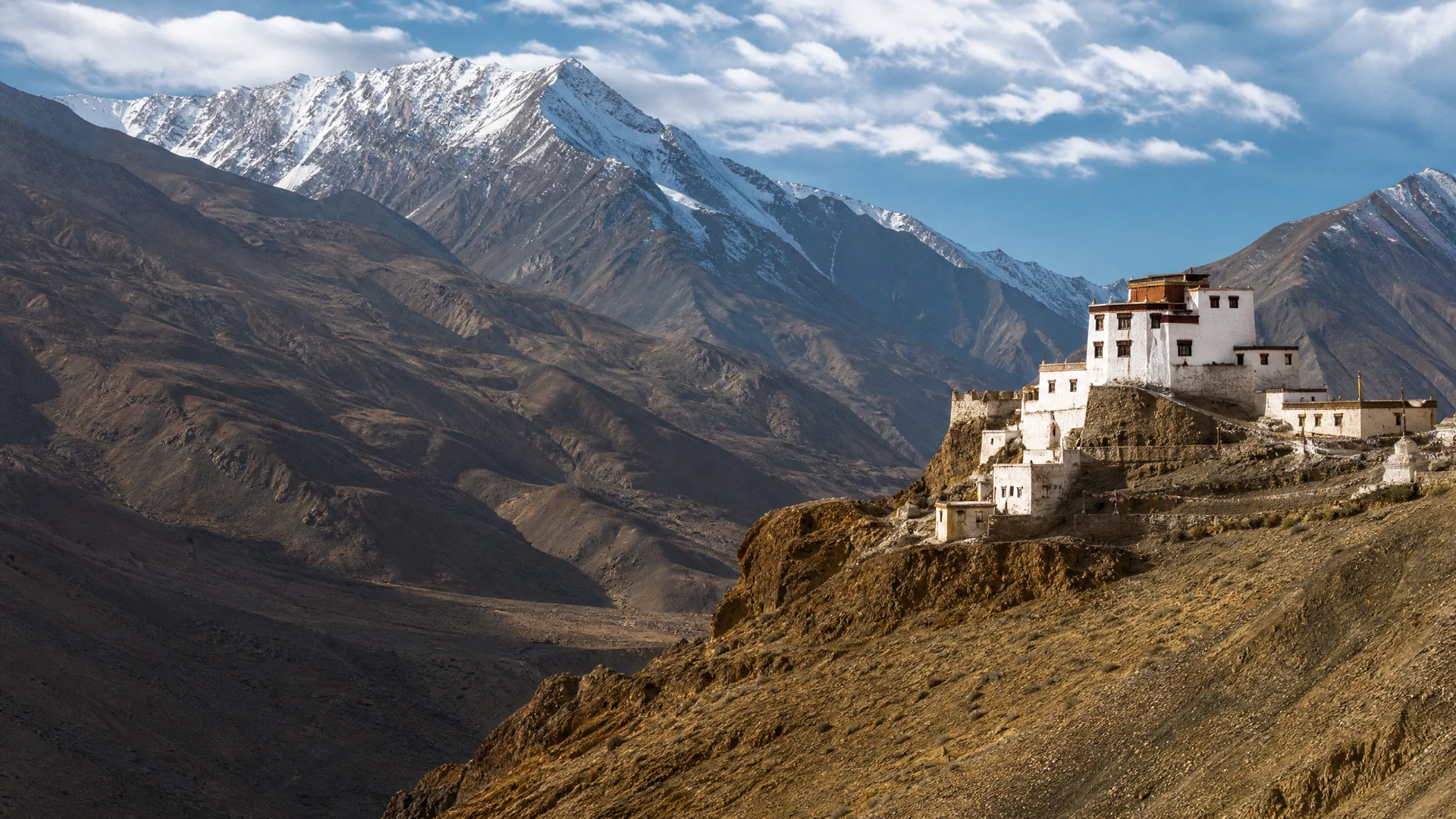
The transition into the Spiti Valley is less a journey and more a fundamental shift in reality. As the lush, emerald slopes of the lower Himachal Pradesh fade into the rearview mirror, the landscape undergoes a dramatic transformation. The air grows thin and sharp, and the vibrant greens are replaced by a spectrum of ochre, sienna, and slate. This is the "Middle Land," a high-altitude cold desert wedged between the peaks of India and the vast plateau of Tibet. Here, the scale of the Himalayas becomes overwhelmingly apparent, with jagged ridges piercing a sky so blue it feels almost artificial. It is a place where the geography dictates a slower pace of life, demanding respect from every traveler who ventures into its silent, wind-swept reaches.
At an average elevation of 12,500 feet, Spiti is a world defined by its extremes. The valley is a lunar wilderness, where the Spiti River carves a silver path through a canyon of crumbling rock and ancient silt. There are no forests here to soften the edges of the mountains; instead, the beauty lies in the raw, exposed bones of the earth. The sun is fierce during the day, reflecting off the snow-capped summits that ring the horizon, while the nights bring a bone-chilling cold that settles deep into the valley floor. This environment has shaped a culture of profound resilience and quiet dignity, where the local communities have thrived for centuries in one of the most inhospitable regions on the planet.
The spiritual anchor of the valley is the Tabo Monastery, a complex of mud-brick buildings that has stood since the 10th century. Known as the "Ajanta of the Himalayas," Tabo is a UNESCO tentative site that houses some of the most significant Tibetan Buddhist art in existence. Unlike the grand, colorful monasteries found elsewhere, Tabo’s exterior is unassuming, blending seamlessly with the brown earth of the valley. Yet, inside its dim, incense-scented chambers, the walls are alive with ancient frescoes and intricate sculptures that have survived for over a millennium. Walking through its narrow corridors is a journey back in time, offering a glimpse into a period when Spiti was a vital hub for scholars and pilgrims traveling between the great monastic centers of the north and south.
Further up the winding mountain roads lies the village of Hikkim, where a small, red-painted building serves as the world’s highest post office at 14,400 feet. In an era of instant digital communication, there is something deeply moving about this humble outpost perched on a barren hillside. Travelers come from across the globe to send postcards to loved ones, each one stamped with a unique mark that signifies its origin from the roof of the world. The postmaster’s life is one of quiet service, bridging the gap between this remote high-altitude outpost and the bustling world far below. It is a reminder that even in the most isolated corners of the earth, the human desire for connection remains steadfast.
Reaching Spiti is an adventure in its own right, requiring a traverse of some of the highest motorable passes in the world. Whether entering from the Shimla side or via the high passes of Manali, the journey involves navigating narrow, unpaved roads that cling to the sides of precipitous cliffs. Because of its proximity to the international border, certain areas of the valley require travelers to obtain mandatory Inner Line Permits. This administrative requirement serves as a constant reminder of the region’s strategic and sensitive location. The logistics of the trip are a test of patience and endurance, as the high altitude demands a slow and careful acclimatization process to avoid the debilitating effects of mountain sickness.
The fragility of Spiti’s ecosystem cannot be overstated. In this cold desert, resources are scarce, and the balance of life is delicate. Responsible travel is not just a suggestion here; it is a necessity for the valley’s survival. Visitors are urged to follow strict "leave no trace" protocols, ensuring that their presence does not degrade the environment. Water is a precious commodity, and the management of waste in such a remote location presents significant challenges. Protecting the valley means respecting the local customs and the natural world, recognizing that the very qualities that make Spiti so attractive—its isolation and purity—are also what make it most vulnerable to the pressures of modern tourism.
Living in Spiti requires a harmony with the seasons that most modern city-dwellers have long forgotten. During the long winter months, the valley is often cut off from the rest of the world by heavy snowfall, leaving the residents to rely on their stores of grain and the warmth of their traditional hearths. This period of isolation is a time for communal reflection and the preservation of ancient traditions. The rhythmic chanting of monks in the monasteries and the fluttering of prayer flags on the mountain ridges are the soundtrack to a life lived in accordance with the cycles of the earth. It is a place where the spiritual and the physical are inextricably linked.
As the sun sets over the Spiti Valley, the mountains turn a deep, glowing violet, and the stars begin to emerge with a clarity that is startling. There is a profound sense of peace that descends upon the "Middle Land" in these moments, a stillness that is rarely found in the world below. A visit to Spiti is more than just a sightseeing tour; it is a recalibration of the soul. It challenges the traveler to look inward, to find beauty in the barren, and to appreciate the enduring strength of a culture that has remained unchanged by the passage of time. Spiti remains a sanctuary for the spirit, a high-altitude wilderness that leaves an indelible mark on all who wander its paths.