Travel
The floating world of Inle Lake remains a testament to human ingenuity in the Shan Hills.
Nestled high in the emerald folds of Myanmar’s Shan State, Inle Lake offers a rare glimpse into a society built entirely upon the water. From leg-rowing fishermen to gardens that drift with the current, this high-altitude sanctuary balances ancient traditions against the modern challenges of environmental preservation.
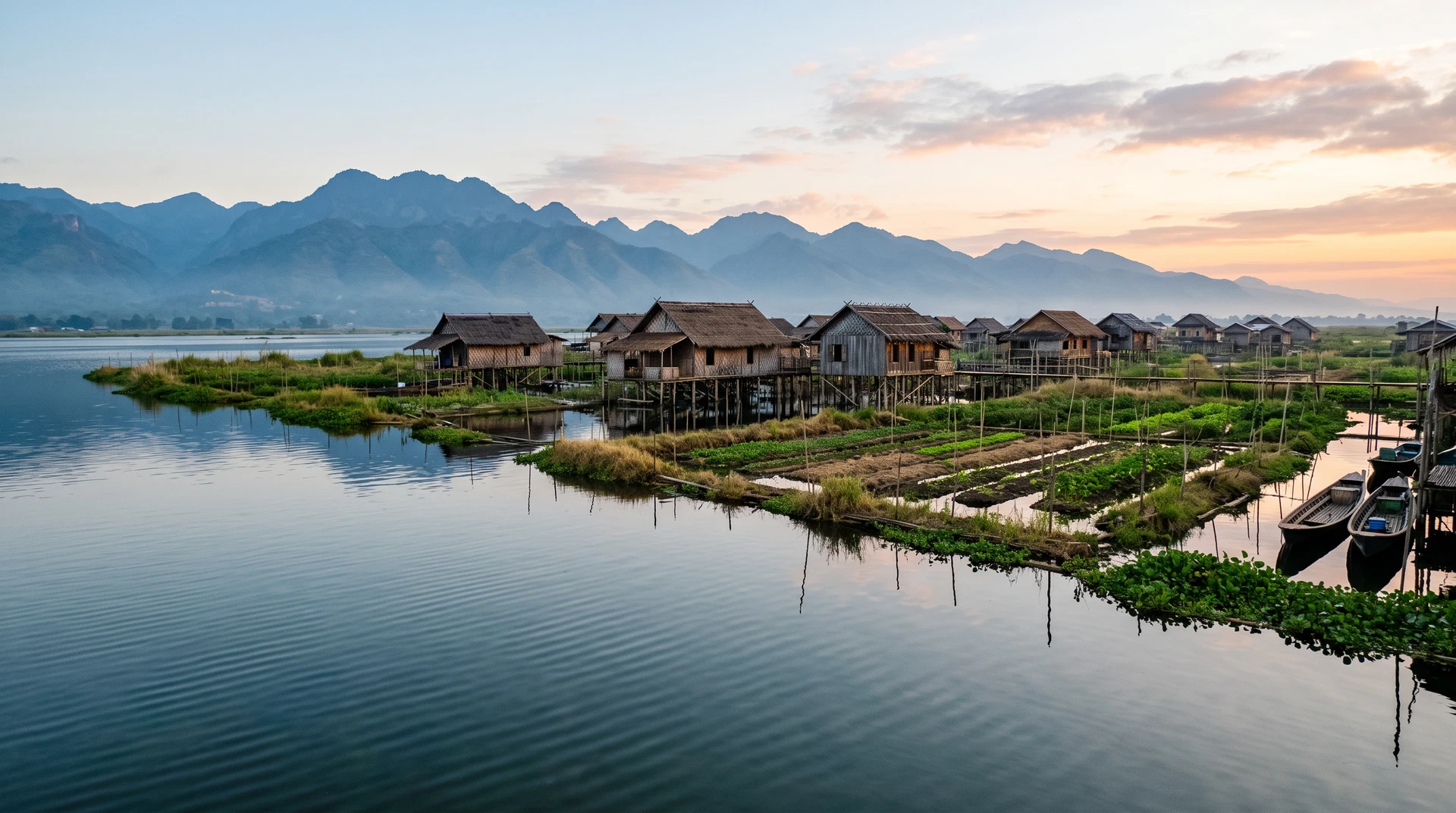
The ascent into the Shan Hills is a transition of both altitude and atmosphere, where the humid lowlands of Myanmar give way to a crisp, temperate plateau nearly three thousand feet above sea level. Here, the landscape opens into a vast, shallow expanse of silver water hemmed in by rolling blue ridges. Inle Lake is not merely a body of water but a living, breathing geography that has shaped every aspect of the people who call it home. To arrive at its shores is to enter a world where the boundary between land and liquid is perpetually blurred, and where the morning mist clings to the surface like a veil, hiding a culture that has thrived in isolation for centuries.
The Intha people, the "sons of the lake," have engineered a life that is entirely symbiotic with their aquatic environment. Their villages are not built on the banks but directly over the water, clusters of teak and bamboo stilt houses that rise above the reeds like long-legged birds. These settlements are connected by a labyrinth of narrow canals, where the sound of outboard motors occasionally breaks the silence, but the primary rhythm remains the soft dip of a paddle. Inside these homes, life follows the ebb and flow of the seasons, with the lake providing everything from the fish on the table to the water for the daily wash, creating a closed-loop existence that feels both fragile and remarkably resilient.
Perhaps the most iconic image of Inle is the leg-rower, a technique born of necessity and refined into an art form. Standing on the very stern of a narrow wooden pirogue, the fisherman wraps one leg around a single long oar, using his body weight to propel the boat while keeping his hands free to manage large, conical bamboo nets. This unique posture allows him to see above the thick carpets of floating vegetation that clog the lake’s surface, spotting the telltale bubbles of fish beneath the weeds. It is a balancing act of extraordinary grace, a silhouette of human coordination that has become the definitive symbol of the lake’s cultural identity.
Beneath the surface of this visual poetry lies a marvel of agricultural engineering: the floating gardens. Known locally as ye-chan, these patches of land are constructed from layers of lake-bottom weeds, silt, and organic debris, anchored to the bed with long bamboo poles. They are buoyant enough to rise and fall with the water levels, ensuring that crops like tomatoes, beans, and cucumbers are never flooded or parched. Tending to these gardens requires a boat rather than a tractor, as farmers paddle between the rows to harvest produce that feeds not only the local villages but much of the surrounding Shan State, proving that land is not a prerequisite for farming.
The heartbeat of the region is found in the rotating five-day markets, which move between different lakeside and hillside villages in a centuries-old cycle. Here, the Intha mingle with Pa-O, Danu, and Shan peoples who descend from the mountains to trade silver, hand-woven silks, and fresh mountain produce for the lake’s bounty. The air is thick with the scent of fermented tea leaves and fried chickpea tofu, and the chatter of multiple dialects creates a vibrant tapestry of commerce. It is a reminder that despite its isolation, Inle Lake has always been a crossroads of the Shan Hills, a place where diverse cultures meet at the water’s edge.
In 2015, Inle Lake was designated as Myanmar’s first UNESCO Biosphere Reserve, a recognition of its unique ecological and cultural value. However, this status also highlights the mounting pressures facing the lake. Decades of deforestation in the surrounding hills have led to increased siltation, causing the lake to become shallower and its margins to shrink. Simultaneously, the use of chemical fertilizers in the floating gardens and the influx of untreated waste from growing settlements have introduced nutrients that fuel the growth of invasive water hyacinths. The very ingenuity that allowed the Intha to thrive is now being tested by the unintended consequences of their success and the changing climate.
Preserving this "floating world" requires a shift toward more conscious and sustainable engagement. Visitors are increasingly encouraged to seek out low-impact tours that prioritize the lake’s health, avoiding the high-speed motorized routes that contribute to bank erosion and water pollution. Local initiatives are focusing on waste management and the restoration of the watershed, recognizing that the lake’s survival is inextricably linked to the forests above it. To travel here now is to be a witness to a delicate transition, where the goal is to protect the environment without sacrificing the living heritage that makes Inle so extraordinary.
As the sun sets behind the Shan Hills, casting long, golden reflections across the water, the lake returns to a state of profound stillness. The fishermen bring in their final catch, the birds settle into the reed beds, and the stilt villages glow with the soft light of evening fires. There is a deep, quiet wisdom in the way the Intha live, a reminder of a time when human life was measured by the natural cycles of the earth and water. Inle Lake is a place that demands observation rather than consumption, a sanctuary where the spirit of the Shan State continues to float, timeless and resilient, upon the silver surface.