Travel
The sun rises over three thousand spires in the spiritual heart of the Irrawaddy plains
Amidst the golden dust of the Mandalay Region, the ancient capital of the Pagan Kingdom remains a testament to spiritual devotion. With over three thousand monuments dating back to the eleventh century, Bagan offers a profound journey through the architectural and historical soul of unified Myanmar.
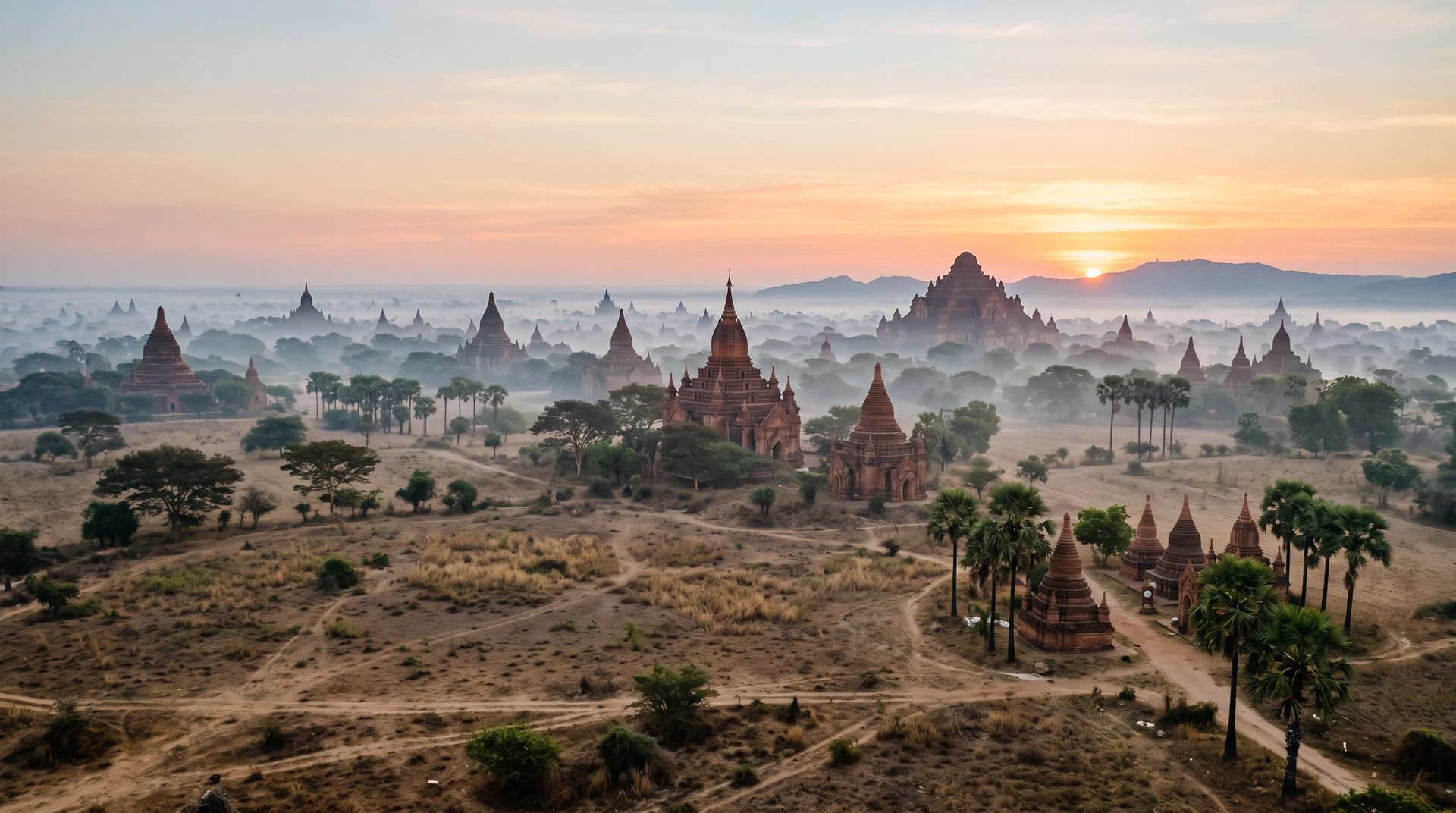
The first light of dawn in Bagan does not merely reveal a landscape; it awakens a sleeping empire of stone and spirit. As the mist clings to the lowlands of the Mandalay Region, the silhouettes of over three thousand Buddhist monuments begin to emerge from the shadows. This is a place where the scale of human ambition meets the quietude of the Irrawaddy plains, creating an archaeological expanse that defies simple categorization. To stand among these spires is to witness a horizon crowded with history, where every brick and every carving tells a story of a kingdom that once sought to reach the heavens through the medium of red earth and devotion.
Bagan’s significance is rooted in its role as the capital of the Pagan Kingdom, the first empire to unify the disparate regions of Myanmar between the eleventh and thirteenth centuries. During this golden age, the kings and citizens of Pagan constructed thousands of temples, stupas, and monasteries as acts of religious merit. This massive building program transformed the dry central plains into a dense forest of sacred architecture. Today, the surviving structures represent a pinnacle of Buddhist art and engineering, showcasing the transition from early Mon-influenced designs to the soaring, multi-story temples that would define the region’s unique aesthetic for centuries to come.
The diversity of the monuments is as staggering as their number. From the massive, gilded dome of the Shwezigon Pagoda to the elegant, towering heights of the Ananda Temple, the architectural vocabulary of Bagan is incredibly rich. Some structures are solid stupas, housing sacred relics within their bell-shaped forms, while others are hollow temples designed for meditation and circumambulation. Inside these vaulted chambers, one finds remnants of intricate frescoes and colossal Buddha statues that have watched over the plains for nearly a millennium. The interplay of light through narrow windows creates a somber, meditative atmosphere that persists despite the passage of time and the wear of the elements.
Life in Bagan has always been inextricably linked to the Irrawaddy River, which flows majestically along the western edge of the archaeological zone. The river was the lifeblood of the Pagan Kingdom, serving as a primary trade route and a source of water for the surrounding agricultural lands. Even today, the rhythm of the river dictates the pace of life for the local communities who live amidst the ruins. The sight of traditional wooden boats navigating the wide, silty waters provides a constant connection to the past, reminding visitors that Bagan was never just a collection of monuments, but a thriving center of commerce and culture.
Walking through the dusty trails that weave between the temples, the spiritual heart of Myanmar remains palpable. Unlike many archaeological sites that feel like outdoor museums, Bagan continues to be a place of active worship. Local pilgrims and monks can often be seen offering flowers and incense at the base of ancient statues, their quiet prayers mingling with the scent of sandalwood and the sound of distant temple bells. This continuity of faith ensures that the monuments are not seen as dead relics, but as living participants in the country’s ongoing spiritual narrative, bridging the gap between the medieval empire and the modern nation.
The sensory experience of the plains is defined by the unique combination of dust and light. In the heat of the afternoon, the fine, reddish soil rises in soft clouds, catching the sun’s rays and bathing the landscape in a warm, ethereal glow. The air is often still, carrying the faint aroma of dry grass and the earthy scent of sun-baked brick. As the day progresses, the changing angles of the sun transform the colors of the monuments from a pale ochre to a deep, fiery crimson. It is a landscape that demands slow exploration, rewarding those who take the time to notice the small details of a weathered carving or the way a tree has taken root in a crumbling wall.
In recognition of its exceptional universal value, Bagan was designated a UNESCO World Heritage Site in 2019. This status brought renewed focus to the stewardship and preservation of the fragile structures, many of which have suffered from centuries of seismic activity and environmental erosion. Preservation efforts are a delicate balancing act, requiring the use of traditional materials and techniques to maintain the integrity of the original masonry while ensuring the safety of those who visit. Visitors are encouraged to respect these efforts by adhering to modest dress codes and refraining from climbing the ancient structures, ensuring that this irreplaceable heritage survives for future generations.
The transition of light at the end of the day is perhaps the most iconic experience in Bagan. As the sun descends toward the horizon, the sky transforms into a palette of orange, violet, and gold, providing a dramatic backdrop for the jagged skyline of spires. The vastness of the plains becomes even more apparent as the shadows lengthen, casting the monuments into sharp relief against the fading light. It is a moment of profound stillness, where the weight of history seems to settle over the landscape. The beauty of the sunset is not just in the colors, but in the realization of the sheer endurance of these structures through centuries of change.
Ultimately, a journey to Bagan is a reflection on the passage of time and the enduring nature of human conviction. The Pagan Kingdom may have faded, but the spiritual legacy it left behind remains etched into the very earth of the Mandalay Region. To wander through this golden horizon is to be reminded of the capacity for beauty and devotion to transcend the limitations of their era. Bagan stands as a silent sentinel of Myanmar’s past, a place where the dust of the earth and the light of the spirit converge to create something truly timeless. It is a destination that asks nothing more than to be observed, respected, and remembered.