Travel
Descending into the ancient karst cathedrals of Vietnam’s subterranean wilderness
Beneath the emerald canopy of Quảng Bình Province lies a four-hundred-million-year-old limestone labyrinth where underground rivers carve through the Earth’s crust. From the record-breaking scale of Sơn Đoòng to the mist-shrouded primary jungles above, Phong Nha-Kẻ Bàng National Park remains a frontier of geological wonder and ecological preservation.
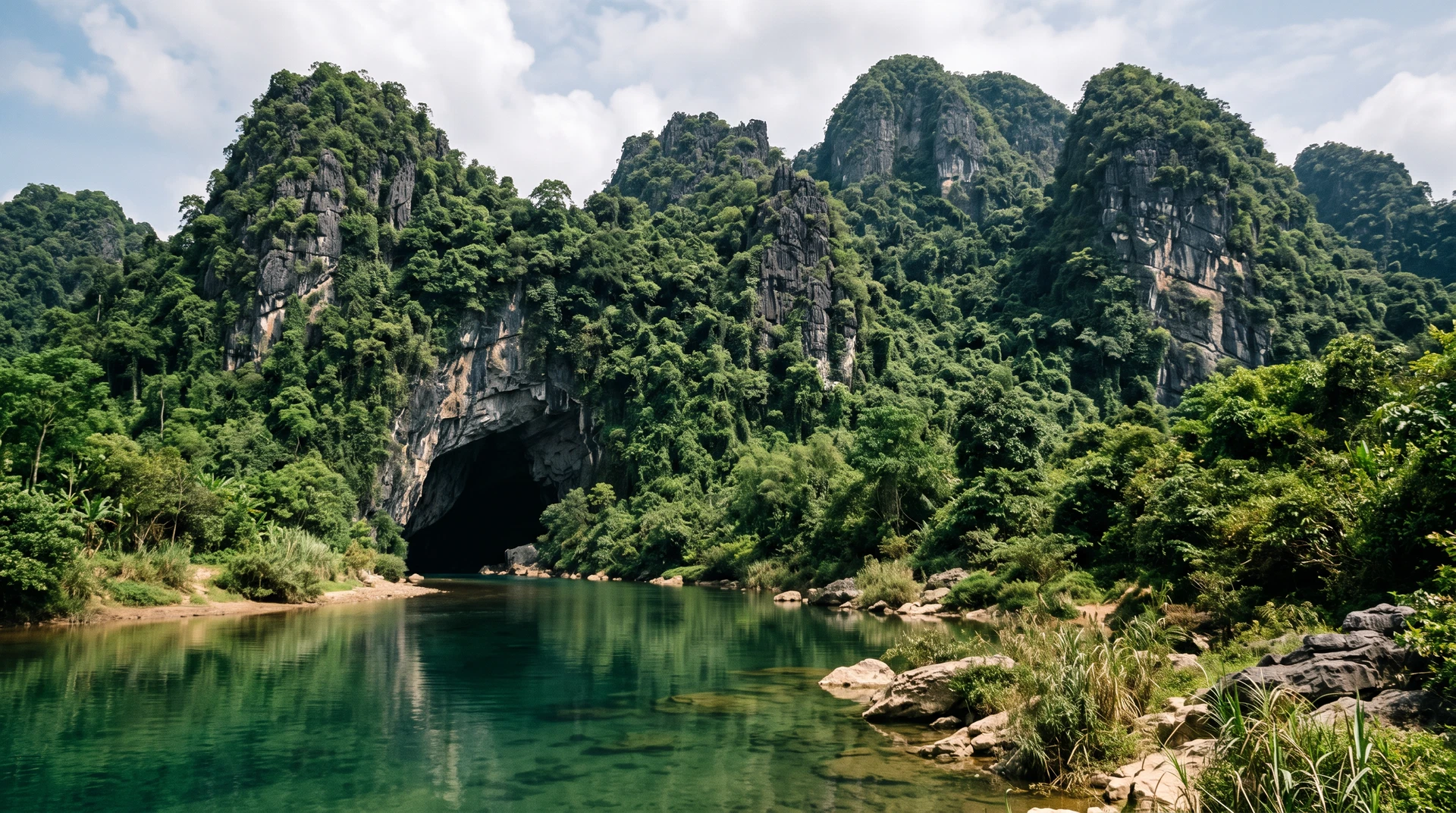
The air in Quảng Bình Province is a heavy, tactile presence, thick with the scent of damp earth and the constant, rhythmic hum of a jungle that never truly sleeps. As one approaches the limestone massifs of Phong Nha-Kẻ Bàng National Park, the landscape shifts from the flat, orderly patchwork of rice paddies into a chaotic, vertical world of jagged peaks and deep, hidden valleys. These mountains, draped in a dense, multi-layered primary forest, serve as the fortress walls to one of the most significant geological treasures on the planet.
This is Asia’s oldest karst landscape, a 400-million-year-old testament to the slow, relentless power of water and time. The limestone here is not merely stone; it is a living record of the Earth’s history, etched with the scars of tectonic shifts and the patient carving of acidic rainfall. The sheer scale of the geological formations is difficult to grasp from the surface, where the jagged peaks seem to crowd the horizon in every direction. It is only by venturing beneath the crust that the true magnitude of this ancient system becomes apparent. Here, the limestone has been hollowed out into a network of chambers and passages so vast they create their own internal weather systems, complete with clouds and localized breezes.
The lifeblood of this subterranean empire is its water. The park contains over 220 kilometers of documented underground rivers, a hidden circulatory system that continues to shape the landscape even today. During the dry season, these rivers flow with a deceptive calm, their turquoise waters reflecting the jagged ceilings above. However, the environment is defined by its extremes. Between September and December, the region is gripped by heavy monsoon rains that transform these tranquil waterways into roaring torrents. The stewardship of this delicate ecosystem requires a profound respect for these cycles; flooding is a seasonal reality that can lead to sudden site closures, reminding visitors that they are guests in a world governed by natural forces far greater than human schedules.
Deep within this labyrinth lies Sơn Đoòng, a name that has become synonymous with the superlative in the world of speleology. Housing the world’s largest cave passage, its dimensions are so gargantuan that a forty-story skyscraper could comfortably stand within its main chamber without touching the ceiling. To stand inside such a space is to experience a profound sense of vertigo, not from height, but from the sheer volume of the void. The cave is so large that it contains its own primary jungle, growing in areas where the ceiling has collapsed to let in shafts of sunlight. These "dolines" create surreal islands of green amidst the gray limestone, where trees reach upward toward a patch of sky that feels impossibly distant.
While the caves are the primary draw, the surface of Phong Nha-Kẻ Bàng is equally vital. The primary jungles that cling to the karst peaks are home to a staggering array of rare endemic wildlife, some of which are found nowhere else on Earth. The biodiversity here is a direct result of the park’s isolation and the challenging terrain, which has acted as a natural barrier to large-scale human encroachment. Walking through the forest, one might hear the distant call of a macaque or the sudden flutter of a rare bird, but the true stars are the smaller, often overlooked species that thrive in the limestone crevices and the dense undergrowth. It is an ecosystem where every niche is occupied, from the highest canopy to the darkest cave floor.
Access to this wilderness is strictly controlled, a necessary measure to protect the fragile environments from the impact of mass tourism. Permits are limited by strict quotas, and the presence of mandatory professional guides is a requirement for almost all explorations. This is not a place for casual wandering; the terrain is demanding, and the risks, particularly during the rainy season, are significant. The guides are more than just navigators; they are the keepers of the park’s secrets, trained to spot the subtle signs of geological instability or the presence of rare flora. Their expertise ensures that the impact of human presence is minimized, preserving the pristine state of the caves for future generations of researchers and explorers.
The experience of emerging from the cool, dark depths of a cave back into the brilliant, humid light of the Vietnamese afternoon is a sensory shock. The transition highlights the stark contrast between the two worlds that coexist here. Below, time is measured in the slow drip of a stalactite, a process that takes centuries to add a single inch of stone. Above, life is fast, vibrant, and constantly in motion. The park serves as a bridge between these two temporalities, offering a rare opportunity to witness the intersection of deep geological time and the immediate, urgent pulse of a tropical rainforest. It is a reminder of the Earth’s capacity for both monumental permanence and delicate, fleeting beauty.
Ultimately, Phong Nha-Kẻ Bàng is a place that demands humility. It is a landscape that has endured for four hundred million years, surviving the rise and fall of countless species and the shifting of continents. To visit is to be reminded of the ephemeral nature of human endeavor in the face of such antiquity. Whether standing at the edge of an underground river or looking out over the mist-veiled peaks from a jungle ridge, the feeling is the same: one of being a witness to a profound, ongoing story of creation and erosion. It is a frontier that remains partially unexplored, a subterranean wilderness that continues to hold its breath, waiting for the next drop of water to fall.