Travel
The Verdant Staircase of Indochina Rising Through the Mists of Northern Vietnam
High in the Hoang Lien Son Mountains, Sa Pa offers a profound encounter with Vietnam’s vertical landscapes and the enduring traditions of its highland peoples. From the emerald curves of heritage rice terraces to the cloud-wrapped summit of Fansipan, this is a place where nature and culture breathe in unison.
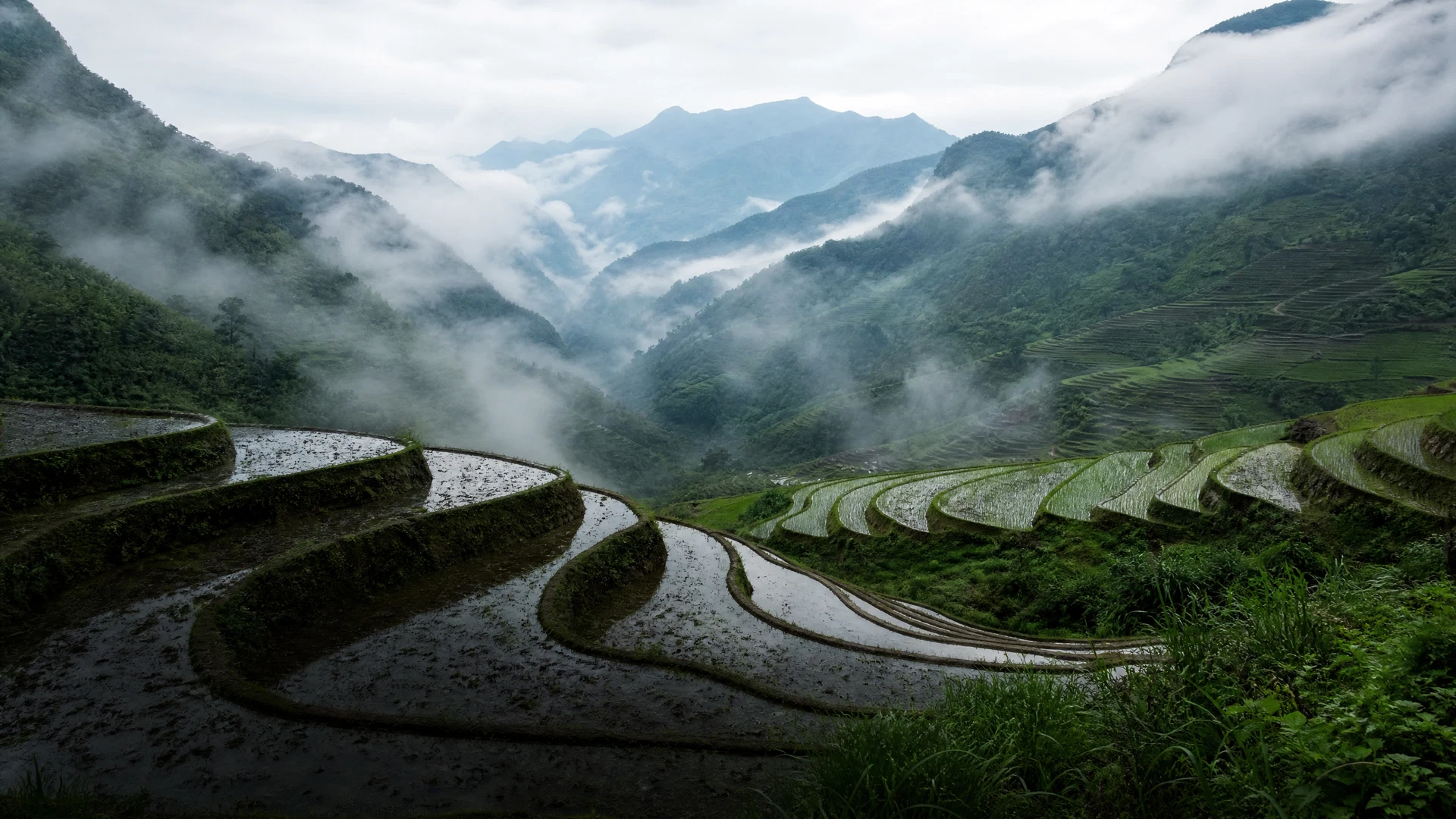
The ascent to Sa Pa is a slow immersion into a world defined by verticality and vapor. As the journey climbs away from the humid lowlands of Lao Cai, the air thins and cools, carrying the scent of damp earth and woodsmoke. Here, in the Hoang Lien Son range, the mountains do not merely stand; they loom, often obscured by a persistent, ethereal mist that clings to the ridges like a silken shroud. When the clouds part, they reveal a landscape so intricately sculpted by human hands that it feels like a living gallery. This is the gateway to the roof of Indochina, a high-altitude sanctuary where the rhythms of the seasons are etched into every slope.
The Muong Hoa Valley serves as the centerpiece of this highland drama, a sweeping amphitheater of green that defies the laws of gravity. Here, the terraced rice fields cascade down the mountainsides in a series of perfect, emerald ribbons. These are not merely agricultural plots but an architectural legacy, built over centuries by the labor of generations. To walk along the narrow earthen dikes is to appreciate the sheer ingenuity required to channel water from mountain springs across such precarious inclines. In the planting season, the terraces shimmer like mirrors, reflecting the sky; by harvest, they turn a resonant gold, a testament to the enduring relationship between the highland people and their demanding environment.
Among these slopes, the cultural fabric is as rich as the landscape itself. Sa Pa is home to five primary ethnic groups, most notably the H’mong and the Dao, whose presence is signaled by the vibrant indigo and intricate embroidery of their traditional dress. In the villages of Cat Cat or Ta Phin, daily life continues with a quiet dignity. There is a profound sense of community here, anchored in the shared stewardship of the land. Visitors are often struck by the hospitality encountered in these hamlets, though it is essential to move with respect, always seeking permission before capturing a portrait or crossing a threshold into a private home.
Towering above it all is Fansipan, the highest peak in Indochina, reaching 3,143 meters into the sky. For the adventurous, the trek to the summit is a rewarding pilgrimage through primary forests and bamboo thickets, where the vegetation shifts from lush tropical greens to stunted alpine shrubs. The mountain is a weather-maker, creating its own microclimate that can shift from brilliant sunshine to a blinding whiteout in minutes. Standing at the top, one feels a sense of immense isolation, looking down upon a sea of clouds that hides the rest of the world. It is a reminder of the raw power of the Hoang Lien Son range, a geological spine defining the northern border.
The town of Sa Pa is a study in contrasts, a former French hill station that has evolved into a bustling hub of highland commerce. Traces of the colonial past remain in the stone church, but the energy today is distinctly contemporary. The central market is a sensory overload where highland produce meets modern amenities. Yet, despite the rapid development, the town remains tethered to its roots. Even in the shadow of new hotels, H’mong women gather in the square, their hands stained blue from indigo dye, trading stories as they work. It is a place where the ancient and the modern coexist in a delicate balance.
Trekking in Sa Pa is less about reaching a destination and more about understanding the texture of the terrain. The paths are often muddy and steep, winding through bamboo groves and crossing streams that swell with mountain rains. Every turn offers a new perspective: a hidden waterfall, a solitary buffalo, or a cluster of wooden houses perched on a cliffside. The physical effort is balanced by the meditative quality of the surroundings. There is a stillness in the high valleys, a quality of light that seems to soften the edges of everything it touches. Responsible trekking is paramount here, ensuring that the fragile mountain ecosystem remains intact for future generations.
Deep within the Muong Hoa Valley lie the ancient rock carvings, a collection of hundreds of boulders etched with mysterious patterns and figures. These petroglyphs, some dating back centuries, remain a subject of fascination among historians. They depict humans, houses, and complex geometric designs, their meanings lost to time but their presence grounding the landscape in a sense of deep history. To stand before these weathered stones is to realize that Sa Pa has been a site of human endeavor and spiritual significance long before the first tourists arrived. The carvings are a silent dialogue with the past, a reminder that this land has been observed and cherished for millennia.
As the sun sets over the Hoang Lien Son, the valley is bathed in a soft, lavender light, and the terraces begin to fade into the gathering shadows. The day’s labor ends, and the smoke from kitchen fires begins to curl into the cooling air. There is a wistful quality to this hour, a sense of a world that is both timeless and rapidly changing. Protecting the cultural and environmental integrity of Sa Pa is a collective responsibility, one that requires visitors to be more than just spectators. To leave this place is to carry away a memory of emerald stairs rising into the clouds and the enduring spirit of the people who call these high peaks home.