Travel
The Vertical Descent of Dana: A Journey Through Jordan's Four Distinct Ecological Worlds
Spanning a dramatic 1,600-meter descent from limestone plateaus to the sun-scorched Wadi Araba, Jordan’s largest biosphere reserve offers a profound encounter with biodiversity. In this rugged sandstone wilderness, ancient stone villages stand sentinel over canyons where rare ibex roam and Bedouin traditions endure.
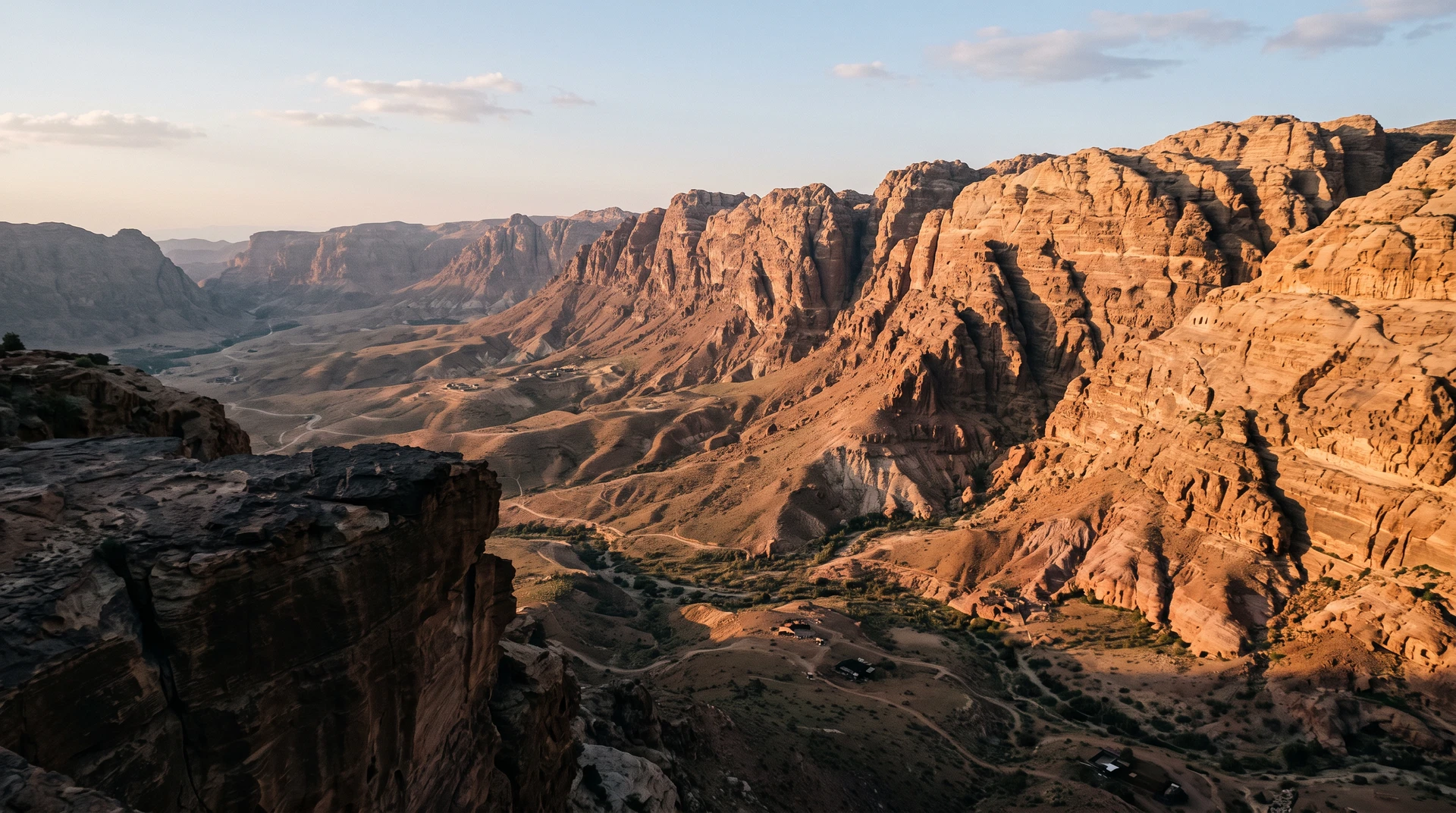
Standing on the precipice of the Dana Biosphere Reserve, one is immediately struck by the landscape's audacity. Here, the rugged limestone plateaus of the Jordanian highlands collapse into a staggering 1,600-meter descent that terminates in the sun-bleached Wadi Araba desert. The village of Dana, a cluster of ancient stone dwellings growing directly from the cliffside, serves as the gateway to this vertical wilderness. It is a place where the air feels thin and cool, carrying the scent of wild herbs and distant goat bells, offering a quiet defiance to the modern world.
This dramatic drop in elevation is the engine of an extraordinary ecological diversity. Within the reserve’s 292 square kilometers, four distinct bio-geographical zones converge: the Mediterranean, the Irano-Turanian, the Saharo-Arabian, and the Sudanian. As a traveler descends from oak-crowned heights to acacia-dotted plains, the world transforms. The transition is palpable, marked by shifting sandstone colors—from deep ochre to pale cream—and the gradual replacement of hardy highland shrubs with resilient desert flora. It is a rare opportunity to witness the Earth’s varied temperaments compressed into a single afternoon’s hike.
The botanical wealth of Dana is staggering, with over 800 plant species recorded. In the higher reaches, rare cypress trees stand as sentinels, while lower wadis host vibrant pink oleander blooms tracing seasonal watercourses. For the observant visitor, the reserve is also a sanctuary for avian life, hosting more than 200 bird species. Among them is the Syrian Serin, a delicate songbird that finds a vital refuge in these crags. To hear its melody echoing through a narrow canyon is to understand the reserve's role as a critical link in the global chain of biodiversity.
Deeper into the wilderness, the terrain becomes even more formidable, providing sanctuary for the region’s most elusive residents. The Nubian Ibex, with its magnificent curved horns, navigates near-vertical rock faces with an ease that humbles human observers. Once on the brink of local extinction, these creatures have found a stronghold in Dana’s protected canyons. Conservation efforts here maintain the integrity of an entire ecosystem that supports everything from the desert fox to the majestic Bonelli’s eagle, ensuring that the wild heart of Jordan continues to beat.
The human history of Dana is as layered as its geology. For centuries, local Bedouin communities have moved through these canyons, their lives dictated by the seasons and water availability. Today, the reserve respects traditional pastoral boundaries, allowing a balance between modern conservation and ancient heritage. Walking the trails, one might encounter a shepherd guiding a flock through a narrow pass, a reminder that this is a living landscape. The Bedouin’s deep knowledge of the land is woven into the very fabric of the reserve’s management and visitor experience.
Hiking through Dana is a physical dialogue with the earth. The trails are invitations to engage with the environment’s fragility. The desert soil, covered in a thin biological crust, is highly susceptible to erosion, making the instruction to stay on marked trails a matter of survival for the landscape. Every step reveals new textures: smooth boulders of a dry riverbed, sharp grit of wind-eroded sandstone, and soft sand in the cliff shadows. It is a journey that requires mindfulness, rewarding the patient traveler with a profound sense of connection to the natural world.
The architecture of the canyons is a masterclass in natural erosion. Over millennia, wind and water have carved the sandstone into a labyrinth of fins, arches, and deep slot canyons. In the heat of the day, these narrow passages provide a cool respite, their walls glowing with reflected light that shifts from orange to violet as the sun moves. The silence here is absolute, broken only by the occasional skitter of a lizard or the sigh of the wind. In these quiet corners, the true scale of Dana becomes apparent, making one feel privileged to witness such raw beauty.
As the sun begins its descent toward the Wadi Araba, the reserve undergoes a spectacular transformation. Long shadows stretch across the desert floor, and the air begins to hum with the cooling breeze. The golden hour in Dana is a photographer’s dream and a moment for reflection. The vastness of the view from the upper plateaus, looking out over layered ridges and distant desert haze, serves as a powerful reminder of the importance of preserving wild spaces. It is a landscape that demands respect, offering clarity and perspective that is increasingly hard to find.
When night falls, the sky above Dana becomes a canopy of impossible brightness. Far from city light pollution, stars appear in startling detail, the Milky Way a vivid smear across the darkness. The silence of the desert at night is a heavy, velvet stillness that seems to amplify the heartbeat. In the traditional stone lodges of the village or eco-camps in the wadis, the evening is spent with tea and stories, a final nod to the hospitality that has defined this region for millennia. It is the perfect conclusion to a day traversing the ecological heart of Jordan.
Ultimately, the Dana Biosphere Reserve is a testament to the resilience of life. From the Syrian Serin clinging to the limestone cliffs to the Bedouin families maintaining ancestral ties, every element of Dana is part of a complex, beautiful whole. As the world faces increasing environmental challenges, places like this serve as a sanctuary and a blueprint for how we might live in harmony with nature. Leaving Dana, one carries away not just memories of dramatic vistas, but a renewed commitment to the stewardship of our planet’s most precious and fragile places.