Travel
Where the Great Dunes Meet the Sea: A Journey into Qatar's Khor Al Adaid.
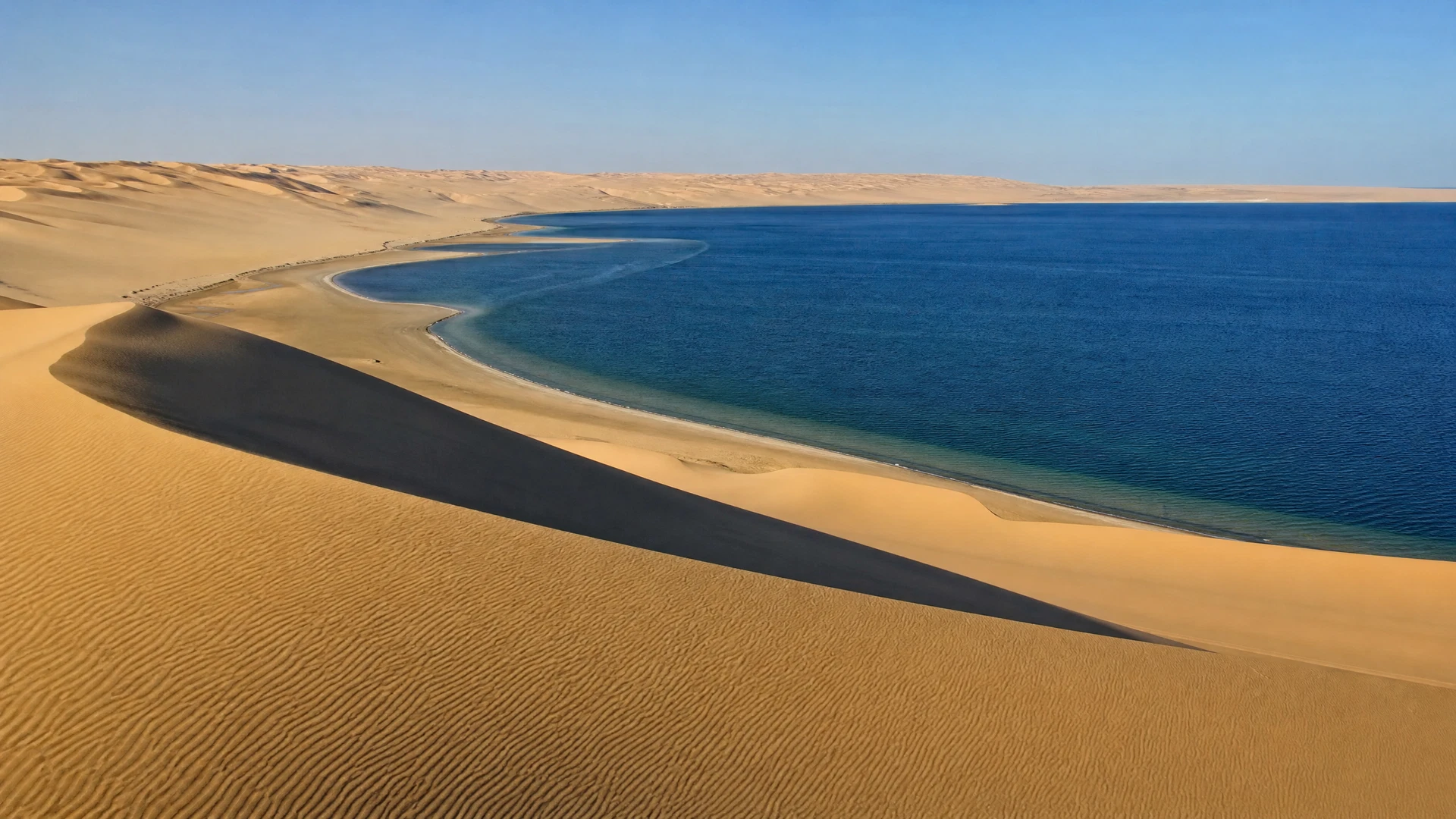
Deep in the Qatari desert, the monumental singing sands of the south perform a rare geological trick, plunging directly into the turquoise waters of a landlocked tidal embayment. This is Khor Al Adaid, a sanctuary where the silence of the dunes meets the rhythm of the Arabian Gulf.
Leaving the glass-and-steel verticality of Doha behind, the road south dissolves into a landscape where the horizon is the only constant. The transition is not merely geographical but atmospheric; the city’s hum is replaced by the rhythmic crunch of tires on gravel, then the muffled sigh of sand. Reaching Khor Al Adaid requires navigating terrain that defies the casual traveler. There are no paved roads here, only the shifting calligraphy of tracks left by those who can read the dunes. It is a journey requiring deep respect for the vehicle, the driver, and the silent void beginning where the asphalt ends. The air grows drier as the coastal breeze gives way to the parched breath of the desert interior.
As the 4x4 climbs the first major ridge, the scale of the landscape reveals itself. These are monumental crescents of barchan dunes, some rising to heights that dwarf the vehicles traversing them. When the wind catches the crests or sand is disturbed by a descent, the dunes "sing"—a low-frequency drone caused by the friction of billions of grains sliding in unison. It is a haunting sound that anchors you to the physical reality of the desert. The sand is fine, almost fluid, shifting between shades of cream and ochre depending on the sun’s angle. It is a world in constant motion, yet it possesses a stillness that feels ancient and unyielding, a testament to its power.
The true magic of Khor Al Adaid occurs at the final ridge. Suddenly, the monochromatic gold is interrupted by a sliver of impossible blue. This is the Inland Sea, a tidal embayment reaching deep into the dunes and connected to the Arabian Gulf by a narrow channel. From this vantage, the dunes do not stop; they plunge directly into the water, their steep faces disappearing into crystalline depths. It is a geological anomaly where a desert ecosystem and a marine environment coexist in intimate proximity. The contrast is harmonious—the heat of the sand meeting the cool, salt-scented breath of the sea, creating a sanctuary removed from the modern world.
Governed by the pulse of the tides, the Inland Sea is unlike any typical lake. At high tide, water pushes deep into the dunes, flooding low-lying salt flats to create turquoise channels. At low tide, it retreats, leaving behind vast expanses of sabkha—crusted salt flats shimmering like ice. These sabkhas are fragile, a delicate crust of evaporated minerals supporting a unique micro-ecosystem. Walking across them feels like stepping on sun-bleached eggshells. The patterns left by receding water are intricate and ephemeral, a natural geometry of salt crystals and ripple marks that will be rewritten by the next tide, ensuring the landscape is never the same twice.
Despite its appearance, Khor Al Adaid is a vital sanctuary. In the early morning, you might spot the ghostly silhouette of an Arabian oryx along the ridgeline. Their white coats provide perfect camouflage, and their long horns give them a regal presence. Above, ospreys circle thermal currents, searching clear waters for fish. Beneath the surface, the embayment provides a rare habitat for the dugong, the shy "sea cow" of the Gulf. These gentle herbivores graze on seagrass beds in the shallower reaches, a reminder that this desert landscape is inextricably linked to the sea’s health. It is a place where life persists against the odds, finding niche environments in the shifting sands and salt.
Time here is measured by the quality of light. At midday, the sun flattens the landscape into high-contrast white and gold. But as the afternoon wanes, shadows stretch, carving deep, violet hollows into the dunes. The ridges become sharp as knives, and the water takes on the color of molten silver. This is the hour when the desert reveals its textures—the fine ripples of wind, the tracks of a desert fox, the crystalline sparkle of salt flats. As the sun dips, the sky erupts in fire and bruised purple, reflected perfectly in the mirror-still water. It is a moment of profound beauty that makes the arduous journey through the sand feel entirely worthwhile.
The beauty of Khor Al Adaid is matched by its vulnerability. Its status on the UNESCO Tentative List reflects its ecological value and the need for careful stewardship. The thrill of the dunes can also be their undoing; fragile sabkhas and nesting sites are easily damaged by reckless driving. Responsible travel is a necessity. Access is strictly for 4x4 vehicles with drivers who understand the terrain—knowing when to deflate tires for traction and when to steer clear of sensitive salt crusts. To visit Khor Al Adaid is to enter a natural cathedral; one must leave no trace, ensuring that this sanctuary remains pristine for the wildlife and future generations.
As the journey concludes and the 4x4 treks back toward Doha, the experience lingers. Khor Al Adaid is more than a destination; it is a recalibration of the senses. In an increasingly noisy world, this corner of Qatar offers a rare encounter with unadulterated silence. It is a place where wind, sand, salt, and water are the only architects. The memory of dunes descending into the sea remains a vivid counterpoint to the modern world, a reminder that there are still places where the earth speaks in a language of vastness and quiet grace. You leave the Inland Sea behind, but its stillness follows you home, a quiet anchor.