Travel
The Sculpted Silence of Qeshm: A Journey Through Iran’s Labyrinthine Island of Erosion
Beyond the mainland’s historic cities lies Qeshm, a geological marvel where tectonic forces and desert winds have carved a surreal landscape of salt caves and canyons. Here, ancient Bandari maritime traditions endure, offering a raw and observant encounter with the Persian Gulf’s most enigmatic sanctuary.
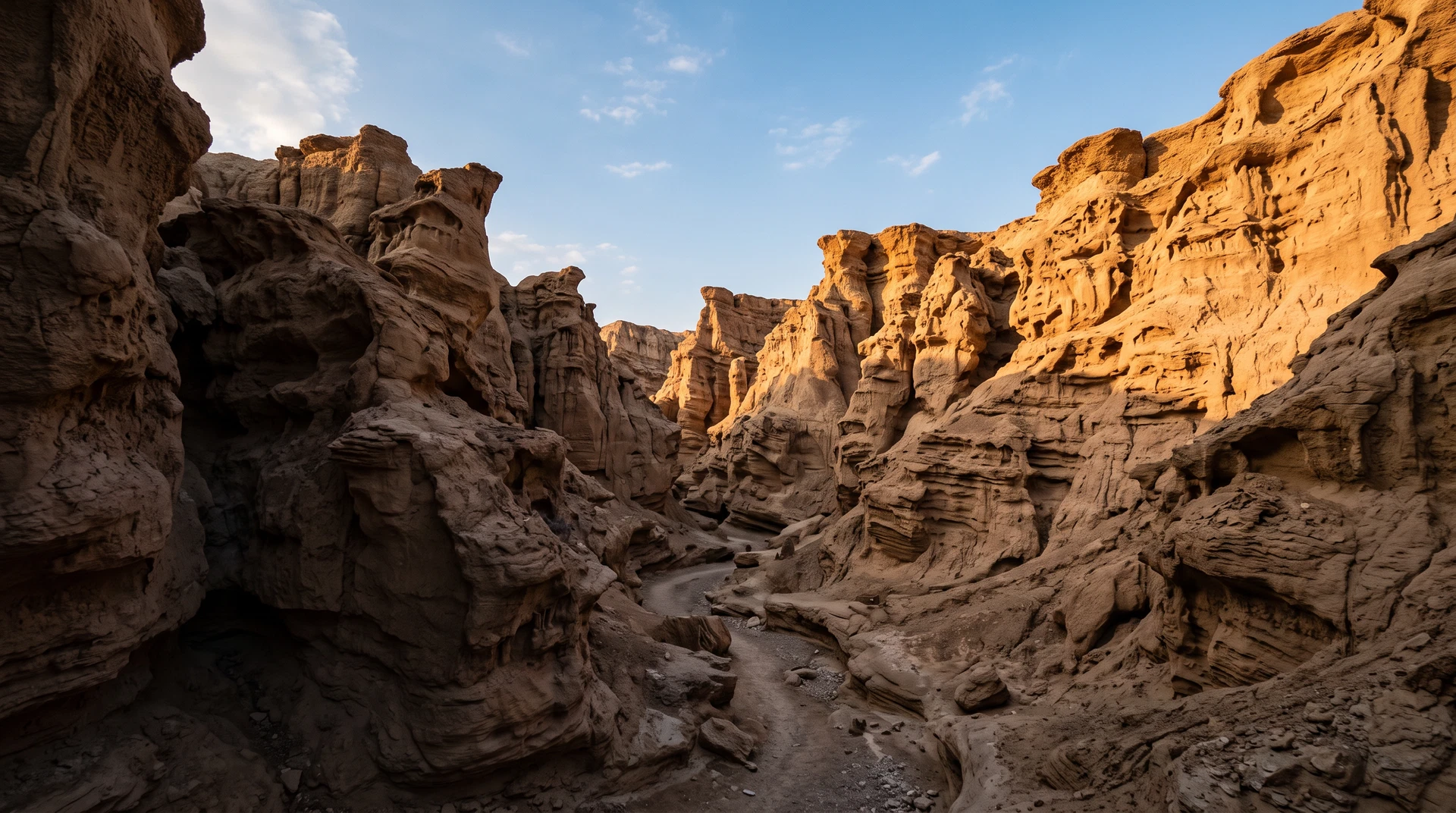
Arrival on Qeshm Island feels less like a landing and more like an entry into a gallery of natural sculpture. Floating in the azure waters of the Persian Gulf, this dolphin-shaped landmass is often referred to as the "island of erosion," a title that becomes immediately apparent as the sun illuminates the jagged, wind-worn ridges that define its interior. Unlike the manicured greenery of more conventional tropical escapes, Qeshm offers a stark, monochromatic beauty, where the earth itself seems to have been pulled and twisted by invisible hands. It is a place where the silence is heavy, broken only by the occasional call of a desert bird or the distant rhythmic thud of a shipbuilder’s mallet.
The island’s dramatic topography is a direct consequence of its location at the volatile collision zone between the Arabian and Eurasian tectonic plates. This geological friction has forced ancient layers of the earth upward, creating a playground of salt domes and sedimentary ridges that defy typical desert landscapes. To walk through the interior is to traverse millions of years of history, where the pressure of shifting continents has folded the rock into impossible shapes. It is this raw, tectonic energy that gives Qeshm its distinctive character, making every canyon and cave feel like a temporary monument to the planet’s ongoing transformation.
At the heart of this geological drama lies the Namakdan Salt Cave, a subterranean wonder that stretches for seven kilometers into the darkness. As the longest salt cave in the world, it is a cathedral of crystalline formations, where the walls are encrusted with delicate white blooms and stalactites that hang like frozen tears. The air inside is cool and thick with the scent of brine, a sharp contrast to the blistering heat of the desert surface. Visitors are cautioned to tread lightly and resist the urge to pocket even the smallest crystal, as these fragile structures are the result of millennia of slow, patient accumulation.
The island’s surface is equally mesmerizing, particularly within the labyrinthine depths of the Chahkooh Canyon. Here, the forces of water and wind have hollowed out the limestone into a series of narrow passageways and vertical walls pockmarked with natural holes and niches. It feels like a cathedral built by ghosts, where every curve of the rock suggests a deliberate design. In the midday heat, the shadows within the canyon provide a necessary respite, and the stillness is so profound that one can almost hear the slow grinding of the earth as it continues to shift beneath the island’s surface.
Transitioning from the geological to the cultural, the island is home to the Bandari people, whose traditions are as resilient as the landscape itself. Modesty is the cornerstone of local life, and visitors are expected to respect this by dressing conservatively, a gesture that opens doors to the island’s genuine hospitality. The Bandari women are often seen wearing the iconic boregheh—intricately decorated masks that serve both as protection from the sun and as a symbol of cultural identity. It is a society deeply rooted in the rhythms of the sea, where the arrival of the tide is more significant than the ticking of a clock.
Perhaps the most evocative symbol of Qeshm’s maritime heritage is the "Lenj," the traditional wooden boats that have been built on these shores for centuries. This craft, inscribed by UNESCO as an intangible cultural heritage, is a testament to the islanders’ ingenuity and their intimate relationship with the Persian Gulf. In the shipyards of Laft and Guran, craftsmen still work without blueprints, relying on knowledge passed down through generations to shape massive ribs of teak and oak. The scent of sawdust and fish oil hangs heavy in the air, a reminder that even in a modernizing world, some traditions remain anchored to the past.
The coastline of Qeshm is a fringed tapestry of mangroves and coral reefs, providing a sanctuary for a diverse array of marine life. The Hara Forest, a sprawling mangrove swamp, disappears and reappears with the tide, its salt-tolerant trees providing a nesting ground for migratory birds. Navigating these waterways in a small boat reveals a side of the island that is lush and vibrant, a stark contrast to the arid canyons of the interior. It is a reminder that Qeshm is a land of extremes, where the harshest desert conditions meet the life-giving waters of the gulf in a delicate, shifting balance.
As the sun sets over the Persian Gulf, the island’s colors shift from a pale ochre to a deep, burning crimson. Standing on the edge of the Stars Valley, where the locals believe a fallen star once carved the earth into its current jagged form, one feels the true weight of the island’s isolation. Qeshm is not a place for those seeking luxury or predictable comforts; it is a destination for the observant traveler who finds beauty in the raw, the eroded, and the enduring. It is a reminder that the earth is not a static stage, but a living, breathing entity that continues to shape itself in the silence of the desert.