Travel
Where the Black Sea Meets the Sky: The Glacial Majesty of Türkiye’s Kaçkar Mountains
Rising above the humid tea plantations of the Rize coast, the Kaçkar Mountains offer a rugged sanctuary of glacial lakes and granite spires. Here, ancient transhumance traditions still pulse through the high-altitude pastures, where the Hemşin and Laz communities navigate the shifting mists of Anatolia’s highest northern peaks.
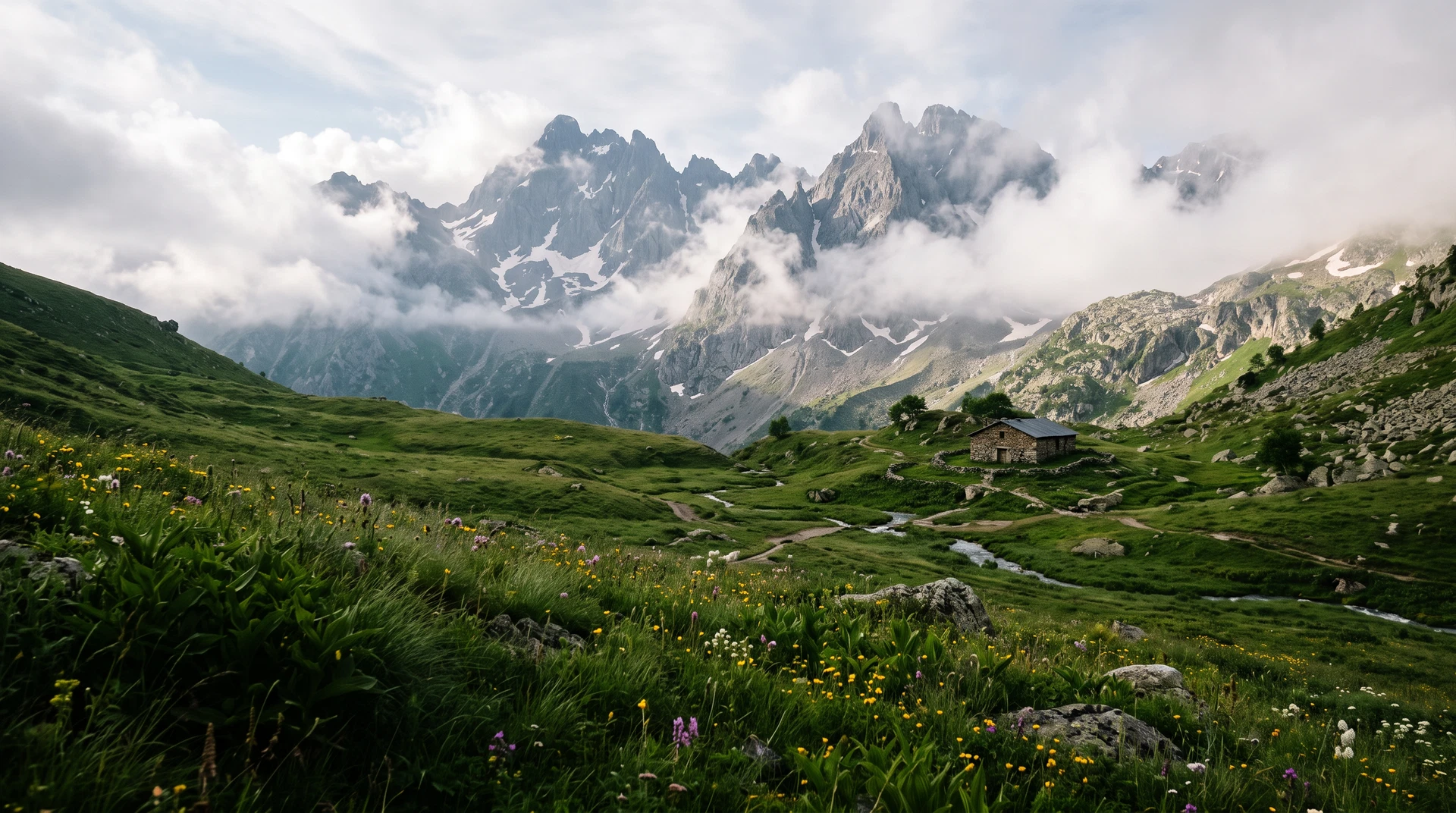
The ascent from the humid, tea-scented shores of the Black Sea into the Kaçkar Mountains is a transition between worlds. As the winding roads of Rize Province climb away from the coastal humidity, the dense, emerald canopy of the lower valleys gives way to a landscape of stark, vertical drama. This is the Pontic Alps, a range that acts as a formidable barrier between the sea and the Anatolian plateau. Here, the air thins and cools, carrying the scent of damp earth and wild herbs. The Kaçkar is not merely a mountain range; it is a vertical archipelago of biodiversity, where the moisture-laden winds from the Euxine Sea collide with granite peaks, creating a microclimate that feels more like the Scottish Highlands than the sun-drenched imagery typically associated with Türkiye.
At the heart of this rugged expanse lies the Kaçkar Mountains National Park, a 52,970-hectare sanctuary established in 1994. The crown jewel is Kaçkar Dağı, a granite giant that pierces the sky at 3,937 meters. Its summit, often wreathed in stubborn clouds, is the highest point in northern Türkiye and a magnet for those seeking a raw encounter with the elements. The geology here is a testament to the power of ice; the range is pockmarked with over 100 glacial lakes, their waters ranging from deep indigo to a brilliant, milky turquoise. These "eyes of the mountain" sit in high cirques, surrounded by moraines and jagged ridges that have been carved by millennia of glacial activity.
To understand the Kaçkar is to understand the yayla—the high-altitude summer pastures that have defined local life for centuries. For the Hemşin and Laz communities, the mountains are a seasonal home. Every summer, a centuries-old tradition of transhumance unfolds as families move their livestock from the lowlands to these verdant plateaus. The yaylas, such as Pokut and Gito, are dotted with traditional stone and timber houses that seem to grow directly out of the hillsides. Life here follows the rhythm of the bells; the tinkling of cattle provides a constant soundtrack to the mountain silence. It is a culture of resilience, where the harshness of the terrain is balanced by the warmth of a shared cup of tea in a mist-shrouded hut.
Botanically, the Kaçkar is a realm of superlatives. As one traverses the varying elevations, the flora shifts in a kaleidoscopic display of adaptation. The most iconic of these are the high-altitude rhododendrons, which bloom in late spring and early summer. Seeing them in their native habitat—clinging to rocky precipices and filling entire valleys with shades of purple and cream—is a transformative experience. These hardy shrubs thrive in the humid, acidic soil and the frequent fogs that characterize the Rize highlands. Alongside them, alpine meadows burst into a riot of wildflowers, including rare orchids and endemic gentians, creating a fragile tapestry that supports a wealth of birdlife and mountain butterflies.
The weather in the Kaçkar is a character in its own right, fickle and frequently formidable. The local term for the thick, rolling fog that often engulfs the peaks is duman. It can appear in minutes, turning a clear morning into a world of white-out conditions where the horizon disappears. This "sea of clouds" is a spectacular sight from the higher yaylas, where one can stand on a sunlit ridge and look down upon a billowing carpet of white that stretches toward the Black Sea. However, for the traveler, this unpredictability demands respect. Heavy rain and sudden temperature drops are the price of admission for such lush beauty, requiring practical preparation and a humble attitude toward nature’s whims.
Hiking in the Kaçkar is an exercise in scale and solitude. Unlike more manicured trails elsewhere, the paths here often follow ancient migration routes, worn deep into the earth by generations of feet and hooves. The terrain is demanding, characterized by steep scree slopes and boulder-strewn valleys. Yet, the rewards are immense. There is a profound sense of isolation to be found in the higher reaches, where the only sound is the whistle of a mountain wind or the distant roar of a glacial stream. The scale of the granite walls provides a perspective that is increasingly rare—a reminder of the enduring power of the natural world and the smallness of the human footprint within it.
The glacial lakes, scattered like sapphires across the high basins, offer a moment of stillness. Lakes like Deniz Gölü, situated at nearly 3,400 meters, are often partially frozen well into the summer, their icy fringes contrasting with the deep blue of the center. Reaching these lakes requires a strenuous climb, but the sight of the peaks reflected in their mirror-like surfaces is a definitive Kaçkar moment. These water bodies are vital reservoirs of the alpine ecosystem, fed by the slow melting of permanent snowfields. Sitting by their shores, one can witness the slow, grinding work of the glaciers that continue to shape this landscape, a process that has remained largely unchanged for millennia.
Stewardship in the Kaçkar is a balance between increasing interest and the preservation of a fragile heritage. The national park status provides protection, but the real guardians are the local communities whose grazing rights are integral to the landscape’s health. Visitors are guests in a working environment, and respecting the boundaries of the yaylas and the privacy of the herders is paramount. The alpine biodiversity is equally sensitive; thin soils mean that even small disturbances can have long-lasting effects. Responsible travel here means adhering to the principles of leaving no trace and recognizing that the beauty of the Kaçkar is inseparable from its ecological and cultural integrity, ensuring these peaks remain wild for generations.