Travel
The silent stone sentinels of AlUla guard the ancient secrets of the Nabataean Kingdom.
Beyond the modern horizon of Saudi Arabia lies a vast geological gallery where monumental tombs carved into sandstone monoliths whisper of the ancient incense route. Here, the legacy of the Nabataeans remains etched in the desert, preserved by the arid winds of two millennia.
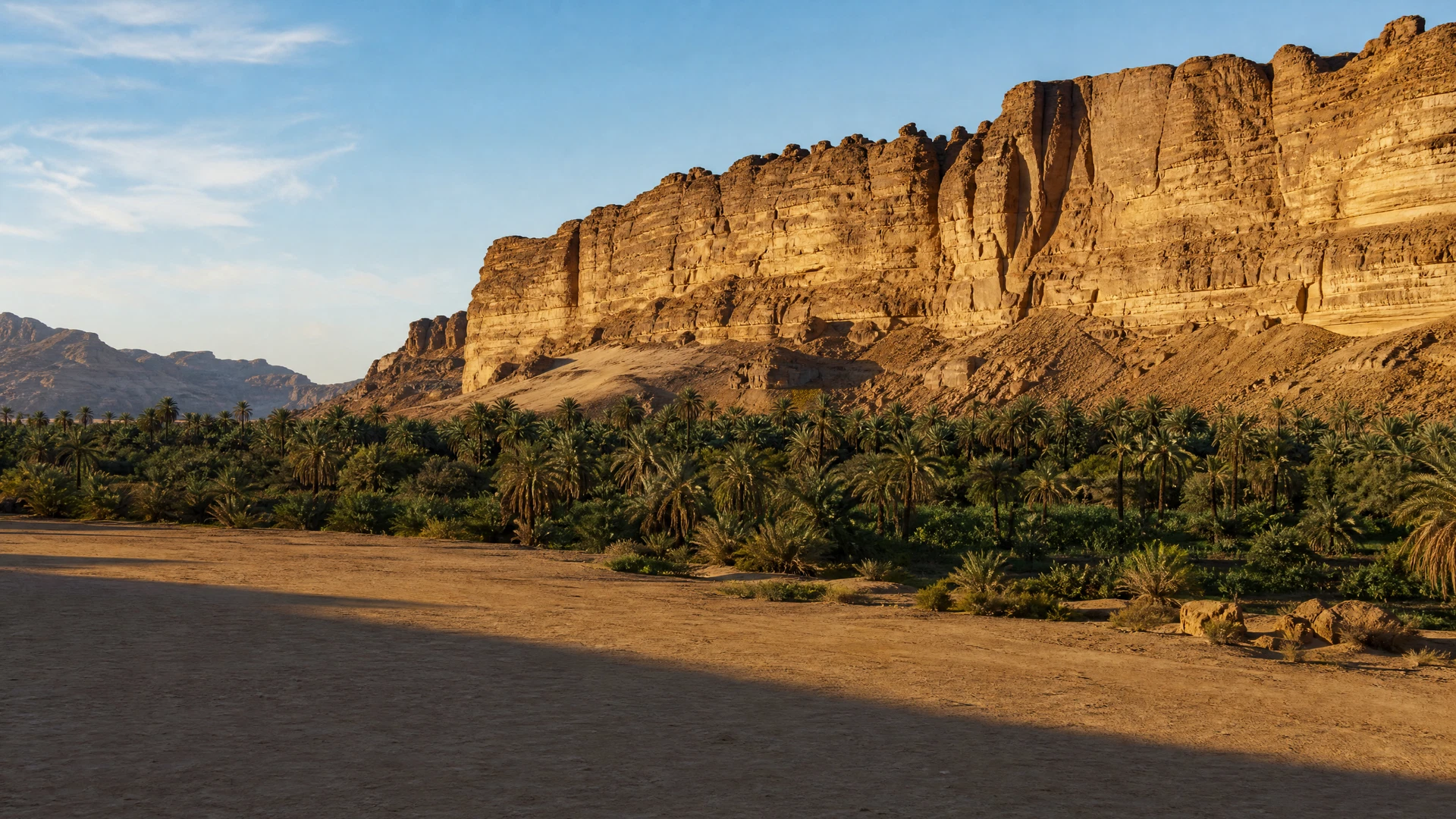
The approach to AlUla is a lesson in perspective, where the scale of the Arabian desert dwarfs the modern traveler’s sense of self. The landscape is dominated by colossal sandstone formations rising from the valley floor, their surfaces weathered into fluid shapes by centuries of wind. As the sun ascends, the rock faces transition through a spectrum of ochre and gold, creating a visual rhythm that feels both ancient and immediate. There is a profound stillness here, a silence so deep that the crunch of sand feels like a disruption of a long-standing peace.
At the heart of this geological theater lies Hegra, Saudi Arabia's first UNESCO World Heritage site. It served as the southern capital of the Nabataean Kingdom, a civilization perhaps best known for Petra, yet here the preservation feels even more intimate. Scattered across the desert are 111 monumental tombs, their façades decorated with classical motifs that have survived since the 1st century BCE. Walking among these structures, one notices the precision of the hewn stone, where Nabataean craftsmen blended Hellenistic and local styles. Each tomb stands as a solitary testament to a family’s status.
To understand AlUla is to recognize its position as a pivotal crossroads on the ancient incense route. For centuries, caravans laden with frankincense and myrrh passed through this valley, connecting the southern Arabian Peninsula with the Mediterranean world. This was a landscape of commerce and cultural exchange, where ideas flowed as freely as the goods themselves. The Nabataeans thrived because of their ability to facilitate and tax this lucrative trade. Standing amidst the ruins, it is easy to imagine the scent of exotic resins that once filled the air, turning this outpost into a cosmopolitan hub.
Perhaps the most impressive aspect of the Nabataean presence was their mastery of desert water management. In a region where every drop of moisture is precious, they engineered an advanced hydraulic system that allowed a large population to flourish. Archaeologists have identified over 130 artificial wells carved deep into the bedrock, some still showing the tool marks of ancient engineers. These were not merely holes in the ground, but part of a sophisticated network designed to capture and store the infrequent desert rains. This technical ingenuity was the hidden foundation of their empire, a triumph of engineering.
The physical experience of AlUla is strictly governed by the sun. During the peak of summer, the heat becomes a tangible force, turning the valley into a furnace by midday. Consequently, activity is concentrated in the cool light of the early morning or the soft shadows of the late evening. In these transition hours, the desert reveals its most subtle details, from the delicate tracks of beetles to the way the light catches fine dust in the air. To be here is to learn the value of patience, waiting for the temperature to drop before venturing out into the vastness.
Navigating AlUla requires a conscious adherence to both heritage conservation and local cultural norms. The site is a sanctuary of history, and visitors are expected to move with reverence. Dress codes are modest, reflecting the traditional values of the region, and this requirement serves as a constant reminder of the cultural context. There is a quiet dignity to the way the site is managed, emphasizing preservation over mass-market tourism. By respecting these boundaries, the traveler gains a deeper appreciation for the site’s sanctity, realizing that the protection of the past is a shared responsibility between stewards and visitors.
Beyond the famous tombs, the broader landscape is a playground for the geological imagination. Towering sandstone monoliths appear like frozen giants against the horizon. These formations, known locally as jebels, are central characters in the story of the valley. Their porous surfaces have been carved by the elements into natural arches and narrow canyons. Exploring these hidden corners reveals a side of the desert where the raw power of nature is on full display, unmediated by human hands. It is a reminder that while the Nabataeans left their mark, the land itself has a much longer history.
Two millennia of Arabian history are compressed into the arid air of AlUla, creating a sense of temporal collapse. Standing before a tomb that has remained unchanged for two thousand years, the distance between the present and the past feels remarkably thin. The lack of significant modern development within the core heritage areas allows for an immersive experience that is increasingly rare. There are no neon signs to break the spell; instead, there is only the wind, the sand, and the enduring stone. This preservation offers a clear window into a world that shaped the foundations of global trade.
Practicality in AlUla means embracing the limitations of the environment. One does not wander aimlessly; movements are planned around the availability of shade and water. The desert is a beautiful but unforgiving host, and successful travel here requires a blend of preparation and flexibility. Whether it is ensuring enough hydration for a morning hike or understanding the logistics of reaching remote outcrops, the practicalities of the trip become a central part of the narrative. This engagement with the logistics of survival fosters a connection to the ancient travelers who once navigated these same paths with far fewer resources.
As the stars emerge over the darkened jebels, the true weight of AlUla’s legacy becomes apparent. The desert night is vast and clear, free from the light pollution that masks the heavens in more populated regions. Under this celestial canopy, the ancient tombs seem to settle further into the earth, their shadows merging with the darkness of the valley. To leave AlUla is to carry away a piece of its stillness, a reminder of the enduring power of human ambition and the even greater power of the natural world to preserve it. It is a place that demands reflection.