Travel
The Silence of the Sandstone: Echoes of Deep Time in Jordan’s Wadi Rum
Beyond the jagged horizons of southern Jordan lies a red-sand sanctuary where geological time and human history collide. From ancient Nabataean petroglyphs to the enduring traditions of Bedouin stewards, Wadi Rum offers a profound encounter with the raw, silent majesty of the high desert wilderness.
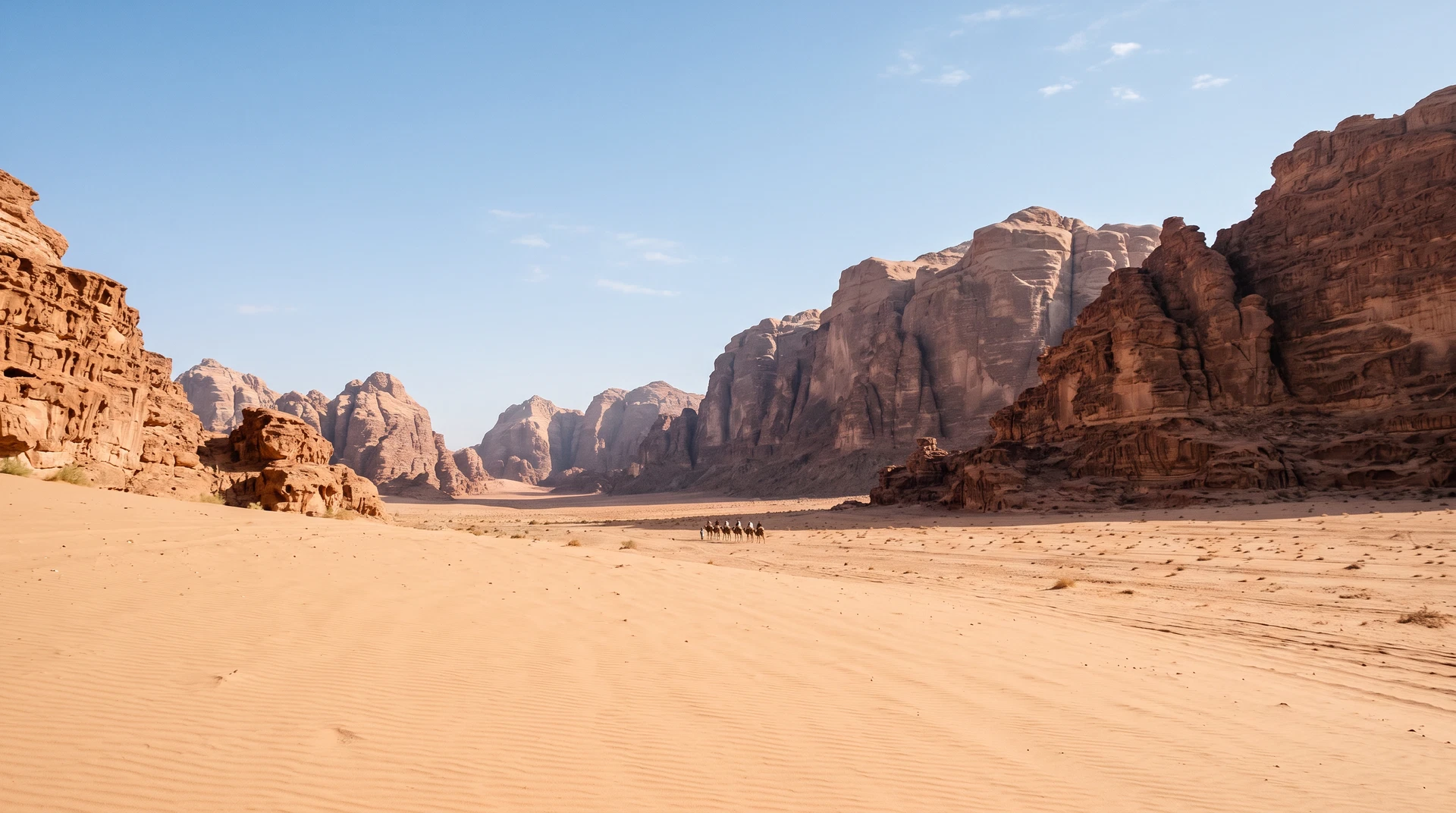
To cross the threshold into the Wadi Rum Protected Area is to enter a landscape that feels less like a terrestrial desert and more like the surface of a distant, cooling planet. Known as the "Valley of the Moon," this vast expanse of southern Jordan is defined by a staggering verticality and a palette of ochre and gold that shifts with the passing sun. Here, the earth’s crust seems to have been pulled apart to reveal the skeletal remains of ancient sandstone mountains, their faces weathered into intricate patterns by wind and sand. It is a place where the scale of nature immediately humbles the observer, reducing the modern world to a distant memory as the silence of the high desert settles over the senses like a comforting shroud.
The geological narrative of Wadi Rum is one of patient, multi-million-year transformation. The foundation of this wilderness is a complex interplay of sandstone and granite, shaped by tectonic shifts and the erosive power of rare but intense flash floods. Over eons, these forces have sculpted the terrain into a labyrinth of narrow canyons and gravity-defying natural arches. Formations such as the Burdah Rock Bridge stand as monumental testaments to the desert’s architectural prowess, offering a constant reminder of the slow pace of planetary change. Each crevice in the sandstone tells a story of atmospheric pressure and thermal expansion, creating a texture so rich it feels almost organic, as if the mountains themselves are breathing in the dry, thin air.
Yet, Wadi Rum is far from a barren wasteland; it is a living archive of human resilience. Across the valley’s iron-stained rock faces, more than twenty-five thousand petroglyphs and twenty thousand inscriptions form a vast, open-air archive that chronicles twelve millennia of human movement. These carvings are vital records of ancient lives, depicting hunting scenes, long-extinct wildlife, and the earliest iterations of written language. From Neolithic sketches to sophisticated Thamudic and Nabataean scripts, the rock faces serve as a monumental library of the desert. Walking through the narrow passage of Khazali Canyon, one sees these inscriptions layered upon one another, a silent conversation between generations who found sanctuary and sustenance in this formidable environment.
The stewardship of this landscape remains rooted in the heritage of the Bedouin people, who have navigated these sands for centuries. Today, the transition from a nomadic existence to a role as the primary guardians of the Protected Area has allowed for a unique form of sustainable tourism. Managed under the oversight of the Aqaba Special Economic Zone Authority (ASEZA), the Bedouin communities serve as the essential link between the visitor and the land. Their knowledge of the desert’s hidden springs and shifting dunes is unsurpassed, providing a practical grounding to the ethereal beauty of the scenery. To travel with a local guide is to understand that Wadi Rum is a complex ecosystem to be respected through traditional wisdom.
Conservation is the heartbeat of Wadi Rum, a necessity born from increasing global interest. The ASEZA management plan balances the influx of travelers with the need to protect the fragile desert pavement and archaeological sites. Visitors are reminded that their presence is a privilege carrying the weight of responsibility; staying on designated vehicle tracks is critical to prevent the irreversible erosion of the delicate soil. The protection of the petroglyphs is equally paramount, as the oils from a single human hand can accelerate the degradation of carvings that have survived for millennia. This ethos of "leave no trace" is woven into the experience, ensuring that the valley remains as pristine for future generations as it was for the Nabataeans.
The sensory experience of Wadi Rum is most profound in its absence of modern noise. In the depths of the protected area, the silence is absolute, broken only by the whistle of wind through a sandstone crack or the soft crunch of sand underfoot. This acoustic purity heightens the other senses, making the scent of wild sage after a rare rain or the sudden coolness of a shaded canyon feel intensely vivid. As evening approaches, the fiery reds of the afternoon soften into deep purples and indigos, and the heat of the day radiates back into the atmosphere. The night sky, free from light pollution, reveals a celestial tapestry of such clarity that the Milky Way appears as a solid, glowing bridge across the heavens.
Hidden within the folds of the mountains are micro-ecosystems that defy the impression of aridity. Canyons like the Lawrence’s Spring area harbor small, verdant pockets of life where water seeps from the rock, supporting ancient fig trees and hardy desert shrubs. These oases were the lifeblood of the caravans that once traversed the incense routes, and they remain vital watering holes for the local wildlife and the camels that still roam the valley. The presence of water in such a parched environment is a reminder of the desert’s hidden depths and the intricate plumbing that exists beneath the surface, feeding the life that clings tenaciously to the shadows of the sandstone cliffs.
As one eventually leaves the valley, the towering monoliths receding into the distance, the impression that remains is one of profound continuity. The desert does not change for the visitor; rather, the visitor is changed by the desert. The echoes of the ancient inscriptions and the quiet dignity of the Bedouin stewards stay with you, a reminder that we are all merely passing through a landscape that has seen civilizations rise and fall like the shifting dunes. Wadi Rum is a place of deep listening, where the stones speak of the past and the wind carries the promise of the future, all held within the timeless embrace of the red sandstone.