Travel
Salt and shell define the enduring human legacy of Senegal’s vast Sine-Saloum Delta
A sprawling five-thousand-square-kilometer expanse of West African coastline, the Sine-Saloum Delta weaves together saltwater channels and dense mangrove forests. Its two hundred islands are marked by ancient shell mounds, enduring witnesses to two thousand years of sustainable human existence within this vibrant, protected biosphere.
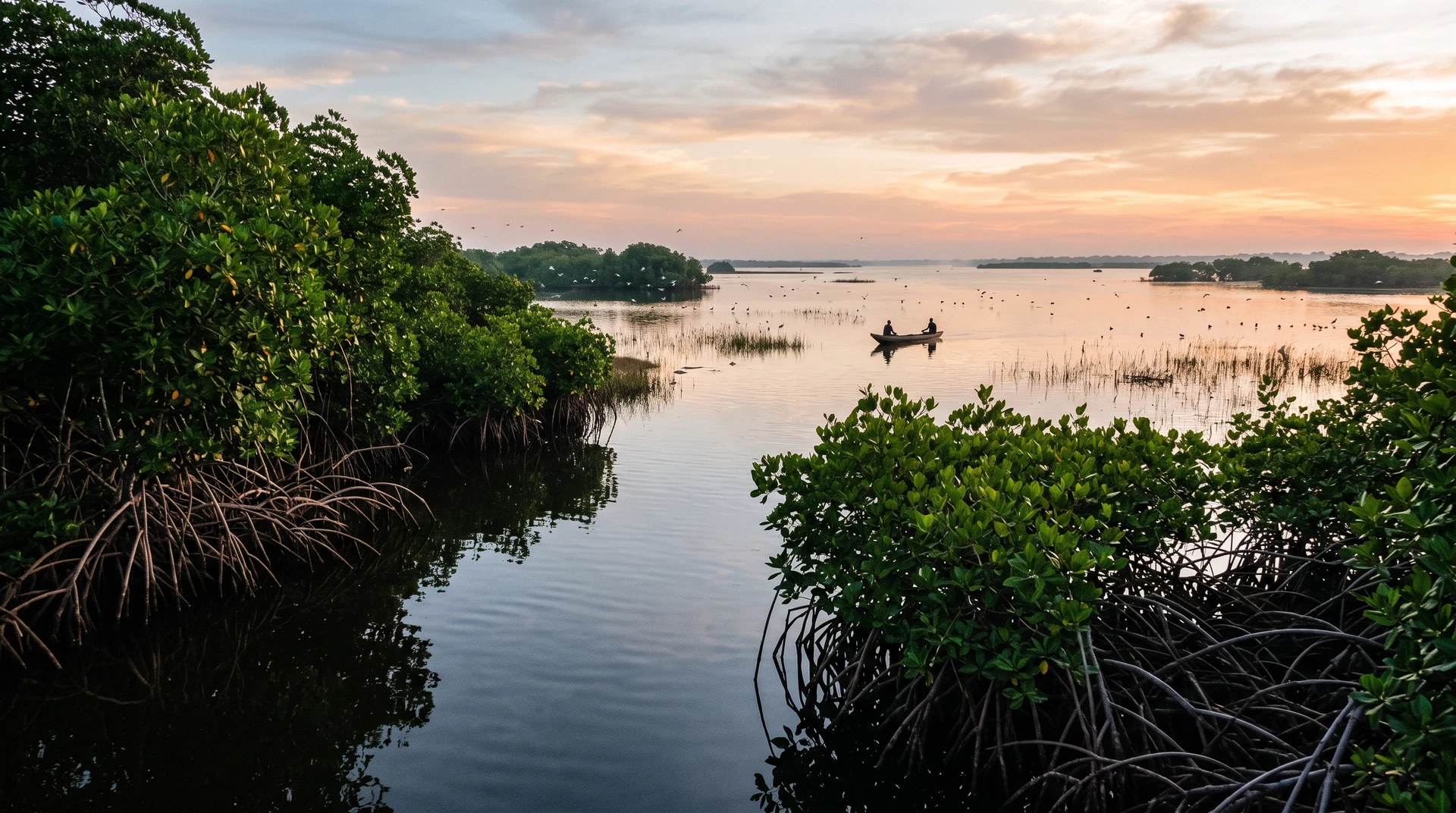
The Sine-Saloum Delta is a place where the distinction between land and water dissolves into a complex geometry. Located on Senegal's central coast, this vast estuary covers five thousand square kilometers, a scale best understood while navigating its winding interior. Here, the Saloum River spreads, its fresh flow meeting the Atlantic to create a salt-tinged environment that is neither entirely sea nor river. It is a landscape defined by thousands of waterways weaving through dense thickets of mangroves, creating a maze that has sustained life for centuries. The air is thick with the scent of brine and damp earth, a sensory reminder of the delta’s dual nature.
The mangroves are the silent architects of this world. Their stilt-like roots reach into the dark mud, anchoring islands and providing a nursery for countless marine species. In the Sine-Saloum, these forests are the very foundation of the ecosystem. The water between them is often still, reflecting the tangled canopy and the wide West African sky. Navigating these channels requires a deep knowledge of tides and shifting sandbanks, a skill perfected by local communities over generations. To move through the delta is to enter a cathedral of green, where the only sounds are the rhythmic dip of a paddle and the occasional cry of a bird disturbed from its roost.
Beyond the natural beauty lies a human history etched into the landscape. Scattered across the delta are 218 ancient mounds composed of discarded shells, some reaching heights of several meters. These are not accidental formations but the result of two millennia of continuous human presence and shellfish gathering. Each mound is a layered record of countless seasons, a testament to a way of life that has remained consistent since the first century. Walking upon these structures, one feels the crunch of sun-bleached fragments, realizing they stand on the physical accumulation of two thousand years of communal effort and sustainable resource management.
The archaeological significance extends to burial traditions. Among the shell mounds, researchers have identified 28 burial tumuli, providing a glimpse into the spiritual lives of ancient inhabitants. These sites testify to a complex society that honored its dead within the landscape that provided its sustenance. The mounds have become so integrated into the geography that they often form the highest points on the islands, serving as landmarks for navigators and foundations for modern villages. This intersection of the domestic and the sacred gives the delta a unique cultural resonance that earned it a place on the UNESCO World Heritage list.
Life in the delta continues to revolve around the water. Local communities, spread across more than two hundred islands, maintain a traditional lifestyle deeply intertwined with the estuary’s health. Sustainable fishing and shellfish gathering are cultural cornerstones. Women can often be seen at low tide, wading into the shallows to collect mollusks, a practice that has changed little in two thousand years. The methods used are mindful of the environment, ensuring resources are not depleted. This delicate balance between human need and ecological capacity is what makes the Sine-Saloum a model for sustainable living in a rapidly changing world.
As a designated Biosphere Reserve and Ramsar site, the Sine-Saloum Delta is recognized for its extraordinary biodiversity. The brackish waters are a vital breeding ground for fish, while the mangroves provide a sanctuary for a staggering array of birdlife. From majestic ospreys circling overhead to kingfishers darting between roots, the delta is a theater of avian activity. The richness of the estuary supports local populations and migratory species that travel thousands of miles to winter in these sheltered channels. The health of this ecosystem is a bellwether for the West African coast, making its preservation a matter of international importance.
However, this paradise is not without vulnerabilities. The intricate channels, ancient mounds, and fragile mangroves are under threat from poorly controlled socio-economic behavior and environmental degradation. As the world outside encroaches, pressure on the delta’s resources increases. Climate change and rising sea levels pose a significant risk to low-lying islands and the delicate salinity balance. Protecting the archaeological integrity of the shell mounds is equally challenging, as they are susceptible to erosion and unauthorized disturbance. Stewardship of this UNESCO site requires a constant, vigilant effort to ensure that the two-millennium-old harmony is not undone by modern pressures.
To stand on a shell mound at sunset, looking out over the vast expanse of the Saloum Delta, is to feel the weight of time. The orange light catches white fragments of ancient shells, turning the ground into a field of gold. In that moment, the connection between the people who lived here two thousand years ago and the communities of today feels palpable. The delta is a living museum, where history is woven into the fabric of the islands and the sea. It is a wistful reminder that human beings are capable of living in harmony with the natural world, provided we listen to the lessons of the past.