Travel
The Rhythms of Coral and Tide in Kenya's Oldest Swahili Sanctuary
On the edge of the Indian Ocean, Lamu Old Town preserves a seven-century legacy of Swahili culture within its car-free coral-stone labyrinth. Here, the pulse of East Africa is measured by the call to prayer and the slow, steady gait of donkeys through narrow, ancient alleys.
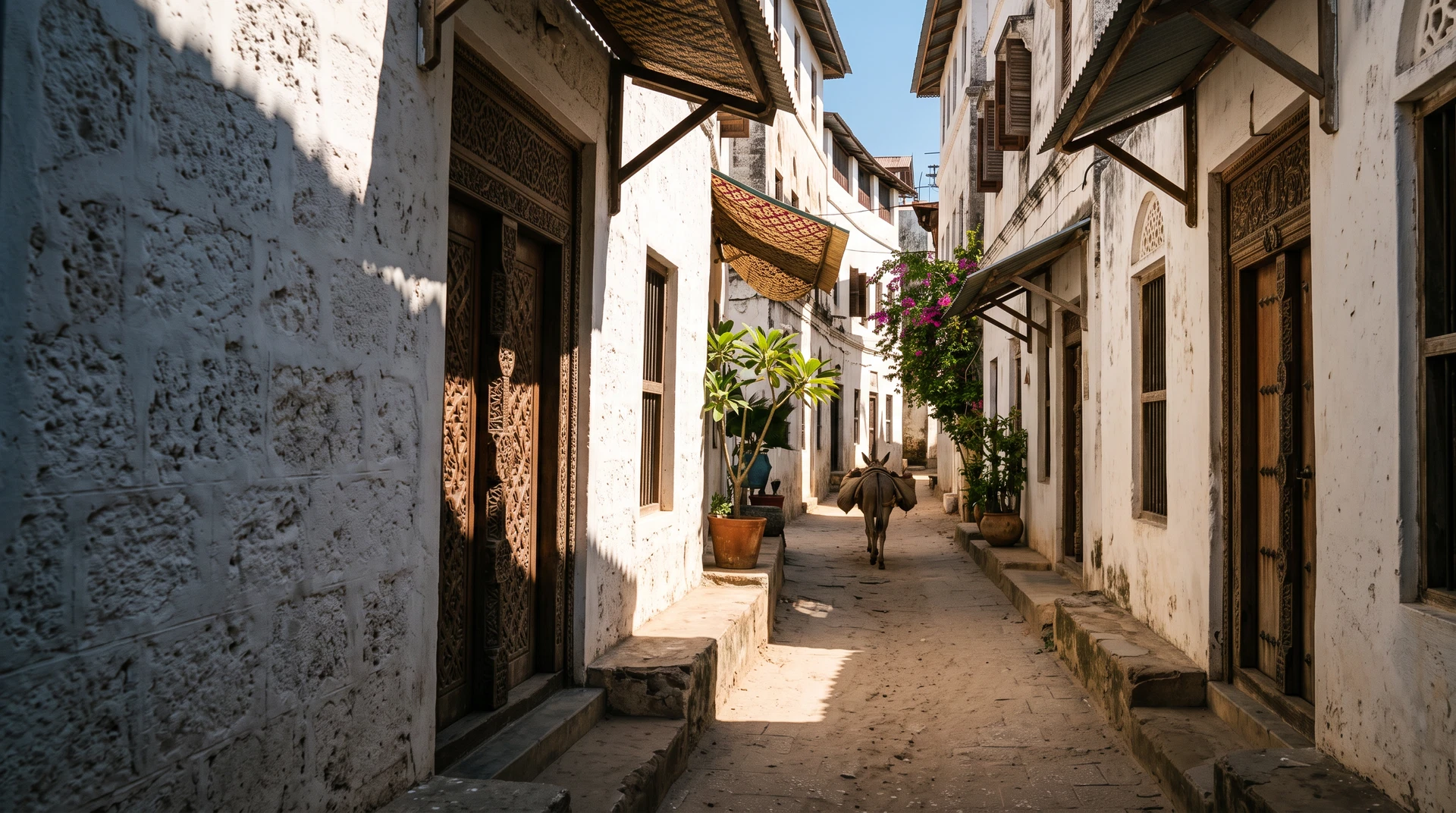
Stepping off the boat onto the stone jetty of Lamu, one immediately notices the profound absence of internal combustion. No taxis idle at the curb, and no motorbikes weave through traffic. Instead, the air is filled with the rhythmic clip-clop of donkey hooves on stone and the distant, melodic echoes of the adhan drifting from one of the town’s many mosques. This is Lamu Old Town, the oldest continuously inhabited Swahili settlement in East Africa, a place where time seems to have folded in on itself, preserving a way of life that has thrived for over seven hundred years. The transition from the modern world to this coral-stone sanctuary is instantaneous, a sensory shift that demands a slower pace and a more observant eye.
The town is a masterpiece of organic urban design, a dense labyrinth of narrow streets that rarely exceed the width of two people walking side by side. These alleys were never intended for vehicles; they were built for the shade, for the breeze, and for the intimate social interactions that define the Swahili coast. The architecture here is a physical record of the Indian Ocean’s trade winds, a fusion of Swahili, Arabic, Indian, and European influences. Massive walls built from local coral stone and reinforced with mangrove timber provide a natural coolness, even in the height of the tropical afternoon. The most striking features are the doors—heavy, intricately carved portals of teak or mahogany that signal the status and heritage of the families living behind them, their patterns telling stories of lineage and faith.
To walk through Lamu is to walk through a living museum, yet there is nothing stagnant about it. The town remains a vibrant center for Islamic education and Swahili culture, its streets teeming with life. Children in crisp school uniforms chase each other through the shadows, while elders sit on baraza—the stone benches built into the exterior of houses—to discuss the day’s events. The social fabric is as tightly woven as the architecture, rooted in a deep sense of community and a religious calendar that dictates the rhythm of the year. During the annual Maulidi festival, which celebrates the birth of the Prophet Muhammad, the town swells with pilgrims from across East Africa, filling the air with traditional songs, dances, and the scent of rosewater.
The relationship between the town and the sea is foundational. For centuries, Lamu was a major port of call for the dhows that traversed the Indian Ocean, carrying spices, textiles, and timber between Africa, Arabia, and India. Even today, the waterfront remains the town’s primary artery. Rows of wooden dhows, their hulls hand-crafted from mangrove wood and their sails stitched from heavy canvas, bob in the turquoise waters. Watching these vessels navigate the narrow channels at high tide is a lesson in ancient maritime skill. The sailors here possess an intuitive understanding of the winds and currents, a knowledge passed down through generations that remains as vital today as it was when the first stones of the town were laid.
As one moves deeper into the labyrinth, the complexity of the town’s interior reveals itself. The houses are often several stories high, built around central courtyards that draw light and air into the heart of the home. The upper floors often feature open-air galleries where the evening breeze can be caught, offering views over the undulating rooftops and the occasional minaret. There is a quiet dignity to these spaces, a sense of privacy and sanctuary that contrasts with the bustling energy of the market streets. In the markets, the air is thick with the aroma of freshly ground cardamom, cloves, and grilled mishkaki, while vendors display piles of tropical fruits and brightly colored khangas, the versatile wraps worn by local women.
Despite its resilience, Lamu exists in a state of fragile equilibrium. The very qualities that make it unique—its car-free status and its ancient architecture—are also its most vulnerable points. The visual integrity of the town is protected by its UNESCO World Heritage status, but the pressure of modern development is a constant shadow. Conservation efforts are not just about preserving the stones, but about maintaining the social functions that have kept the town alive. This includes the protection of the Shela sand dunes, located just a short distance down the coast. These towering white hills are not merely a scenic wonder; they are the island’s primary freshwater catchment area, a natural filter that sustains the entire community. Encroachment on these dunes poses a direct threat to the town’s survival.
There is a specific kind of stillness that settles over Lamu in the late afternoon, just as the sun begins to dip toward the horizon. The light turns a deep, honeyed gold, casting long shadows across the coral walls and illuminating the dust motes dancing in the alleys. It is a time for reflection, for sitting by the water and watching the sky turn from blue to a bruised purple. In these moments, the weight of the town’s history feels palpable. You realize that you are not just a visitor in a tourist destination, but a guest in a living community that has weathered the rise and fall of empires, the shifts of global trade, and the slow march of modernity, all while keeping its soul intact.
Leaving Lamu is a reluctant process, a slow unwinding of the spell the town casts. As the boat pulls away from the jetty and the silhouette of the waterfront recedes into the distance, the sounds of the town—the donkeys, the bells, the calls to prayer—gradually fade, replaced once again by the roar of engines and the rush of the world outside. Yet, the memory of the coral-stone labyrinth remains, a reminder that there are still places where the pace of life is dictated by the tide and the tradition, and where the past is not something to be looked back upon, but something to be lived every single day.