Travel
Echoes of the San: Navigating the Basaltic Spires and Ancient Art of the Drakensberg
Rising as a jagged sentinel along South Africa’s eastern border, the uKhahlamba-Drakensberg Park offers a profound synthesis of geological drama and ancient human history. Within its basaltic buttresses lies a sanctuary for endemic flora and the world’s most significant collection of San rock art.
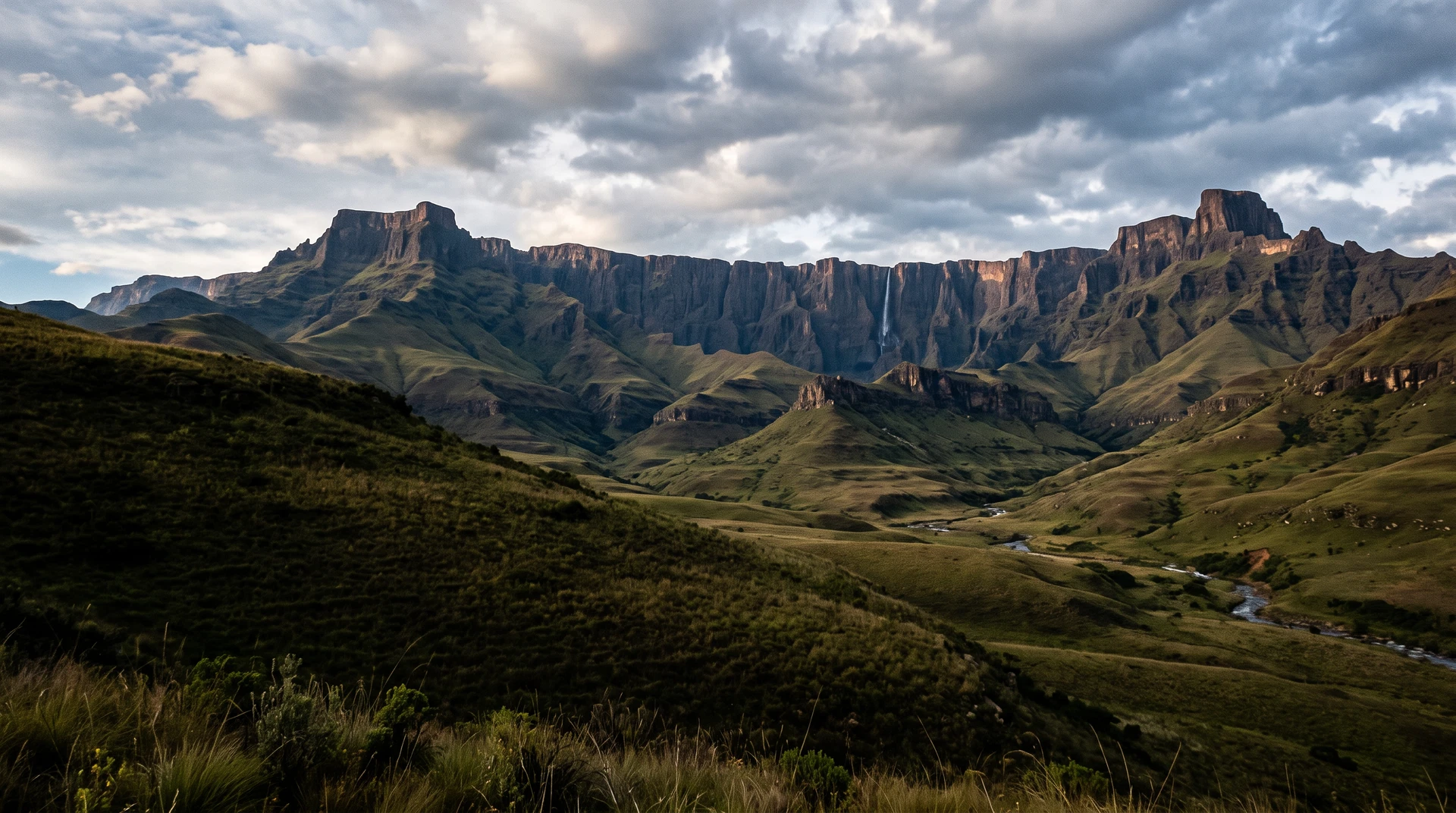
To stand at the foot of the uKhahlamba-Drakensberg Park is to confront a wall of history predating nations. Known to the Zulu as uKhahlamba, or the "Barrier of Spears," this massive escarpment forms a jagged spine along South Africa’s border. The scale is humbling; mountains erupt in basaltic buttresses and deep valleys that defy the logic of the surrounding plains. It is a landscape defined by verticality, where clouds often snag on sharp peaks, creating a swirling, atmospheric theater. For the traveler, the Drakensberg is a place of profound stillness, where the wind carrying the scent of wild grasses is the only sound that breaks the silence of the high peaks.
The geological narrative of the Drakensberg is one of immense pressure and patient erosion. Millions of years ago, volcanic activity flooded the region with basalt, forming the dark, resilient cap of the high escarpment. Beneath this lies the softer, golden sandstone of the lower slopes, carved by wind and water into a labyrinth of caves and riverbeds. This duality defines the park’s aesthetic—the stern, dark heights of the peaks contrasted against the warm, inviting hollows of the valleys. Walking these landscapes, one notices the intricate textures of the rock, from smooth boulders in the Tugela River to the lichen-covered faces of higher ridges. It is a terrain that demands respect, as the ground tells a story of tectonic shifts.
While the peaks command the eye, sandstone shelters reveal the park’s most intimate secrets. The uKhahlamba-Drakensberg is home to the world’s most concentrated collection of San rock art, a visual legacy spanning thousands of years. Across approximately 600 sites, some 35,000 individual images are etched onto the stone, offering a window into the spiritual lives of the indigenous San people. These are not merely decorations; they are records of a culture that viewed the landscape as a living entity. The paintings, rendered in ochre and charcoal, depict a world where the boundaries between human and animal realms were fluid. To see these works in their original context is a transformative experience that anchors the visitor to the deep history of the land.
The primary subject of many paintings is the eland, a large antelope holding deep spiritual significance for the San. In their belief system, the eland was a source of supernatural potency, and its depiction was often a way for shamans to access the spirit world during trance dances. In the quiet of a rock shelter, you can still see the delicate lines of these creatures—some leaping, some grazing, others morphing into human figures. The level of detail is astonishing, capturing the curve of a neck or the tension in a leg with precision. Because these sites are fragile, access is strictly managed through guided tours, a necessary precaution to ensure that the pigments are not degraded by modern contact.
Beyond its cultural treasures, the park is a vital ecological sanctuary, protecting life that exists nowhere else. The high-altitude wetlands act as a massive sponge, capturing rainfall and slowly releasing it into the river systems that sustain much of South Africa. Within these moist, cool environments, more than 250 endemic plant species thrive, adapted to the thin air and intense sunlight. In the spring, the valleys are carpeted in a riot of wildflowers, from delicate Proteas to vibrant Watsonias. Birdwatchers are equally rewarded, as the cliffs provide nesting sites for rare species like the Bearded Vulture, which can often be seen soaring on the thermals, their massive wingspans silhouetted against the blue expanse of the sky.
Navigating the Drakensberg requires more than just a sturdy pair of boots; it requires an awareness of the mountain’s volatile temperament. The weather here is famously unpredictable, with clear morning skies often giving way to sudden, violent thunderstorms by mid-afternoon. Hikers must be prepared for temperature drops that can turn a pleasant walk into a test of endurance, especially as one ascends toward the higher passes. There is a specific rhythm to life on the escarpment, dictated by the sun and the mist. To reach the top of the Amphitheatre or to stand at the edge of the Tugela Falls is to earn a view that feels like the edge of the world. The physical challenge only heightens the arrival.
The dual UNESCO World Heritage status reflects the link between the park's natural beauty and its cultural heritage. Preservation is a complex task, balancing the needs of a growing tourism industry with the imperative to protect a landscape that is both ecologically sensitive and archaeologically irreplaceable. The stewardship of the land involves not just the physical protection of the rock art and the endemic flora, but also a commitment to the stories of the people who once called these mountains home. Visitors are encouraged to move through the park with a light footprint, adhering to the principle of "take only pictures, leave only footprints." This ethos of respect is central, fostering a connection to ancient rhythms.
As the sun sets over the Barrier of Spears, the mountains take on a haunting, ethereal quality. The long shadows stretch across the valleys, and the basaltic peaks turn a deep, bruised purple against the fading light. It is in these moments that the true character of the Drakensberg emerges—a place that is simultaneously rugged and delicate, ancient and ever-changing. The wistful ink of the landscape is written in the curves of the sandstone and the faded pigments of the San, a narrative that continues to unfold for those willing to listen. To leave is to carry its silence, a reminder of a world where earth and spirit remain bound.