Travel
The Ancient Silence of the Namib Where Towering Dunes Meet the Rugged Naukluft Peaks
In the vast expanse of Namibia’s Namib-Naukluft National Park, the world’s oldest desert reveals a landscape of stark contrasts, from the fog-drenched Namib Sand Sea to the rocky sanctuaries of the Naukluft Mountains, offering a profound encounter with a wilderness shaped by deep time and extreme resilience.
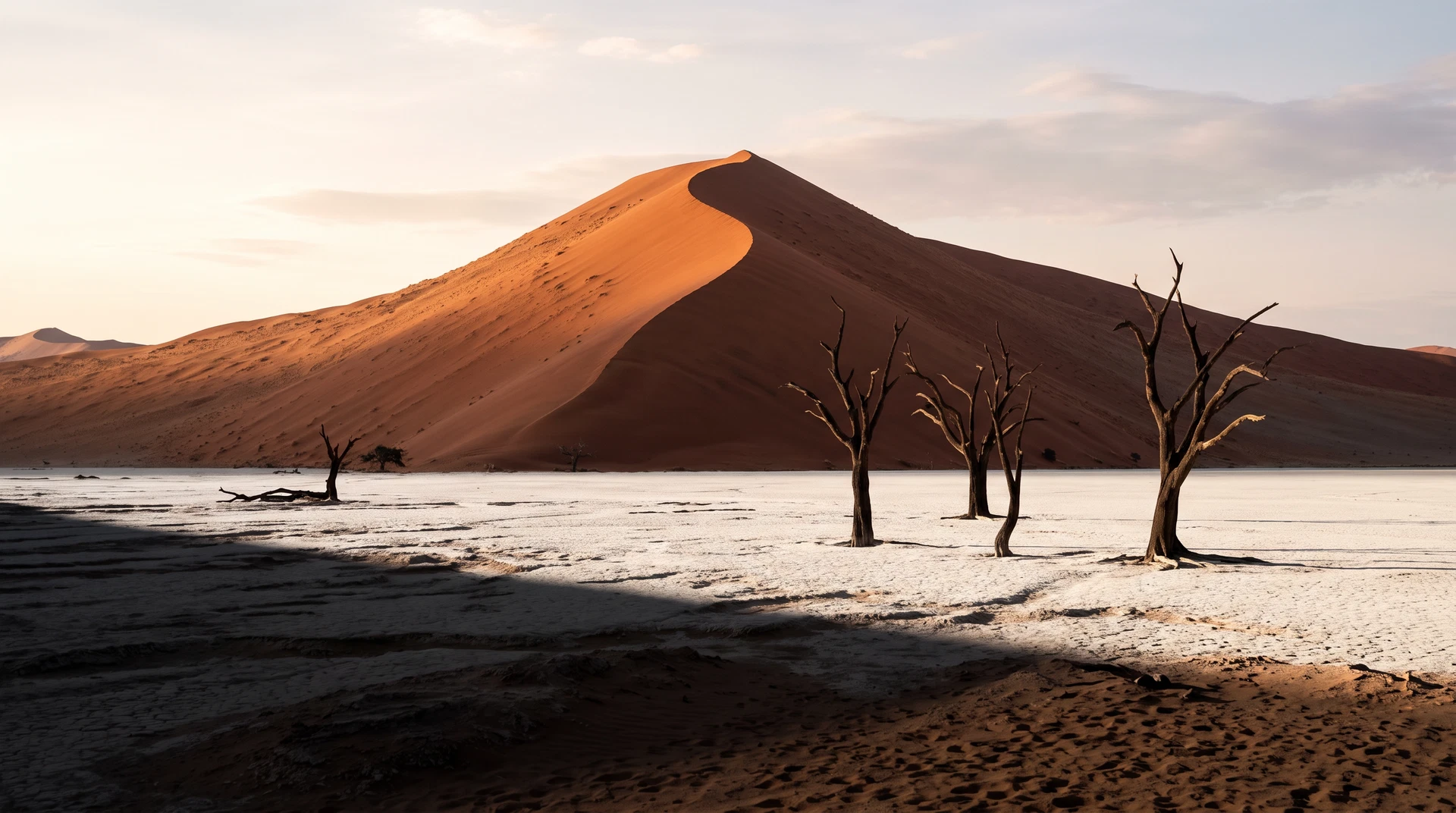
The immense scale of the Namib-Naukluft is a physical sensation that greets every traveler. Encompassing nearly 50,000 square kilometers, this expanse is the most significant stretch of protected land in Namibia, where human presence feels like a brief footnote to an epic geological story. Navigating this wilderness means surrendering to the rhythms of an environment shaped by wind and the slow movement of the earth. The atmosphere possesses a startling transparency, bringing distant peaks into sharp focus while the horizon recedes into a shimmering line. It is a realm where time is measured not by clocks, but by the steady erosion of stone, providing a rare sense of perspective for those who wander its paths.
Central to the park’s identity is the Namib Sand Sea, a UNESCO-recognized phenomenon and the planet’s sole coastal desert where fog acts as a primary source of moisture. This ghostly sea-mist, rolling inland from the Atlantic, sustains a complex web of life in an otherwise arid wasteland. The iconic dunes of Sossusvlei rise like colossal, frozen waves of ochre and rust, their sharp edges sculpted by the wind. These massive structures are living entities, perpetually in motion yet grounded in an ancient history. The stark juxtaposition of vibrant orange sand against the pale surfaces of salt pans creates a landscape of surreal beauty, demonstrating the desert’s capacity to forge masterpieces from sun, sand, and air.
The transition from the soft curves of the sand sea to the rugged edges of the Naukluft Mountains is a dramatic geological shift. Here, the landscape changes from fluid geometry to a fortress of ancient limestone and dolomite. The mountains rise abruptly from the plains, their surfaces scarred by deep canyons that hide precious pockets of water. This is a resistant world where the earth’s bones are laid bare. The Naukluft range serves as a sanctuary for species adapted to the verticality of the terrain. Walking through these mountains, one hears the clatter of loose stone underfoot, a sharp contrast to the muffled silence of the sand, signaling a change in the environment's rhythm.
Within these rocky heights, the Hartmann’s mountain zebra finds its home. This endemic subspecies possesses hard, fast-growing hooves that allow it to navigate steep, jagged slopes with surprising agility. To see a herd moving across a ridge is to witness a perfect synchronization of biology and terrain. Their distinctive stripes, which extend to their hooves and lack shadow-stripes, provide effective camouflage against the fractured light of mountain canyons. They are symbols of resilience, surviving where water is a rare luxury and the sun is a constant force. Their presence brings life to the stillness of the stone, a reminder that even in extreme conditions, life finds a way to endure.
The desert’s true stewards are often the most inconspicuous. Slow-growing lichens covering rocks and soil crusts are vital to the park’s ecological health. These organisms, which can take decades to grow just a few centimeters, survive by absorbing moisture from morning fog. They are essential for soil stability and nutrient cycling. The requirement for visitors to stay on designated paths is a necessity for their survival; a single footstep off the trail can destroy a century of growth, leaving a scar that may take generations to heal. This attentive way of traveling transforms a simple trip into a meditative practice of environmental respect, acknowledging our role as temporary guests in an ancient house.
Preparation is the silent requirement of any journey here. The environment is one of extremes, where the midday sun pushes temperatures to punishing levels before the air turns bone-chillingly cold at night. The dry heat saps moisture with an efficiency often underestimated. Carrying surplus water is a fundamental respect for the desert’s power. The sensory experience is intense—the smell of sun-baked stone, the feeling of wind carrying fine sand, and the light changing from a harsh white at noon to a soft violet at dusk. It demands constant awareness and a disciplined approach to one’s physical needs, rewarding the prepared traveler with a visceral connection to the land.
The practicalities of travel are inseparable from the ethics of stewardship. The park’s management emphasizes a "leave no trace" philosophy enforced by the terrain's nature. There is a quiet discipline in following marked tracks, a commitment to preserving the integrity of the desert’s delicate crust. This observant pace allows visitors to notice smaller details—the tracks of a beetle, the light on a translucent succulent, or the sudden cry of a bird echoing in a canyon. This focus shifts the experience from sightseeing to a deeper engagement with the wilderness, where every observation is grounded in the reality of a landscape that does not cater to human comfort.
As shadows lengthen across the dunes, the true character of the Namib-Naukluft reveals itself. The silence that settles is absolute, a profound stillness emanating from the earth. It is a silence full of the weight of millions of years. Standing on a mountain ridge, one feels a sense of isolation that is both humbling and liberating. The vastness serves as a mirror, reflecting the insignificance of human concerns against geological time. The memory of the Namib is not of specific sights, but of this overwhelming space and the quiet power of a wilderness that remains largely untouched. It is a reminder that ancient worlds still breathe, indifferent to human history.