Travel
Where the Andean Condor Circles the Deepest Veins of the Peruvian Highlands
In the shadows of the Arequipa region, Colca Canyon reveals a prehistoric scale that dwarfs the imagination. Here, ancient agricultural terraces still sustain life, while the world’s heaviest raptors ride the morning thermals above a chasm twice as deep as the floor of the Grand Canyon.
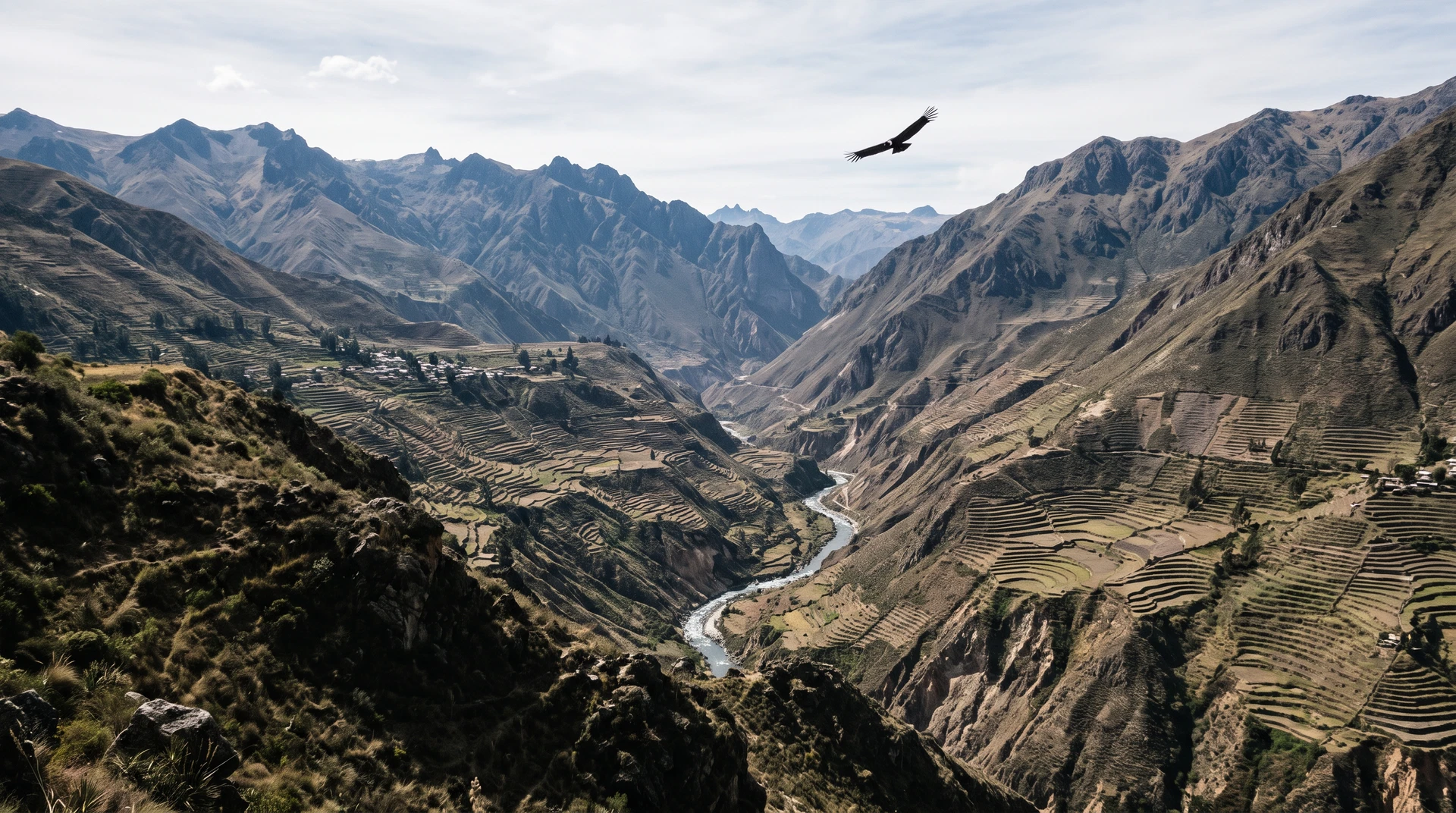
The morning in the Colca Valley does not begin with the sun, but with the slow retreat of a cold, blue shadow that clings to the volcanic rock. At over three thousand meters above sea level, the air is thin enough to make every breath a deliberate act of appreciation. Below the rim, the canyon drops away into a vertigo-inducing abyss that reaches depths of more than 3,400 meters. It is a scale that defies the casual observer’s sense of proportion, a geological scar that runs twice as deep as the Grand Canyon. As the light finally spills over the jagged peaks of the Arequipa region, the silence of the high Andes is broken only by the distant rush of the Colca River, a silver thread winding through the darkness far below.
At the Cruz del Condor, a natural viewing platform perched precariously over the void, the world waits in hushed anticipation. The stewardship of this place is a quiet responsibility; visitors are reminded that excessive noise and the mechanical hum of drones are strictly prohibited near the nesting sites. The Andean condor, a bird of prehistoric majesty with a wingspan that can reach three meters, requires the stillness to thrive. When the first thermal currents begin to rise from the depths, the condors emerge. They do not flap their wings so much as lean into the sky, circling upward in effortless spirals. To watch a creature of such weight become weightless against the backdrop of the vertical cliffs is to witness a performance that has remained unchanged for millennia.
While the sky belongs to the condors, the canyon walls belong to the ancestors. The landscape is defined by a staggering network of agricultural terraces, or andenes, which predate the Inca Empire. These stone-walled steps, carved into the steep slopes by the Collagua and Cabana people, are not mere relics of the past; they are living infrastructure. Fed by complex irrigation systems that channel glacial meltwater, the terraces still produce maize, quinoa, and potatoes for the local communities. The sight of these green ribbons clinging to the arid brown cliffs is a testament to an ancient understanding of hydrology and soil conservation that modern engineering often struggles to replicate.
Walking through the villages of Chivay or Yanque, one encounters a culture that is as resilient as the stone it inhabits. The local women are distinguished by their elaborate traditional dress, particularly their hats, which serve as a visual marker of their heritage. The Collagua women wear white hats adorned with intricate embroidery, while the Cabana women favor felt hats decorated with colorful ribbons. These distinctions are not for the benefit of visitors but are essential threads in the social fabric of the valley. In the central plazas, the air smells of roasting corn and woodsmoke, and the rhythm of life is dictated by the agricultural calendar rather than the digital clock.
The geology of the region is equally compelling, earning it a designation as the Colca y Volcanes de Andagua UNESCO Global Geopark. The canyon is the result of a massive tectonic rift, further sculpted by the erosive power of the river and the volcanic activity of the surrounding peaks. The earth here feels restless and alive. Thermal springs bubble up from the ground near the riverbanks, offering a sulfurous, steaming respite from the high-altitude chill. These waters, heated by the same subterranean forces that raised the Andes, provide a visceral connection to the volcanic heart of the continent.
Acclimatization is the primary practical hurdle for any visitor, and the canyon demands a slow, respectful pace. The altitude can be punishing, manifesting as a dull ache in the temples or a sudden shortness of breath. Local wisdom suggests drinking mate de coca to alleviate the symptoms, a practice that has sustained travelers in these mountains for centuries. There is a certain humility required to navigate this terrain; you cannot rush the descent into the canyon, nor can you hurry the climb back out. The physical exertion serves as a reminder of the canyon’s sheer verticality, forcing a meditative focus on each footstep.
As the day progresses, the light in the canyon shifts from the harsh clarity of noon to the golden softness of the late afternoon. The shadows return, stretching across the terraces and turning the river into a ribbon of molten lead. The wind picks up, whistling through the dry grasses and the stands of eucalyptus trees that line the valley floor. It is a landscape of extremes—of blinding light and deep shadow, of lush greenery and barren rock. The sensory experience is one of profound isolation, yet the presence of the terraces ensures that one never feels truly alone; the hand of man is visible on every slope.
To leave the Colca Canyon is to carry a sense of its immense gravity back to the lowlands. It is a place that recalibrates your understanding of time and depth. The condors will continue to circle long after the last traveler has departed, and the terraces will continue to hold the mountain in place as they have for over a thousand years. In a world that often feels increasingly fragile and fleeting, the Colca stands as a monument to endurance. It is a destination that does not just offer a view, but a perspective on the enduring relationship between a people and the formidable earth they call home.