Travel
The Rhythms of the Rising Tide in Brazil’s Great Inland Sea
Spanning an immense mosaic of flooded grasslands and labyrinthine rivers, the Pantanal serves as South America’s most vibrant wildlife theater. Here, the seasonal ebb and flow of water dictates the pace of life, offering an intimate, unscripted encounter with the continent’s most elusive predators and brilliant avian treasures.
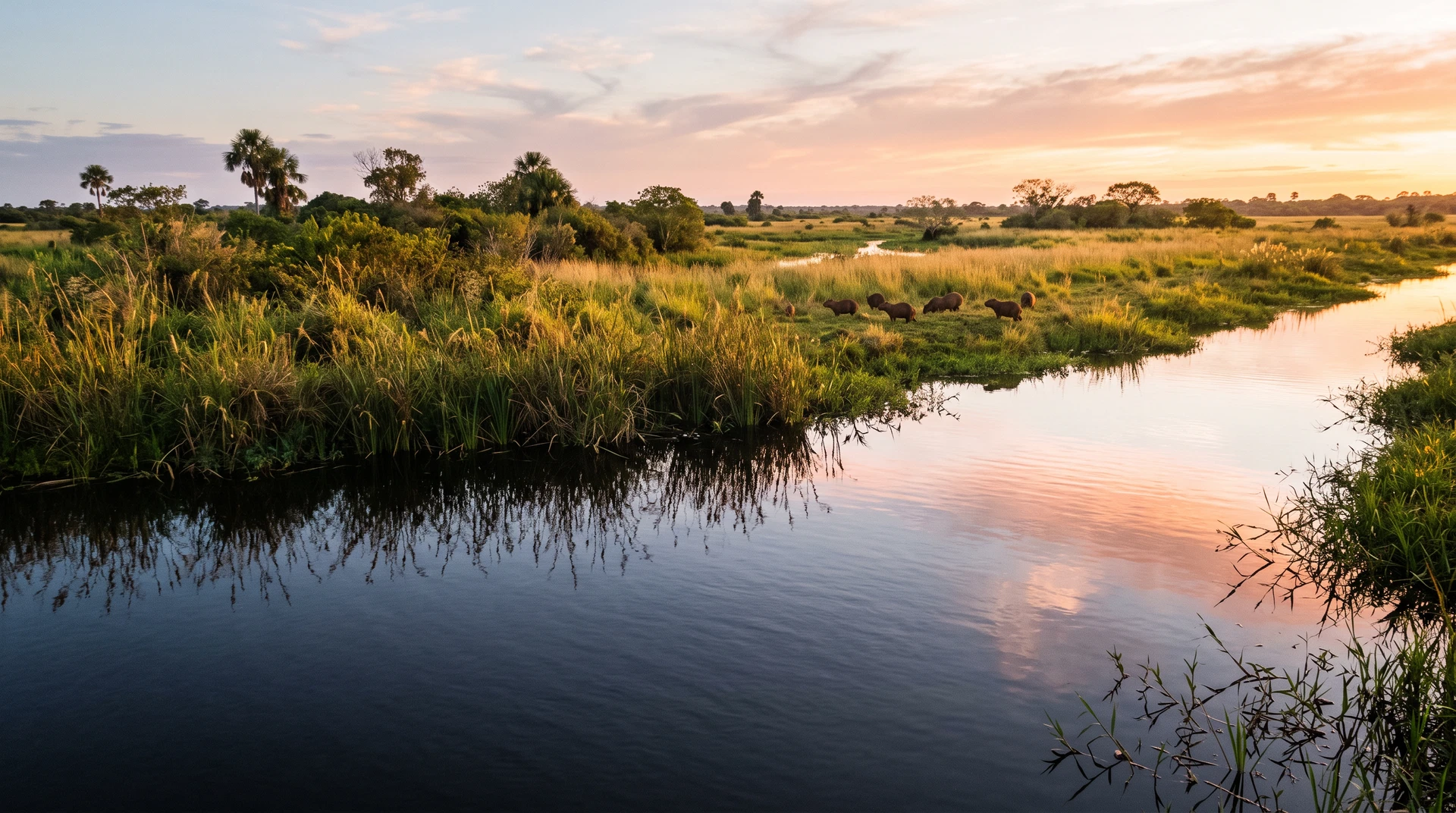
The horizon in the Pantanal does not behave like horizons elsewhere. In this vast, low-lying basin in the heart of South America, the line between earth and sky is often blurred by a shimmering sheet of water that stretches toward infinity. This is the world’s largest tropical wetland, a territory so expansive it swallows the borders of three countries, though its soul resides firmly within the Brazilian states of Mato Grosso and Mato Grosso do Sul. To arrive here is to enter a landscape defined not by permanent landmarks, but by the relentless pulse of the seasons. It is a place where the map is rewritten every six months, as summer rains transform dusty cattle tracks into navigable arteries of life.
The hydrological cycle of the Pantanal is a slow-motion miracle. Unlike the rapid flash floods of mountain regions, the water here moves with a languid, deliberate grace. As the rains fall in the surrounding highlands, the basin fills like a giant, shallow bowl. By the peak of the wet season, roughly eighty percent of the region is submerged, creating a labyrinth of temporary lakes and floating islands of vegetation known as matupás. This seasonal inundation is the engine of the ecosystem, depositing nutrient-rich sediments and triggering a biological explosion. For the traveler, this means the experience is entirely dependent on the calendar; what was a driveable road in October becomes a boat-only passage by March.
Wildlife visibility here is arguably the finest on the continent, largely because the open nature of the wetlands offers nowhere for the inhabitants to hide. While the Amazon hides its secrets behind a dense curtain of emerald foliage, the Pantanal lays them bare across sun-drenched savannas and riverbanks. The undisputed sovereign of this realm is the jaguar. In the northern reaches, these apex predators have developed a unique relationship with the water. They are powerful swimmers, often seen patrolling the river edges in search of caiman or capybara. Observing a jaguar here is not a fleeting glimpse, but often a prolonged, breathtaking encounter with a creature that seems entirely indifferent to the presence of an observant boat.
Beneath the surface of the slow-moving rivers, another charismatic resident commands the water. The giant river otter, often referred to locally as the "water wolf," lives in boisterous family groups that are as formidable as they are playful. To hear their rhythmic snorts and splashes before they emerge from a den in the clay bank is a quintessential Pantanal experience. These otters are highly social and fiercely territorial, often seen working together to hunt fish with coordinated precision. Their presence is a testament to the health of the waterways, as they require pristine environments and abundant prey to sustain their high-energy lifestyles in the winding channels that thread through the flooded forest.
High above the riverbanks, the canopy and the scrubland are punctuated by flashes of impossible blue. The hyacinth macaw, the world’s largest parrot, finds its last great stronghold in these wetlands. Their cobalt plumage is so vivid it appears almost luminescent against the pale greens of the palm trees where they nest. These birds are not merely beautiful; they are loud, social, and deeply intelligent, often seen in pairs that mate for life. Watching them fly across the sunset, their long tails trailing like ribbons, provides a sense of prehistoric scale. Their survival is intrinsically linked to the preservation of specific nesting trees, making every sighting a reminder of the delicate balance required to maintain this paradise.
Navigating the Pantanal requires a shift in one's perception of distance and time. The Transpantaneira, a legendary dirt road that terminates in the heart of the northern wetlands, is punctuated by over a hundred wooden bridges, each a small threshold into a new pocket of biodiversity. In the dry season, the ditches alongside this road become crowded refuges for thousands of caiman and wading birds like the jabiru stork, whose massive stick nests crown the tops of isolated trees. Travel here is rarely fast; it is a slow progression through a landscape that demands frequent stops to admire a southern screamer’s call or the steady, watchful gaze of a marsh deer standing in the reeds.
However, this abundance comes with a profound responsibility for the visitor. The Pantanal is a fragile mosaic, highly susceptible to the dual threats of human-caused wildfires and the disruption of its delicate water chemistry. During the dry months, the parched vegetation becomes a tinderbox, and the memory of recent devastating fires looms large over conservation efforts. Stewardship here means more than just taking photos; it involves adhering to strict wildlife-viewing protocols that ensure animals are not stressed or habituated. Responsible land access, particularly during the flood stages, is critical to preventing erosion and protecting the nesting sites that line the riverbanks, ensuring that the seasonal pulse continues uninterrupted for generations to come.
As the sun dips below the horizon, the Pantanal undergoes one final daily transformation. The heat of the day gives way to a cool, moisture-laden air, and the sounds of the wetlands shift from the cacophony of birds to the deep, resonant croaks of frogs and the distant splash of a nocturnal hunter. There is a profound stillness that settles over the marshes, a feeling of being at the center of a wild, unscripted world that has functioned this way for millennia. To leave the Pantanal is to carry away the rhythm of the water in one’s bones, a reminder that there are still places on earth where the wild thrives in spectacular, flooded abundance.